

 English
 中文简体
中文简体 русский
 Español
 عربى
عربى
Submit feedback
Are Silicone Hoses Better Than Rubber? The Ultimate Comparison Guide
Industry news-Content
- 1 Are Silicone Hoses Better Than Rubber? The Short Answer
- 2 Temperature Resistance: Where Silicone Pulls Ahead
- 3 Lifespan and Durability: How Long Each Hose Actually Lasts
- 4 Where Rubber Still Wins: Cost, Oil, and Fuel Resistance
- 5 What Is a Universal Silicone Hose? Types and Sizing
- 6 How to Install a Universal Silicone Hose Correctly
- 7 Silicone or Rubber? A Quick Decision Guide
Are Silicone Hoses Better Than Rubber? The Short Answer
Yes, for most automotive and performance applications, silicone hoses outperform standard rubber hoses. Silicone tolerates continuous temperatures of roughly -60°C to 200°C (-76°F to 392°F), compared with about -40°C to 120°C (-40°F to 248°F) for standard EPDM rubber, and a quality reinforced silicone hose typically lasts 10 to 15 years or more, versus 3 to 7 years for rubber. Silicone also resists UV light, ozone, and heat cycling far better, so it doesn't harden or crack the way rubber does after a few summers in an engine bay.
That said, rubber isn't obsolete. It costs a fraction of silicone's price and handles direct contact with oil or fuel far better than plain silicone, which swells and softens on contact with petroleum products. The table below summarizes the core trade-offs before we look at each factor in detail.
| Property | Silicone Hose | Rubber Hose (EPDM/NBR) |
|---|---|---|
| Continuous temperature range | -60°C to 200°C | -40°C to 120°C |
| Typical service life | 10 to 15+ years | 3 to 7 years |
| Relative upfront cost | 2 to 5 times higher | Lowest cost |
| Oil and fuel contact | Not recommended | Good (NBR) to excellent |
| UV and ozone resistance | Excellent | Fair, degrades over time |
| Best suited for | Turbo, intercooler, high-heat routing | Fuel lines, budget coolant, OEM replacement |
Temperature Resistance: Where Silicone Pulls Ahead
Heat tolerance is the single biggest reason installers switch to silicone. A typical 3-ply to 4-ply reinforced silicone hose is rated for continuous use from -60°C to 200°C, and some high-performance grades hold up to 220°C for short periods under load. Standard automotive rubber compounds behave differently depending on type: EPDM, the standard for coolant and heater hoses, is rated for continuous use up to roughly 120°C to 140°C, while NBR (nitrile), used for fuel and oil lines, tops out at a similar range despite its different chemical resistance profile. Below about -40°C, both rubber types stiffen and become prone to cracking, while silicone stays flexible.
This gap matters because engine bay temperatures routinely exceed 93°C (200°F) near the turbocharger, exhaust manifold, and intercooler piping — comfortably within rubber's failure zone but well inside silicone's working range. A rubber hose that spends years cycling between cold starts and 100°C-plus underhood temperatures ages far faster than the same hose used only for low-heat vacuum routing.
Why the Difference Exists
The difference comes down to chemistry. Silicone's backbone is built from silicon-oxygen bonds instead of the carbon-carbon chains that make up natural and synthetic rubber. Silicon-oxygen bonds require significantly more energy to break, which is why silicone resists softening, swelling, and hardening at temperatures that degrade rubber within months rather than years. The same bond strength is why silicone stays pliable in freezing conditions instead of turning brittle.
Where the temperature gap shows up most:
- Turbocharger inlet and outlet piping, where boosted air can exceed 150°C
- Intercooler and charge-pipe routing on tuned or forced-induction engines
- Exhaust gas recirculation (EGR) lines
- Radiator and heater hoses in hot climates or towing applications
Lifespan and Durability: How Long Each Hose Actually Lasts
Rubber hoses age through three main mechanisms: oxidation, ozone exposure, and repeated heat cycling. Most installers report a service life of 3 to 7 years before a rubber coolant or vacuum hose needs replacing, and the failure is rarely sudden — it shows up gradually as surface cracking, hardening, and a phenomenon known as "hose sweating," where coolant seeps through the wall as the rubber's internal structure breaks down, with no visible leak point.
Silicone resists this same aging process because it is chemically inert and largely unaffected by UV light and ozone. A quality reinforced silicone hose commonly lasts 10 to 15 years in daily driving, and well-documented cases in marine and off-road equipment show hoses still performing after 20 years with no cracking, hardening, or loss of flexibility. That longevity is also why silicone hoses hold their clamp seal for their entire service life, while an aging rubber hose can loosen its grip on the fitting as the material shrinks and hardens.
Warning Signs a Rubber Hose Needs Replacing
- Surface cracks or a rough, "checkered" texture
- Hardening or a noticeable loss of flexibility when squeezed
- Bulging or soft spots near clamps
- A fine coolant mist or residue on the exterior with no obvious leak point (hose sweating)
Where Rubber Still Wins: Cost, Oil, and Fuel Resistance
Despite silicone's advantages in heat resistance and longevity, rubber remains the correct choice in two common situations.
Fuel and Oil Lines
Standard silicone's molecular structure causes it to swell and soften on contact with gasoline, diesel, or engine oil, so plain silicone should never be used for fuel lines, oil coolers, or PCV lines. NBR (nitrile) rubber is formulated specifically for this contact and remains the industry standard for fuel and oil applications. Fluorosilicone (FVMQ) hoses solve this by combining silicone's temperature range with genuine fuel and oil resistance, but they typically cost 3 to 6 times more than standard silicone — a premium usually reserved for motorsport and aerospace builds where no compromise is acceptable.
Upfront Cost
Rubber hoses cost a fraction of silicone's price, typically 2 to 5 times less than an equivalent silicone part. For stock vehicles operating well within rubber's temperature range — general coolant runs, vacuum lines, and low-boost daily drivers — rubber remains a genuinely adequate, cost-effective choice. The cost gap narrows over the ownership period, since rubber needs replacing roughly twice as often, but for a short-term fix or a tight budget, rubber still makes practical sense.
What Is a Universal Silicone Hose? Types and Sizing
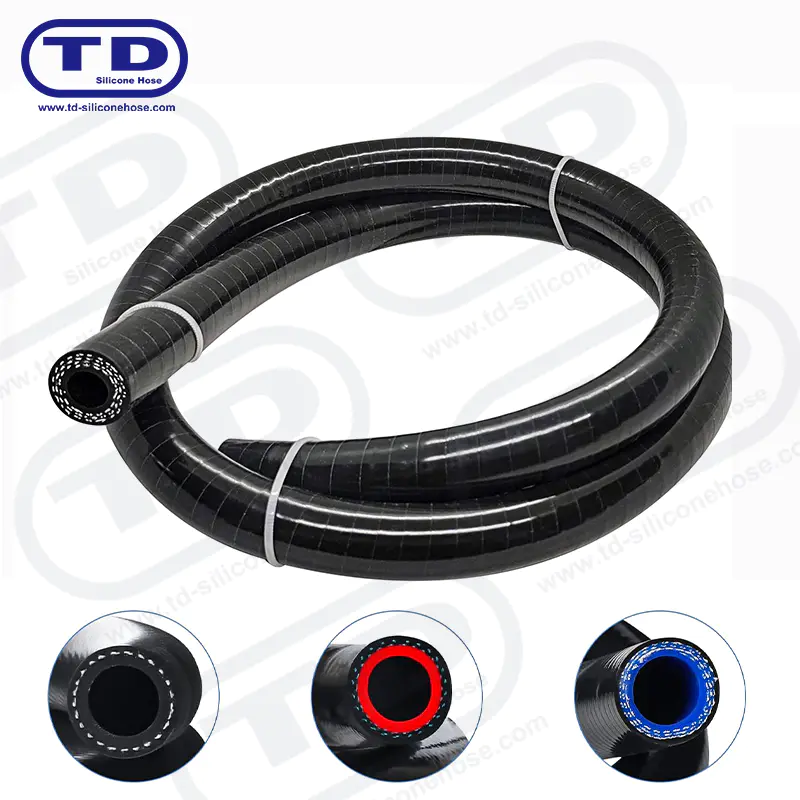
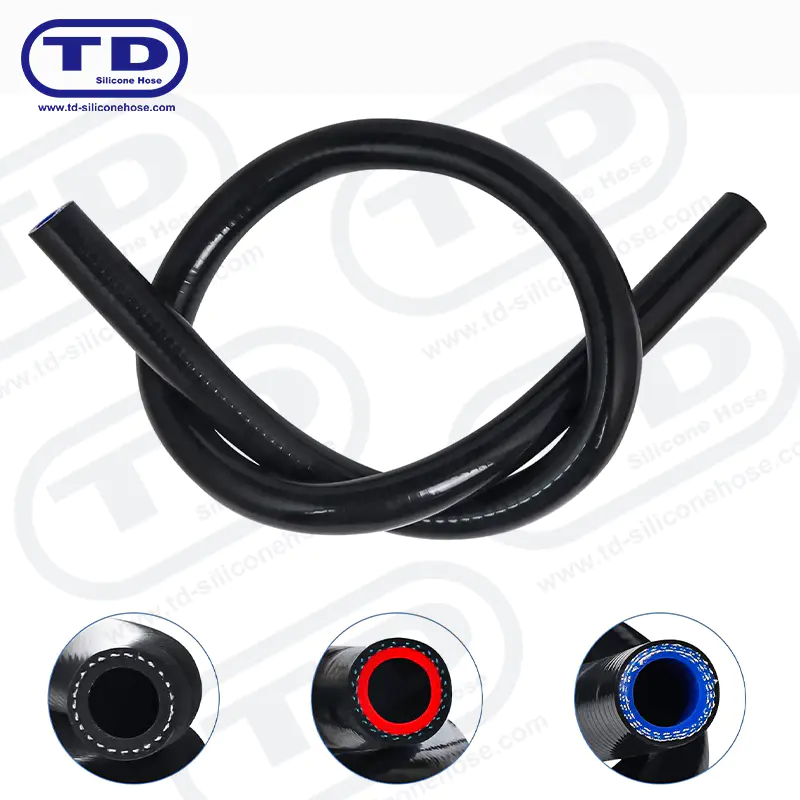
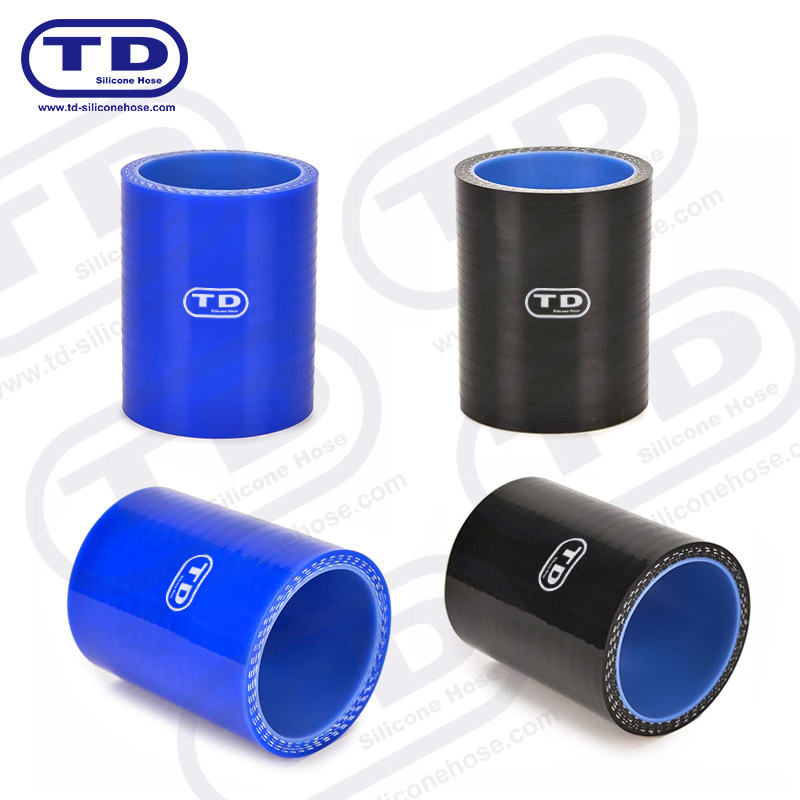
A universal silicone hose is a straight, elbow, or reducer hose sold without vehicle-specific fitment. Rather than replacing a single molded OEM part exactly, it is manufactured to be trimmed, routed, and clamped to fit a range of bore sizes and configurations — which makes it the standard choice for turbo kits, custom intercooler piping, and any build where an exact-match hose isn't available or has been discontinued. Reputable universal hoses are still manufactured to meet SAE J20 coolant and heater hose performance standards, even though the part itself isn't molded to one specific model.
Common Universal Hose Types
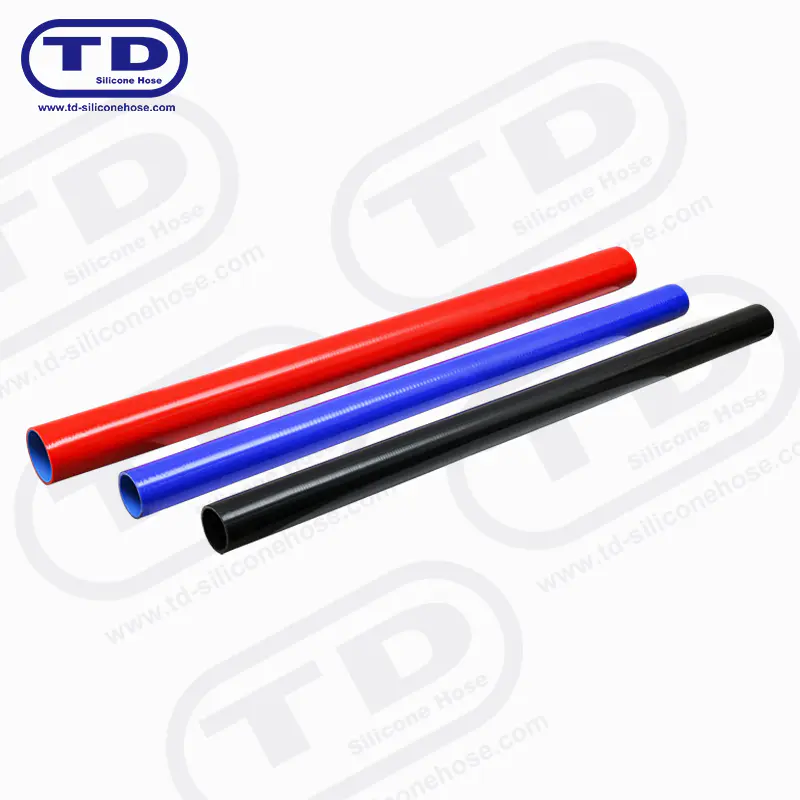
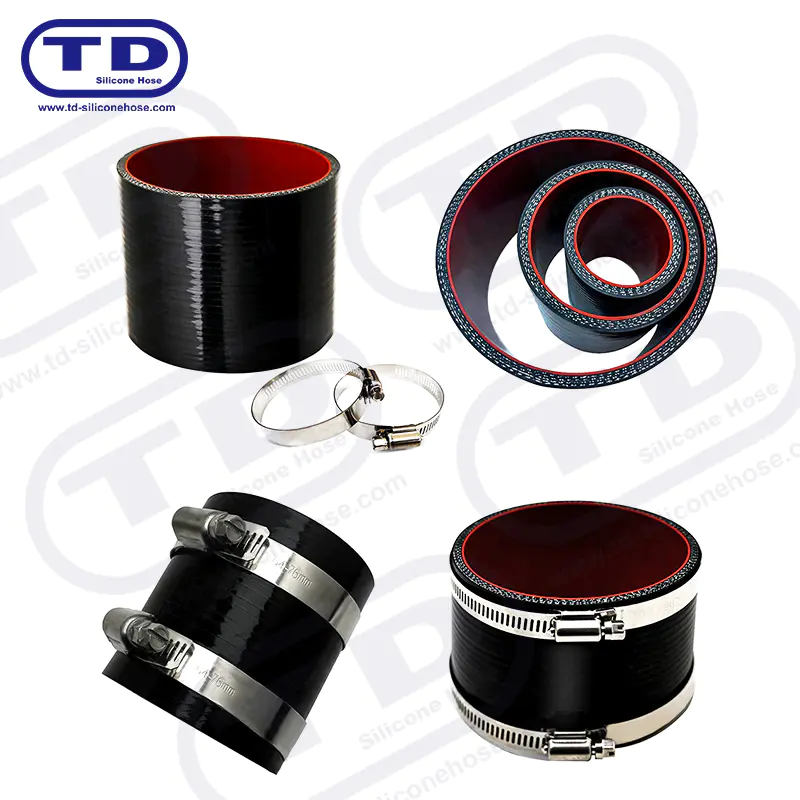
- Straight couplers — sold in lengths of roughly 300mm to 1,000mm and cut to the exact length needed at installation; used for intercooler piping, turbo outlets, and radiator hose replacements
- Elbow couplers (45°, 90°, and 135°) — preformed angles that replace complex OEM-molded bends without custom fabrication
- Reducer couplers — connect two pipes of different diameters, commonly used when upgrading to a larger turbo or intercooler
- Hump hoses — join two pipes of the same diameter in a short, flexible section that absorbs vibration and minor misalignment
Bore size, wall thickness, and reinforcement level should match the application, not just the pipe diameter. The table below outlines typical ranges for automotive use.
| Bore Size (ID) | Typical Construction | Common Application |
|---|---|---|
| 25mm - 38mm (1" - 1.5") | 3-ply reinforced, ~4mm wall | Vacuum lines, PCV routing, small turbo inlets |
| 45mm - 63mm (1.75" - 2.5") | 4-ply reinforced, ~4.5mm to 5mm wall | Turbo inlet/outlet, mid-size intercooler piping |
| 70mm - 89mm (2.75" - 3.5") | 4-ply reinforced, ~5mm wall | Large intercooler piping, high-boost builds |
| 95mm - 102mm+ (3.75" - 4"+) | 4-ply reinforced, ~5mm wall | Big-turbo and diesel intercooler systems |
Reinforcement layer count matters as much as bore size. Most universal silicone hoses use 3-ply to 4-ply polyester or aramid fabric sandwiched between layers of silicone, giving them a burst pressure typically between 150 PSI and 300 PSI — far beyond the 15 to 25 PSI a standard cooling system ever sees, which is why silicone becomes the default option once turbo boost enters the picture. Vendors sometimes count silicone layers instead of reinforcement layers when labeling "ply," so it's worth confirming wall thickness and reinforcement material directly if burst pressure matters for your build.
How to Install a Universal Silicone Hose Correctly
A correctly installed rubber hose will outlast a silicone hose that's installed poorly, so technique matters as much as material choice.
Choosing the Right Clamp
T-bolt clamps are the correct choice for silicone hoses, especially on turbo and intercooler piping under boost. Standard worm-drive (Jubilee-style) clamps concentrate their clamping force on a narrow band, which can cut into silicone's comparatively soft wall under vibration over time. T-bolt clamps distribute pressure evenly around the full circumference, sealing the joint without weakening the hose.
Getting the Fit Right
- Cut straight hoses to length with a sharp blade for a clean, square edge
- Overlap the hose onto each pipe by at least 25mm (1 inch) on each side for a secure seal
- Tighten clamps to roughly 4 to 6 Nm; overtightening crushes the hose wall and creates a weak point that fails under boost
- Route hoses away from sharp edges, exhaust surfaces, and moving parts, and add a heat shield or specify a higher-temperature grade near exhaust components
- Recheck clamp tightness after the first 100 to 200 km of driving, since a new hose can settle slightly as it seats
Silicone or Rubber? A Quick Decision Guide
Matching the hose to the specific job matters more than picking one "best" material for the whole vehicle. Use the guide below as a starting point.
| Application | Recommended Material | Why |
|---|---|---|
| Turbo or intercooler piping | Silicone | Heat and boost pressure exceed rubber's rating |
| Coolant/radiator hose, stock or moderate climate | Rubber (EPDM) | Adequate temperature range at lower cost |
| Coolant/radiator hose, performance or hot climate | Silicone | Resists heat-cycling failure and hardening over years |
| Fuel lines, oil coolers, PCV lines | Rubber (NBR) or fluorosilicone | Standard silicone swells on contact with fuel or oil |
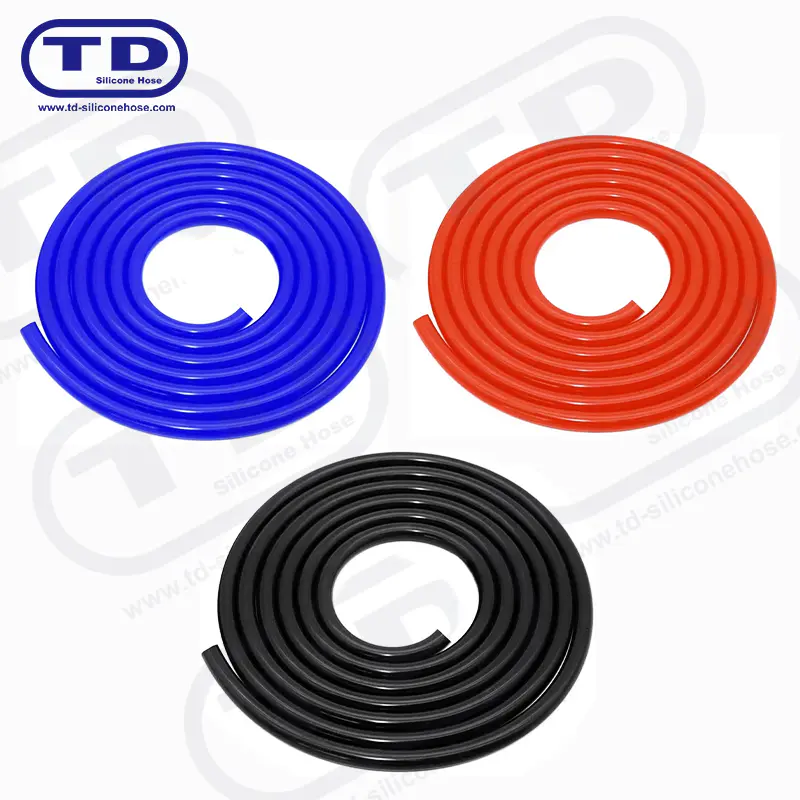
| Vacuum lines | Either | Silicone lasts longer; rubber is adequate at stock boost levels |
| Marine or outdoor equipment | Silicone | Superior UV and ozone resistance in harsh environments |
| Budget or short-term repair | Rubber | Lower upfront cost when long-term service life isn't a priority |
As a rule of thumb, if the hose sits near a turbocharger, runs at sustained boost, or needs to survive a decade outdoors, silicone is worth the extra cost. If it carries fuel or oil, or it's a stock, low-boost application on a tight budget, rubber remains the practical and reliable choice.
Our Product //
Ningbo Tiandai Auto Parts Co., Ltd. All Rights Reserved. ALL RESERVED.
Wholesale Automotive Silicone Hose Manufacturers
