

 English
 中文简体
中文简体 русский
 Español
 عربى
عربى
Submit feedback
How to Choose the Correct Diameter for Your Silicone Hump Hose
Industry news-Content
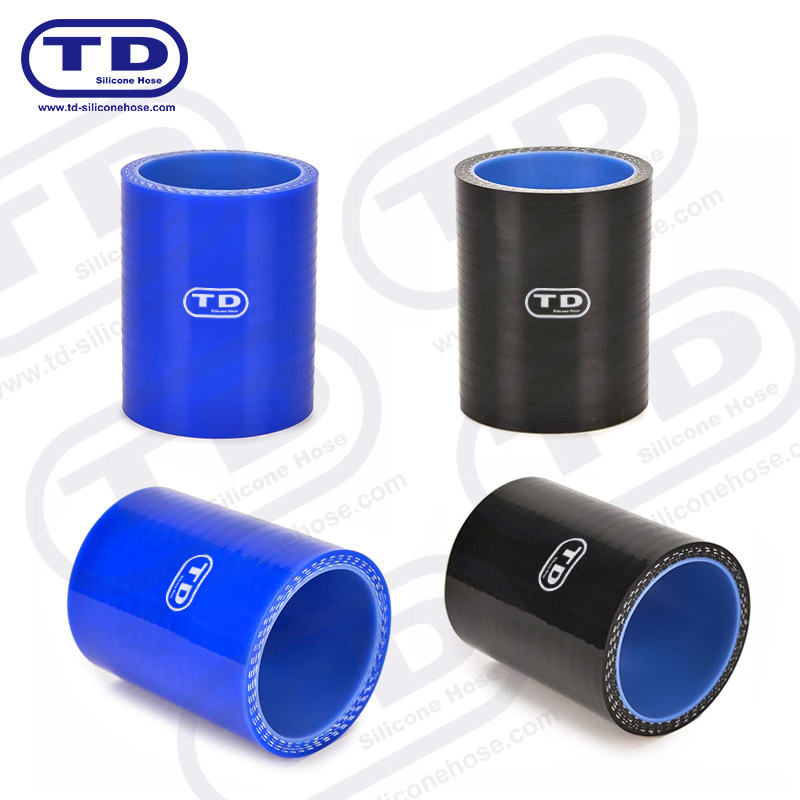
In the high-stakes world of automotive engineering, industrial fluid transfer, and turbocharger systems, the smallest details often yield the biggest results. When you are building a custom intake system or repairing a heavy-duty cooling line, the Silicone Hump Hose—also known as a Reinforced Silicone Straight Hump Coupler—is a vital component.
Unlike standard straight couplers, the "hump" design allows for expansion, contraction, and, most importantly, the absorption of vibration between two pipes. However, all the engineering benefits of high-grade silicone are lost if the diameter is incorrect. A loose fit leads to boost leaks and pressure loss, while a fit that is too tight can stress the silicone material, leading to premature failure.
Understanding the Basics: Why Diameter Matters
Before picking up a measuring tool, it is crucial to understand that in the world of Reinforced Silicone Straight Hump Couplers, we almost always talk about the Inner Diameter (ID).
The hose is designed to slide over a pipe or a throttle body. Therefore, the inner diameter of the hose must correspond to the Outer Diameter (OD) of the pipe you are connecting. If your aluminum intake pipe has an OD of 3 inches, you need a Silicone Hump Hose with a 3-inch ID.
The Danger of a "Near-Miss" Fit
Silicone is flexible, but it is not infinitely stretchy. Attempting to force a 2.75-inch hose onto a 3-inch pipe will over-stretch the fabric reinforcement layers. This compromise in structural integrity can lead to a "blowout" once the system reaches peak operating pressure. Conversely, using a hose that is too large and relying solely on a T-bolt clamp to "crush" it down creates gaps in the seal, leading to persistent leaks.
Step 1: Accurate Measurement Techniques
To find the right fit, you need precision. Here is how the professionals do it.
Measure the Pipe, Not the Old Hose
Never use your old, worn-out rubber or silicone hose as a measurement reference. Over time, heat and pressure cycles can cause old hoses to swell or deform. Always measure the metal or plastic pipe that the hose will be attached to.
Use Digital Calipers
For the most accurate results, use a digital caliper to measure the OD of the pipe. Measure in two or three different spots around the circumference to ensure the pipe is perfectly round. If you are using a soft tape measure, you can measure the circumference and divide by $\pi$ (approximately 3.14) to find the diameter, but calipers are far more reliable for Silicone Hump Hose selection.
Account for the "Bead Roll"
High-quality intake pipes often have a "bead roll"—a small raised lip at the end of the pipe designed to prevent the hose from slipping off under pressure. When measuring, measure the main body of the pipe, not the peak of the bead roll. The Reinforced Silicone Straight Hump Coupler is designed to stretch slightly to pass over the bead but sit snugly on the pipe's main surface.
Evaluating the Reinforcement Layers
When selecting your diameter, you must also consider the wall thickness, which is determined by the "Ply" or the number of reinforcement layers.
3-Ply vs. 4-Ply vs. 5-Ply
As the diameter of a Silicone Hump Hose increases, the surface area exposed to internal pressure also increases.
- Small Diameters (1" to 2"): Usually available in 3-ply or 4-ply.
- Standard Turbo Applications (2.5" to 4"): Typically require a 4-ply reinforcement to handle boost pressures.
- Large Industrial Applications (5"+): Often utilize 5-ply reinforcement for maximum wall strength.
A thicker wall means the hose is less likely to "balloon" under pressure, but it also makes the hose slightly less flexible. For a Reinforced Silicone Straight Hump Coupler, the 4-ply construction is generally considered the "sweet spot" for balancing strength with the ability to absorb engine vibration.
Determining the Proper Length and Hump Offset
Diameter is the most critical factor, but length and the position of the hump also play roles in a successful installation.
Total Length
Standard hump hoses are usually 3 to 6 inches long. Ensure that you have at least 1 to 1.5 inches of "clamping surface" on either side of the hump. If the pipe does not extend far enough into the hose, the clamp will sit too close to the hump, which can cause the hose to slip off when the engine torques.
The Multi-Hump Option
In cases where there is significant misalignment between two pipes, a single-hump Silicone Hump Hose might not be enough. Double-hump couplers provide even greater flexibility and are often used in heavy-duty truck air-to-air intercooler systems where the cab and engine move independently.
Installation Best Practices for a Perfect Seal
Once you have chosen the correct diameter Reinforced Silicone Straight Hump Coupler, the installation determines its lifespan.
Clean the Surfaces
Use a quick-drying cleaner (like isopropyl alcohol) to remove any oil, grease, or dirt from the pipe ends and the inside of the silicone hose. A clean surface provides better friction, which helps the hose stay put under high pressure.
Choose the Right Clamps
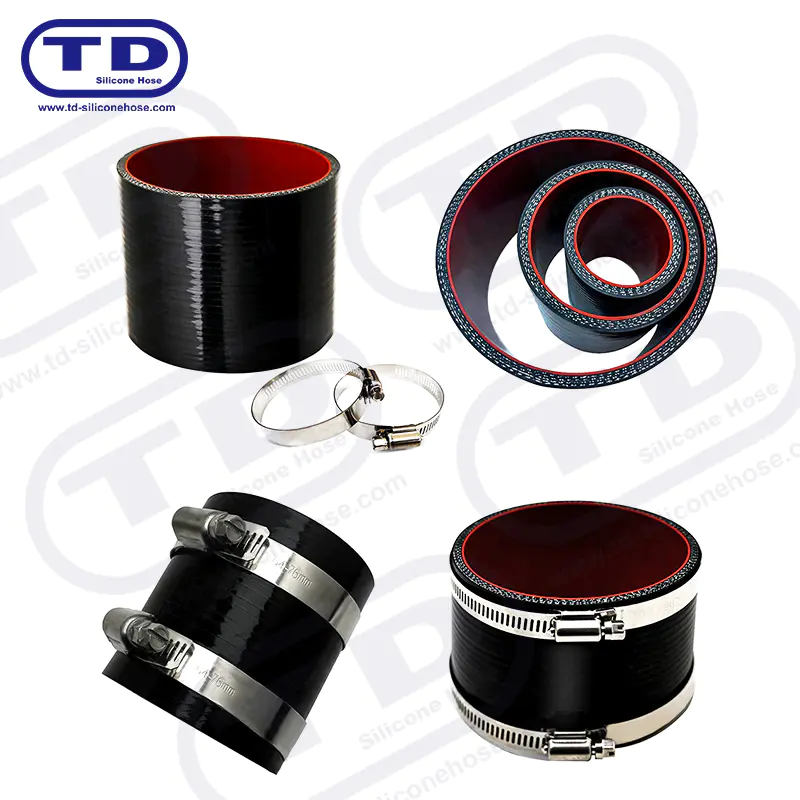
For a Silicone Hump Hose, standard worm-gear clamps are often insufficient and can cut into the silicone. T-Bolt Clamps are highly recommended. They provide a 360-degree uniform seal and are designed specifically for high-pressure silicone applications.
Lubrication (Use Sparingly)
If the fit is very snug, a tiny drop of soapy water can help the hose slide onto the pipe. Avoid using petroleum-based lubricants (like WD-40 or grease), as these can degrade the silicone material over time and cause the hose to slip off unexpectedly.
Common Sizing Mistakes to Avoid
- Ordering by Outer Diameter (OD): Always remember that hoses are sold by ID. If you buy a 3-inch OD hose, it will be too small for a 3-inch pipe.
- Ignoring Metric vs. Imperial: Some European and Japanese systems use metric piping (e.g., 70mm or 80mm). While a 3-inch hose (76mm) might seem "close enough" for an 80mm pipe, it is not. Always stick to the exact measurement.
- Underestimating Heat Expansion: In extremely high-temperature environments, both the metal pipe and the silicone will expand. Quality Reinforced Silicone Straight Hump Couplers are designed to handle this, provided the initial fit is correct.
The Right Fit for the Long Haul
Choosing the correct diameter for your Silicone Hump Hose is the foundation of a reliable system. By taking the time to measure your pipes with calipers, selecting a high-quality Reinforced Silicone Straight Hump Coupler with the appropriate ply rating, and using the correct clamping force, you ensure that your engine or industrial machinery operates at peak efficiency.
A well-fitted hump hose doesn't just prevent leaks; it protects your entire drivetrain by absorbing the stresses of movement and vibration. Whether you are a professional builder or a maintenance engineer, precision in sizing is the ultimate key to performance.
Our Product //
Ningbo Tiandai Auto Parts Co., Ltd. All Rights Reserved. ALL RESERVED.
Wholesale Automotive Silicone Hose Manufacturers
