

 English
 中文简体
中文简体 русский
 Español
 عربى
عربى
Submit feedback
How to Install Automotive Silicone Hose: Step-by-Step
Industry news-Content
- 1 How to Install Automotive Silicone Hose: The Direct Answer
- 2 Why Upgrade to Automotive Silicone Hose in the First Place
- 3 Tools and Materials You Need Before Starting
- 4 Step-by-Step: How to Install Automotive Silicone Hose
- 4.1 Step 1: Allow the Engine to Cool Completely
- 4.2 Step 2: Remove the Old Hose
- 4.3 Step 3: Clean and Inspect the Fittings
- 4.4 Step 4: Measure and Cut Universal Silicone Hose (If Applicable)
- 4.5 Step 5: Slide Clamps onto the Hose Before Installation
- 4.6 Step 6: Seat the Silicone Hose onto the Fitting
- 4.7 Step 7: Position and Tighten the Hose Clamps
- 4.8 Step 8: Refill Fluids and Pressure Test
- 5 Choosing the Right Clamp for Your Auto Silicone Hose
- 6 How to Size a Universal Automotive Pure Silicone Hose Correctly
- 7 Common Installation Mistakes and How to Avoid Them
- 8 Silicone Hose Installation for Specific Automotive Applications
- 9 Post-Installation Checks and Long-Term Maintenance
How to Install Automotive Silicone Hose: The Direct Answer
Installing an automotive silicone hose involves four core steps: remove the old hose, clean the fitting or barb, slide the new silicone hose into position, and secure it with the appropriate clamp torqued to spec. For most vehicle silicone hose replacements — including coolant hoses, intercooler pipes, and intake hoses — no special tools beyond basic hand tools and a clamp driver are required. The process typically takes 15–60 minutes depending on hose location and vehicle layout.
Unlike rubber hoses, auto silicone hoses do not bond to fittings over time, which makes both installation and future removal significantly easier. However, their smooth inner surface requires proper clamp selection and correct torque to prevent leaks — especially under high-pressure applications like turbocharged intercooler systems operating at 15–30 PSI.
Why Upgrade to Automotive Silicone Hose in the First Place
Before diving into installation, it helps to understand why vehicle silicone hose upgrades are worthwhile. Silicone outperforms standard EPDM rubber in virtually every measurable category relevant to automotive use:
| Property | Standard Rubber Hose | Auto Silicone Hose |
|---|---|---|
| Temperature Range | -40°F to 257°F (-40°C to 125°C) | -65°F to 392°F (-54°C to 200°C) |
| Lifespan | 3–5 years typical | 10–15+ years |
| Pressure Resistance | Up to ~50 PSI (standard) | Up to 100–150 PSI (3-ply) |
| Ozone/UV Resistance | Moderate | Excellent |
| Cracking/Hardening Over Time | Common after 4–6 years | Minimal |
| Coolant/Oil Resistance | Good | Excellent (pure silicone) |
Universal automotive pure silicone hoses are particularly valuable for modified or high-performance engines where coolant temperatures and boost pressures exceed OEM rubber hose ratings. A universal automotive pure silicone hose can be cut to length, making it adaptable across a wide range of vehicle models and engine bays.
Tools and Materials You Need Before Starting
Gathering the right tools before beginning saves time and prevents incomplete installations. Here is what you need for a standard vehicle silicone hose installation:
- New auto silicone hose — correctly sized inner diameter (ID) to match the fitting or barb. Common IDs range from 10mm to 102mm (3/8" to 4").
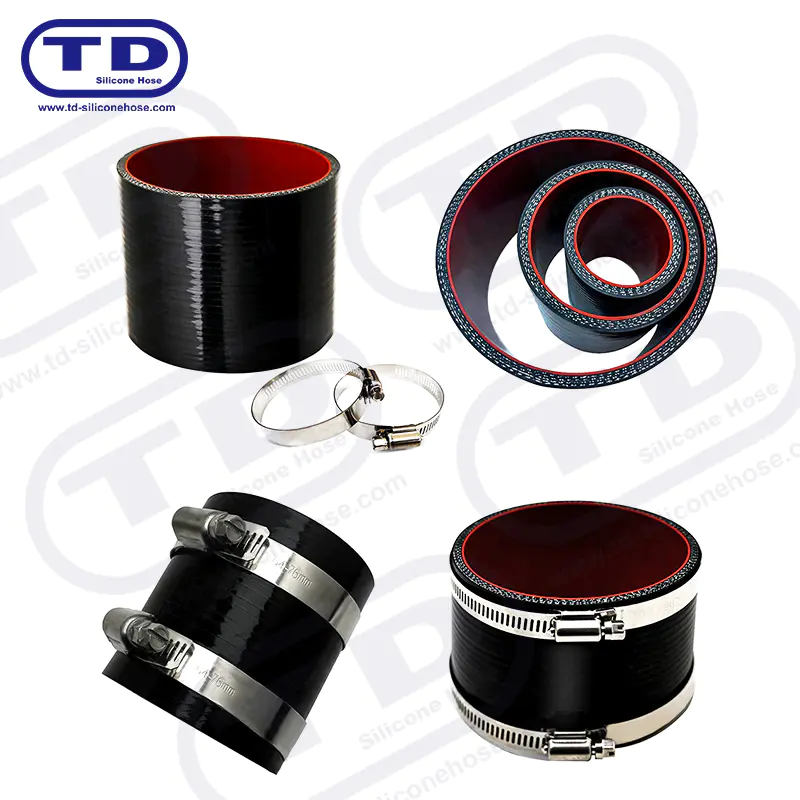
- Hose clamps — stainless steel T-bolt clamps for high-pressure applications (intercoolers, turbos); worm-gear clamps for coolant hoses at lower pressures.
- Screwdriver or nut driver — for worm-gear clamp tightening (typically a 5/16" hex driver).
- Socket wrench (8mm or 10mm) — for T-bolt clamp nuts.
- Utility knife or hose cutter — for trimming universal automotive pure silicone hose to the correct length.
- Wire brush or sandpaper (220-grit) — to clean rust or residue from metal fittings.
- Clean rags and isopropyl alcohol — for degreasing fittings before installation.
- Coolant catch pan — if replacing coolant hoses, to collect draining fluid.
- Torque wrench — recommended for T-bolt clamps on boosted applications to avoid over-tightening.
Do not use silicone grease or petroleum-based lubricants on the fitting during installation. These can cause the hose to slip under pressure. A small amount of fresh coolant or plain water is acceptable as a fitment lubricant for coolant hoses only.
Step-by-Step: How to Install Automotive Silicone Hose
The following steps apply to the most common auto silicone hose installation scenarios: coolant hoses, intercooler pipes, and intake hoses. Adjust based on your specific application.
Step 1: Allow the Engine to Cool Completely
Never work on coolant hoses with a hot engine. Coolant systems operate at 15–18 PSI and temperatures up to 230°F (110°C). Allow at least 60–90 minutes after engine shutdown before opening any hose connections. For intercooler and intake hoses, the engine can be cooler after just 20–30 minutes, but it is safest to wait for full cool-down.
Step 2: Remove the Old Hose
Loosen and slide back the existing hose clamps. Twist the old hose back and forth while pulling to break any adhesion to the fitting. If it is stuck, use a hose removal pick or flat plastic pry tool — avoid metal tools that can score the fitting. For coolant hoses, position your drain pan before pulling the hose free.
Step 3: Clean and Inspect the Fittings
Use a wire brush to remove rust, calcium deposits, or old sealant from the metal barb or fitting. Wipe thoroughly with isopropyl alcohol and a clean rag. A clean, smooth fitting is critical — rough or corroded surfaces are the leading cause of silicone hose leaks after installation. Inspect the fitting for cracks, deep pitting, or deformation. Replace damaged fittings before proceeding.
Step 4: Measure and Cut Universal Silicone Hose (If Applicable)
If you are using a universal automotive pure silicone hose, measure the required length with the hose routed in its final position, allowing for any bends. Add 5–10mm of overlap on each end for fitting insertion. Use a sharp utility knife or hose cutter to make a clean, perpendicular cut. A diagonal or ragged cut will create an uneven sealing surface and increase leak risk.
Step 5: Slide Clamps onto the Hose Before Installation
This step is frequently forgotten. Always thread your hose clamps onto the silicone hose before pushing it onto the fitting. Once the hose is seated on the fitting, it is difficult or impossible to slide a clamp over it. Position each clamp approximately 10–15mm from the end of the hose.
Step 6: Seat the Silicone Hose onto the Fitting
Push the auto silicone hose firmly onto the barb or fitting with a twisting motion. The hose should slide over the barb fully — the end of the hose should sit at least 20–25mm past the first barb ridge, or to the depth stop on molded fittings. If resistance is high, apply a small amount of water or fresh coolant to the fitting exterior only — never to the inside of the hose.
Step 7: Position and Tighten the Hose Clamps
Slide the pre-installed clamps into their final position — centered over the barb ridge where possible. Tighten according to the clamp type and application:
- Worm-gear clamps (coolant hoses): Tighten until snug, then an additional quarter turn. Typical torque is 2–3 Nm (18–26 in-lbs). Do not overtighten — this cuts into the silicone and causes failure.
- T-bolt clamps (intercooler/turbo hoses): Torque to 4–6 Nm (35–53 in-lbs) for standard applications. Consult the clamp manufacturer's specification for high-boost setups above 20 PSI.
- Spring clamps (OEM replacement): Use pliers to compress and seat — these are self-tensioning and require no torque setting.
Step 8: Refill Fluids and Pressure Test
For coolant hose replacements, refill the cooling system with the correct coolant mixture (typically 50/50 ethylene glycol and distilled water). Start the engine and let it reach operating temperature. Inspect all newly installed silicone hoses for leaks at idle, then again after a 10–15 minute drive cycle. Re-torque clamps after the first heat cycle, as silicone compresses slightly during initial thermal expansion.
Choosing the Right Clamp for Your Auto Silicone Hose
Clamp selection is one of the most important — and most overlooked — aspects of vehicle silicone hose installation. Using the wrong clamp type is a primary cause of post-installation leaks.
| Clamp Type | Best For | Pressure Rating | Notes |
|---|---|---|---|
| Worm-Gear (Screw) Clamp | Coolant, heater hoses | Up to ~30 PSI | Use stainless steel only; avoid zinc-plated in wet environments |
| T-Bolt Clamp | Intercooler, turbo, intake | Up to 150+ PSI | 360° even clamping force; preferred for boosted engines |
| Spring (Constant-Tension) Clamp | OEM coolant hose replacement | Up to ~25 PSI | Self-adjusting; compensates for thermal expansion automatically |
| Ear Clamp (Stepless) | Heater hoses, low-pressure lines | Up to ~20 PSI | Requires special crimping pliers; smooth sealing surface |
For any vehicle silicone hose on a turbocharged or supercharged engine, always use stainless steel T-bolt clamps regardless of system pressure. The even 360-degree clamping force they provide is far superior to worm-gear designs, which apply uneven pressure that can cause hose deformation over time.
How to Size a Universal Automotive Pure Silicone Hose Correctly
Universal automotive pure silicone hose is sold by inner diameter (ID) and must match the outer diameter (OD) of the fitting or pipe it connects to. Choosing the wrong size is the single most preventable installation error.
Measuring the Correct ID
Measure the outer diameter of the metal or plastic fitting using vernier calipers. The silicone hose ID should match the fitting OD within ±1mm for a secure, leak-free fit. A hose that is 2mm or more undersize will be extremely difficult to install and may split. A hose that is 2mm or more oversize will not seal properly even when clamped.
Straight vs. Elbow vs. Reducer Silicone Hose
Universal automotive pure silicone hoses are available in several configurations to accommodate different routing needs:
- Straight hose: Used for direct, linear connections. Available in lengths from 100mm to 1000mm. Can be cut to any length needed.
- 45° and 90° elbow hose: Used when routing requires a direction change. Avoids tight bends that would kink a straight hose and restrict flow.
- Reducer hose: Connects two fittings of different diameters — for example, a 57mm pipe to a 63mm pipe. Common in custom intercooler piping builds.
- 180° U-hose: Used for connecting two parallel pipes running in the same direction, such as in radiator overflow systems.
Ply Count and Wall Thickness
Universal automotive pure silicone hoses are available in 2-ply, 3-ply, and 4-ply construction, with polyester or aramid fiber reinforcement between layers. 3-ply silicone hose with a 5–6mm wall thickness is the standard recommendation for turbocharged intercooler and boost pipe applications. For naturally aspirated coolant systems, 2-ply with a 4mm wall is sufficient and more flexible.
Common Installation Mistakes and How to Avoid Them
Even experienced DIY installers make errors when fitting vehicle silicone hose for the first time. The following are the most frequent problems and their solutions:
- Forgetting to pre-install clamps: Once the hose is seated on a barb, it is nearly impossible to slide a clamp over it. Always install clamps before mounting the hose.
- Over-tightening worm-gear clamps: Excessive torque cuts into the silicone wall, creating stress fractures that lead to hose failure within weeks. Tighten to the recommended 2–3 Nm and stop.
- Using silicone grease as lubricant: Silicone lubricant reduces friction between the hose and clamp, preventing proper clamping force. Use water or coolant only.
- Skipping the re-torque after the first heat cycle: Silicone compresses by 5–10% during the first thermal expansion cycle. Clamps that were properly torqued initially may feel loose after the first drive. Always re-check after the first use.
- Installing over corroded or pitted fittings: Even the best auto silicone hose will leak if the mating surface is rough or corroded. Clean or replace fittings before installation.
- Using the wrong hose diameter: A hose that is too large in ID cannot seal properly regardless of clamp force. Measure fittings with calipers, not by eye.
Silicone Hose Installation for Specific Automotive Applications
Different vehicle systems have different installation considerations when upgrading to auto silicone hose. Here is what to know for the most common use cases:
Coolant and Radiator Hoses
This is the most common vehicle silicone hose upgrade. The replacement process requires draining the cooling system first. Always flush the cooling system with distilled water before refilling with fresh coolant when replacing hoses. Use spring clamps or worm-gear clamps rated for at least 25 PSI. After installation, bleed the cooling system of air pockets according to your vehicle manufacturer's procedure to prevent overheating.
Intercooler Pipes and Boost Hoses
On turbocharged vehicles, intercooler silicone hoses connect the turbocharger to the intercooler and intercooler to the intake manifold. Use only T-bolt clamps on boost pipes operating above 10 PSI. Inspect all couplers and elbow hoses for correct fitment before a boost leak test — a misfitted boost hose can cause sudden engine detonation or power loss.
Air Intake and Cold Air Intake Hoses
Universal automotive pure silicone hose is widely used in custom cold air intake builds. For naturally aspirated applications, any 2-ply silicone coupler with matching ID will work well, as intake system pressures are minimal (below 5 PSI vacuum). Focus on routing the hose away from heat sources and ensuring the mass airflow sensor (MAF) port is not obstructed during installation.
Heater Hoses
Heater hoses carry hot coolant from the engine to the cabin heater core. They operate at similar temperatures and pressures to radiator hoses. Use 2-ply silicone hose with a minimum 125°C (257°F) continuous temperature rating, and ensure the ID matches the heater core inlet and outlet barbs precisely — typically 16mm, 19mm, or 25mm depending on the vehicle.
Post-Installation Checks and Long-Term Maintenance
Once your auto silicone hose installation is complete, a few follow-up steps ensure long-term reliability:
- Visual inspection at 100 miles (160 km): Check for any signs of weeping, discoloration, or hose movement indicating clamp loosening.
- Re-torque clamps at first service interval: Especially important for coolant and boost hoses after the first 500–1,000 miles of use.
- Annual visual check: Look for cuts, abrasion damage from nearby components, or softening near exhaust-adjacent areas. Silicone resists heat well, but continuous contact with surfaces above 200°C (392°F) will degrade it over time.
- Boost leak test after intercooler hose installation: Use a boost leak tester plugged into the intake system to pressurize to 15–20 PSI. Listen for hissing at each silicone coupler joint.
- Avoid petroleum-based cleaners on silicone hose surfaces: Use mild soap and water or a dedicated silicone-safe cleaner to clean hose exteriors during routine engine bay detailing.
A properly installed vehicle silicone hose requires virtually no maintenance and should outlast the vehicle itself when correctly sized, clamped, and routed away from direct heat sources. The initial investment in quality universal automotive pure silicone hose and stainless steel clamps pays for itself many times over in avoided replacements and improved reliability.
Our Product //
Ningbo Tiandai Auto Parts Co., Ltd. All Rights Reserved. ALL RESERVED.
Wholesale Automotive Silicone Hose Manufacturers
