

 English
 中文简体
中文简体 русский
 Español
 عربى
عربى
Submit feedback
Silicone vs Rubber Hoses: Performance & Value Guide
Industry news-Content
- 1 Core Material Differences: Silicone vs Rubber
- 2 Silicone vs Rubber Hoses: Full Performance Comparison
- 3 What Is a Universal Silicone Hose and Who Needs One?
- 4 Where Silicone Hoses Excel: Top Application Scenarios
- 5 Where Rubber Hoses Still Make Sense
- 6 Ply Count and Construction: Not All Silicone Hoses Are Equal
- 7 Installation Tips for Universal Silicone Hoses
- 8 Long-Term Value: Does the Price Premium Pay Off?
When comparing silicone vs rubber hoses, the direct answer is: silicone hoses last longer, handle more extreme temperatures, and resist aging far better than standard rubber hoses — but they cost 2–4× more upfront. For high-performance engines, turbocharged systems, or any application where heat and longevity matter, silicone is the clear winner. For low-stress, budget-sensitive applications, rubber remains a practical choice.
Core Material Differences: Silicone vs Rubber
Silicone and rubber are fundamentally different materials, not just grades of the same thing. Understanding what each is made of explains why they perform so differently under real-world conditions.
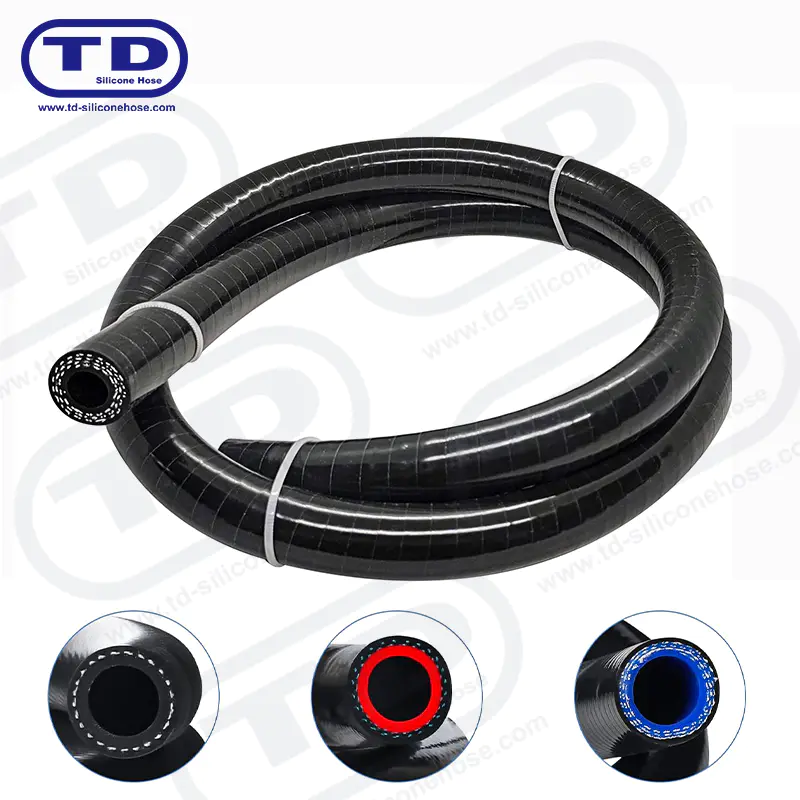
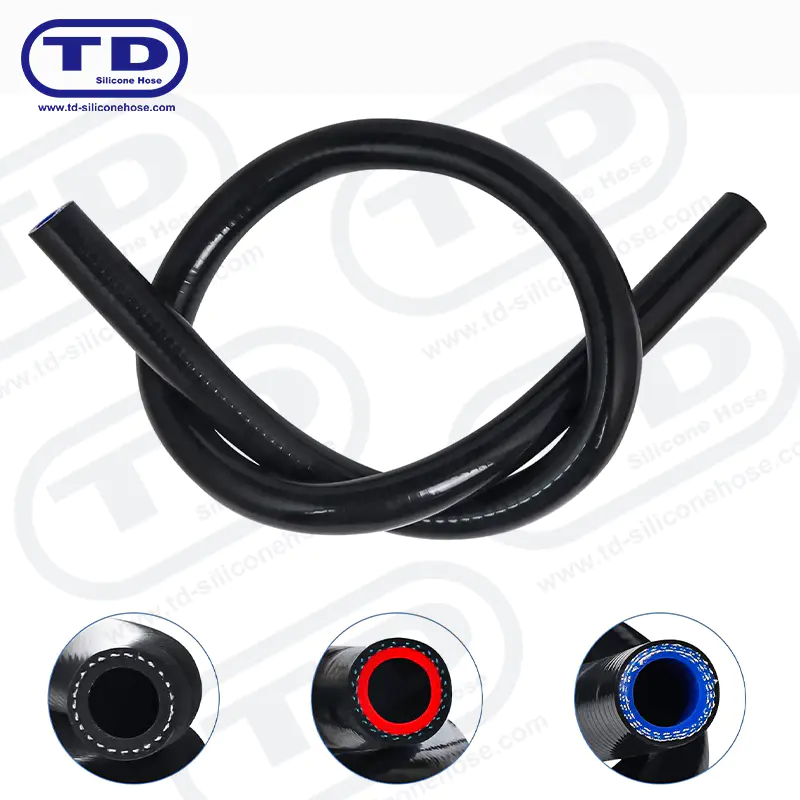
Silicone hoses are made from a synthetic polymer — polydimethylsiloxane — reinforced with polyester or aramid fabric layers. This structure gives them flexibility at both high and low temperature extremes.
Rubber hoses (typically EPDM — Ethylene Propylene Diene Monomer) are petroleum-based elastomers, widely used in OEM (original equipment manufacturer) automotive systems due to their low cost and adequate performance under standard conditions.
Temperature Tolerance: The Single Biggest Difference
This is where silicone decisively outperforms rubber:
- Standard EPDM rubber hoses: rated for -40°F to 257°F (-40°C to 125°C)
- Silicone hoses: rated for -65°F to 350°F (-54°C to 177°C), with some high-grade variants tolerating brief spikes up to 500°F (260°C)
In a turbocharged engine bay where intake air temperatures routinely exceed 200°F, a rubber hose begins to soften, blister, and crack over time. A silicone hose maintains its shape and integrity under the same conditions for years.
Silicone vs Rubber Hoses: Full Performance Comparison
| Property | Silicone Hose | EPDM Rubber Hose |
|---|---|---|
| Max Continuous Temp | 350°F (177°C) | 257°F (125°C) |
| Min Temperature | -65°F (-54°C) | -40°F (-40°C) |
| Typical Service Life | 8–15+ years | 3–7 years |
| UV / Ozone Resistance | Excellent | Moderate (degrades over time) |
| Pressure Resistance | High (reinforced layers) | Moderate |
| Oil / Fuel Resistance | Poor (not for fuel lines) | Good (EPDM for coolant; NBR for fuel) |
| Flexibility at Low Temp | Remains flexible | Stiffens / can crack |
| Typical Price (per foot) | $5–$20 | $1–$6 |
| Color Options | Wide (red, blue, black, etc.) | Mostly black |
What Is a Universal Silicone Hose and Who Needs One?
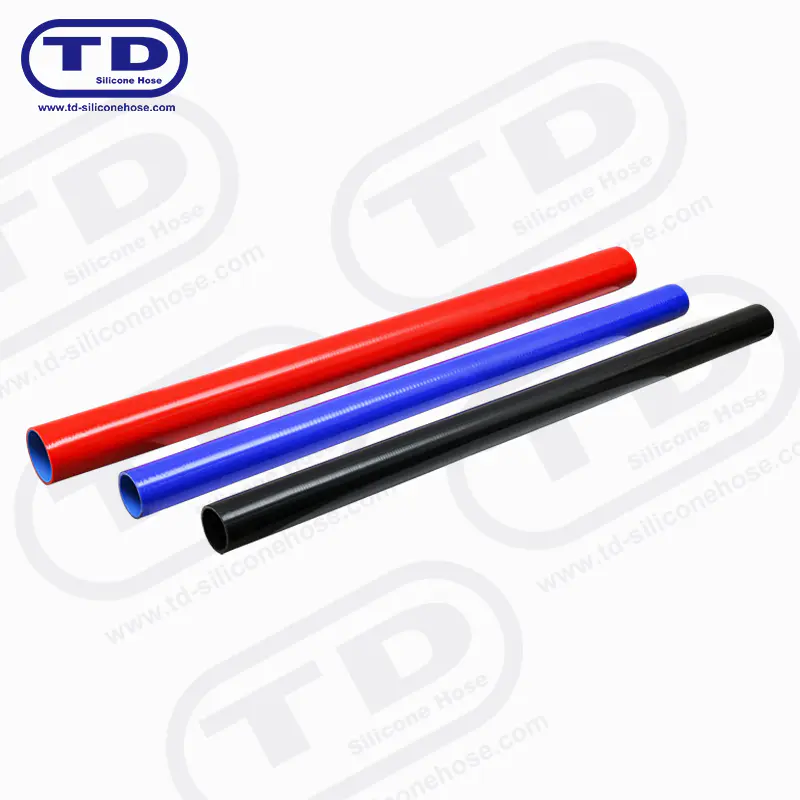
A universal silicone hose is a non-vehicle-specific silicone hose designed to fit a wide range of applications through cutting, clamping, or coupling. Unlike OEM-fit hoses made for a specific make and model, universal hoses are sold by inner diameter (ID), wall thickness, and shape — straight, elbow (45°, 90°, 135°), reducer, or coupler.
Universal silicone hoses are the go-to solution for:
- Custom engine builds where no OEM hose exists for the specific configuration
- Turbocharger intercooler piping — 90° and 45° elbows are extremely common in boost systems
- Radiator and coolant system upgrades on modified or high-mileage vehicles
- Industrial equipment where standard rubber fails due to heat cycling
- DIY fabricators and racers who need consistent, reliable components off the shelf
How to Size a Universal Silicone Hose Correctly
Getting the right size is critical — a hose that's even 1–2mm too large in inner diameter can work loose under boost pressure, while one that's too small will restrict airflow. Follow this process:
- Measure the outer diameter (OD) of the pipe or fitting the hose will connect to — not the hose itself.
- Match that OD to the hose's inner diameter (ID). A snug fit with a clamp is the goal.
- For boost or pressure applications, check the hose's maximum PSI rating — quality 3-ply silicone hoses handle 50–100 PSI continuously.
- Choose the right shape: straight runs use straight hoses; tight routing bends need 45° or 90° elbows to prevent kinking.
- Confirm wall thickness — 4–5mm walls are standard for automotive use; thinner walls suit low-pressure applications only.
Where Silicone Hoses Excel: Top Application Scenarios
Turbocharged and Supercharged Engines
This is the strongest case for silicone. Forced induction systems expose intake hoses to both high boost pressure (commonly 10–25 PSI in modified applications) and elevated temperatures. Rubber hoses in these systems collapse, soften, or blow off clamps. A properly sized silicone hose with a quality clamp eliminates those failure modes almost entirely. Many motorsport teams replace all rubber intake and intercooler hoses with silicone as a preventive maintenance standard, not just a performance upgrade.
Coolant and Radiator Systems
Coolant hoses experience continuous heat cycling — cold at startup, hot at operating temperature, then cold again. This cycling causes rubber to harden and crack from the inside out, often invisibly until a failure occurs on the road. Silicone maintains its elasticity through hundreds of thousands of heat cycles without hardening. For vehicles with over 80,000 miles, switching to silicone coolant hoses is one of the most cost-effective reliability upgrades available.
Air Intake and Vacuum Lines
Silicone is ideal for aftermarket cold air intake systems, where the hose routes outside the hot engine bay to draw in cooler ambient air. The combination of UV exposure, vibration, and occasional high heat makes rubber less durable in this role. A silicone intake hose paired with a performance air filter can reduce intake air temperature by 15–30°F compared to a degraded rubber equivalent.
Where Rubber Hoses Still Make Sense
Silicone is not always the right call. There are applications where rubber genuinely performs better or where the cost premium of silicone is not justified:
- Fuel lines: Silicone is not compatible with gasoline, diesel, or ethanol. NBR (nitrile butadiene rubber) or fluorosilicone hoses are required for direct fuel contact. Using standard silicone as a fuel line will cause it to swell and deteriorate rapidly.
- OEM replacements on stock vehicles: A naturally aspirated daily driver running at normal temperatures rarely stresses rubber hoses enough to justify the 3–4× cost of silicone equivalents.
- High-abrasion environments: Standard silicone has lower abrasion resistance than rubber. Where a hose rubs against metal brackets or sharp edges, rubber holds up better unless the silicone is specifically armored.
- Budget fleet vehicles: For high-turnover commercial fleets where lowest upfront parts cost is the priority, EPDM rubber hoses remain the standard industry choice.
Ply Count and Construction: Not All Silicone Hoses Are Equal
The quality of a silicone hose depends heavily on how many reinforcement layers — or "plies" — are embedded within the silicone walls. More plies mean greater burst pressure resistance and dimensional stability under heat.
| Ply Count | Typical Burst Pressure | Best For |
|---|---|---|
| 1-ply | ~50 PSI | Low-pressure coolant, vacuum lines |
| 2-ply | ~100 PSI | Street performance, mild boost |
| 3-ply | ~145–175 PSI | High-boost turbo, intercooler piping |
| 4-ply+ | 200+ PSI | Race engines, extreme-duty industrial |
For most street-driven turbocharged vehicles, a 3-ply universal silicone hose is the sweet spot — strong enough for 20–25 PSI boost systems with a comfortable safety margin, yet flexible enough for easy installation. Avoid any hose sold without a specified ply count or burst pressure rating, as these are almost always low-quality imports with inconsistent wall construction.
Installation Tips for Universal Silicone Hoses
Even the best silicone hose will fail if installed incorrectly. Follow these practices to ensure a leak-free, long-lasting connection:
- Clean the pipe or fitting end — remove rust, old sealant, or debris before sliding the hose on. Contamination under the clamp zone is a common cause of slow leaks.
- Do not use hose lubricant with petroleum-based products — use water or silicone grease only. Petroleum products degrade silicone over time.
- Use the right clamp type — for boost applications, T-bolt clamps are superior to worm-gear clamps. T-bolt clamps distribute pressure evenly and resist loosening under vibration and heat cycling.
- Position clamps 10–15mm from the hose end — too close to the edge risks tearing; too far back reduces sealing force on the pipe bead.
- Torque clamps to spec — for T-bolt clamps, typical torque is 45–60 in-lbs (5–7 Nm). Overtightening cuts into the silicone; undertightening allows blow-off.
- Re-check clamps after the first heat cycle — silicone compresses slightly when first heated. A re-torque after the initial run eliminates virtually all post-install leaks.
Long-Term Value: Does the Price Premium Pay Off?
A direct cost comparison over a 10-year vehicle ownership period illustrates why silicone often wins economically despite higher upfront cost. Assume a turbocharged vehicle needing three intercooler hoses:
- Rubber hoses: $15 each × 3 = $45. Replacement every 4 years = $112.50 total over 10 years (plus labor twice)
- Universal silicone hoses: $45 each × 3 = $135. One replacement set over 10+ years = $135 total (plus labor once, or none if DIY)
The cost difference narrows significantly when you factor in labor. At a shop rate of $100/hour and a 1-hour job, silicone comes out cheaper over a decade even before accounting for the risk of a roadside hose failure. For high-mileage or performance vehicles, the case for silicone as the more economical long-term choice is straightforward.
Our Product //
Ningbo Tiandai Auto Parts Co., Ltd. All Rights Reserved. ALL RESERVED.
Wholesale Automotive Silicone Hose Manufacturers
