

 English
 中文简体
 русский
 Español
 عربى

Submit feedback
How Much Is a Radiator Hose? Real Cost Ranges by Material and Vehicle Type
Industry news-Content
- 1 The Short Answer: What a Radiator Hose Usually Costs
- 2 What Actually Drives the Price of a Radiator Hose
- 3 Rubber Versus Silicone: How Material Changes the Math
- 4 A Side-by-Side Look at Typical Radiator Hose Prices
- 5 The Costs Around the Hose: Clamps, Coolant and Labor
- 6 When a Single Hose Becomes a Hose Kit
- 7 How to Get an Accurate Price for Your Own Vehicle
- 8 Questions We Hear Most About Radiator Hose Pricing
A radiator hose looks like one of the simplest parts in the engine bay, which is exactly why its price so often surprises people. The honest answer is that a replacement radiator hose usually costs somewhere between $15 and $120, while a dealer-supplied hose for a newer or less common engine can push past $150. The tube itself is rarely the expensive part of the job — clamps, coolant and an hour or two of labor often add more to the bill than the hose you came in for.
We have spent years molding, reinforcing and testing cooling hoses for cars, trucks, buses and motorcycles, and the questions we hear from drivers and workshops almost always start with the same number. So let us walk through what actually moves that number up or down, so you can sanity-check a quote before you agree to it.
The Short Answer: What a Radiator Hose Usually Costs
For most everyday passenger cars, the part sits in a fairly narrow band. The spread you see between two quotes usually comes from the vehicle, the material and where the part is sourced — not from anything mysterious.
- Universal or cut-to-fit rubber hose: roughly $10 to $30.
- Molded rubber hose for a common engine: roughly $25 to $90.
- Dealer or OEM-branded hose: roughly $40 to $150, higher on newer or low-volume models.
- Performance silicone hose: roughly $40 to $140 per hose.
- Full silicone hose kit for a modified or swapped car: roughly $150 to $400.
- Shop labor to fit one hose: roughly $100 to $250, depending on access and how much air needs bleeding afterwards.
If your car is common and the hose is a simple molded rubber piece, the whole job — part, coolant, clamps and labor — often lands between $150 and $350. Fit it yourself and you can usually stay under $60 for a single rubber hose, or a little more if you prefer silicone.
What Actually Drives the Price of a Radiator Hose
Material and construction
Rubber is the cheaper raw material and the default for mass-produced vehicles. Silicone costs more per hose because the compound, the reinforcement layers and the curing process all cost more to run. A plain rubber hose might be $20; the same shape in reinforced silicone might be $70. You are paying for heat tolerance, flexibility and a longer service life rather than for extra fittings.
Vehicle make, model and engine
This is the single biggest variable. A hose for a popular four-cylinder sedan may be produced in large volumes and cost very little. The same function on a low-volume turbo engine, a heavy truck or an older bus can cost three or four times as much simply because fewer are made and the shape is more complex.
Molded shape versus universal fit
A molded hose follows the exact routing of the original part, including the bends that avoid the alternator, belt or exhaust manifold. That tooling and low-volume production add cost. A universal straight hose is cheap but must be cut and routed carefully, and it will kink where the original curved.
Dealer, aftermarket and performance options
Dealer parts carry the original specification and often a stronger warranty, which is why they sit at the top of the range. Quality aftermarket hoses from established manufacturers cover most of that reliability at a lower price. Performance silicone sits in its own band: more expensive than a stock rubber hose, usually cheaper than a dealer replacement for the same engine.
Where you buy it
The same part number can vary noticeably between a dealership counter, a local parts store, an online marketplace and a specialist hose supplier. Shipping and duty also matter on imported parts, especially for trucks and buses where hoses are bulky.
Rubber Versus Silicone: How Material Changes the Math
On price alone, rubber wins. On cost per year of service, the picture often flips. Rubber hardens and cracks as it cycles through heat and coolant, and many stock hoses start to feel stiff and swollen at the clamps after a few years. Silicone keeps its flexibility across a much wider temperature range, resists coolant degradation better and does not take a permanent set around a tight bend. That is worth reading more about if you plan to keep the car — there is a useful breakdown of why silicone radiator coolant hoses hold up under repeated heat cycles.
In practice, we see three groups choose silicone: enthusiasts who track or regularly push their cars, owners of older vehicles tired of replacing the same hose every two or three seasons, and workshops that want to fit a part once. If you simply need a reliable replacement for a daily driver you will sell in two years, a good molded rubber hose is a perfectly rational choice.
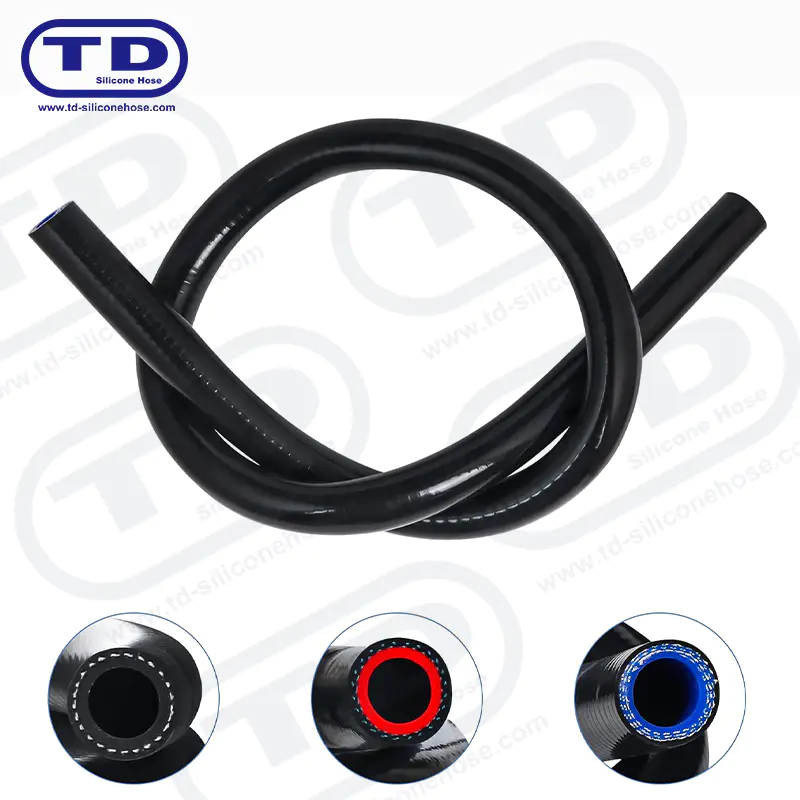
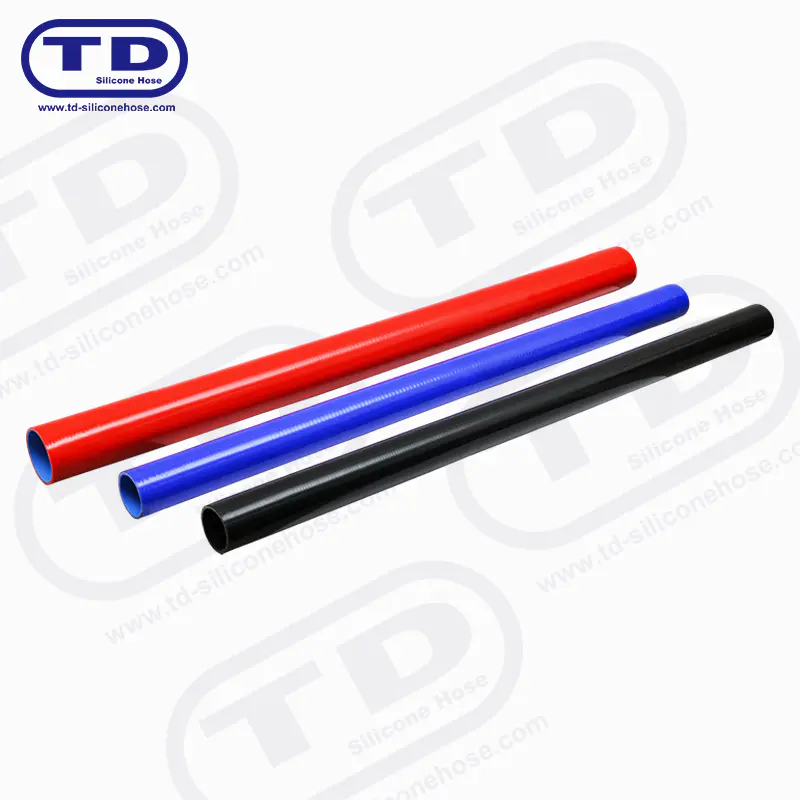
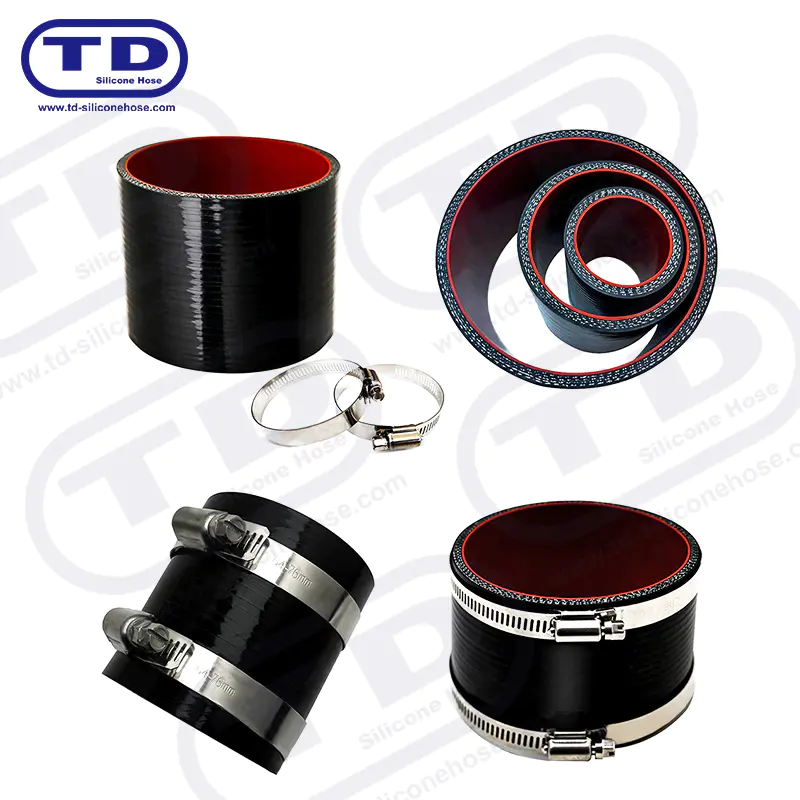
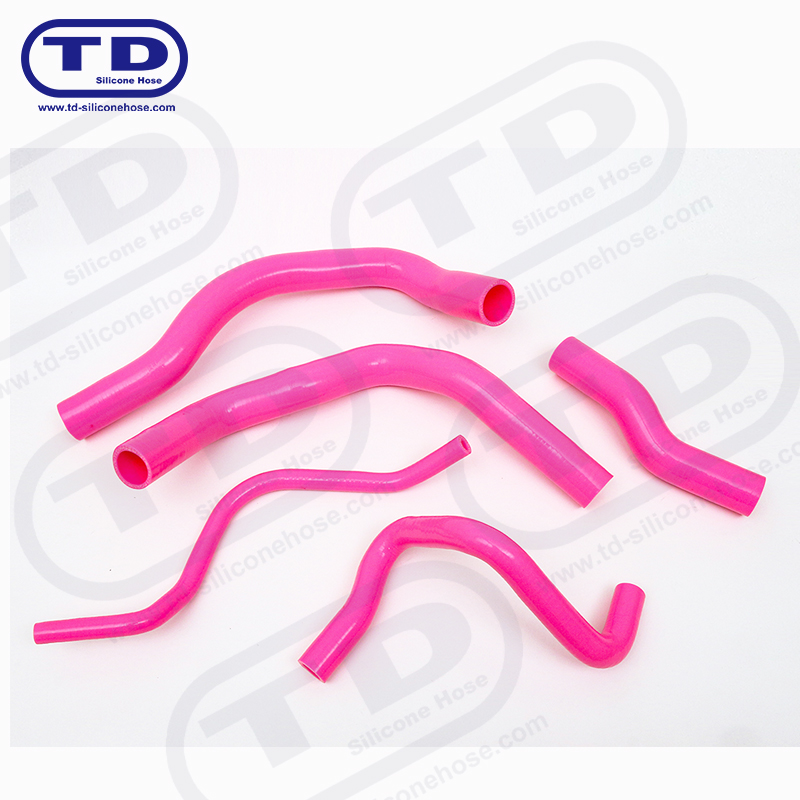 Reinforced Silicone Radiator Hose RangeFor track use, older vehicles, or one-time workshop fits, this reinforced silicone radiator hose range covers multiple configurations and temperature-resistant cooling applications.View Product →
One practical note: silicone is softer on the surface, so an old, over-tightened worm-drive clamp can bite into it. Match the clamp to the hose, and never overtighten to chase a leak that is actually coming from a scored neck on the radiator.
A Side-by-Side Look at Typical Radiator Hose Prices
| Option | Typical price | What you get |
|---|---|---|
| Universal straight rubber hose | $10 – $30 | Cut-to-fit, needs careful routing |
| Molded rubber hose | $25 – $90 | Factory shape, fits without adaptation |
| Dealer or OEM-branded hose | $40 – $150 | Exact fit, warranty support |
| Performance silicone hose | $40 – $140 | Heat and pressure resistance, longer life |
| Full silicone hose kit | $150 – $400 | Several hoses, clamps often included |
| Shop labor, one hose | $100 – $250 | Drain, fit, refill and bleed the system |
Read the table as a starting point, not a quote. The labor row is what most often surprises first-time buyers, because bleeding the cooling system properly takes longer than swapping the hose.
The Costs Around the Hose: Clamps, Coolant and Labor
Budget for the whole job, not just the tube. A basic worm-drive clamp costs a dollar or two; a proper T-bolt or spring-reinforced clamp runs closer to $5 to $15 each, and you may need two per hose. Fresh coolant adds roughly $20 to $50 depending on the type and quantity your system holds. If a plastic thermostat housing or a brittle radiator neck crumbles while you are working, that is another $30 to $120.
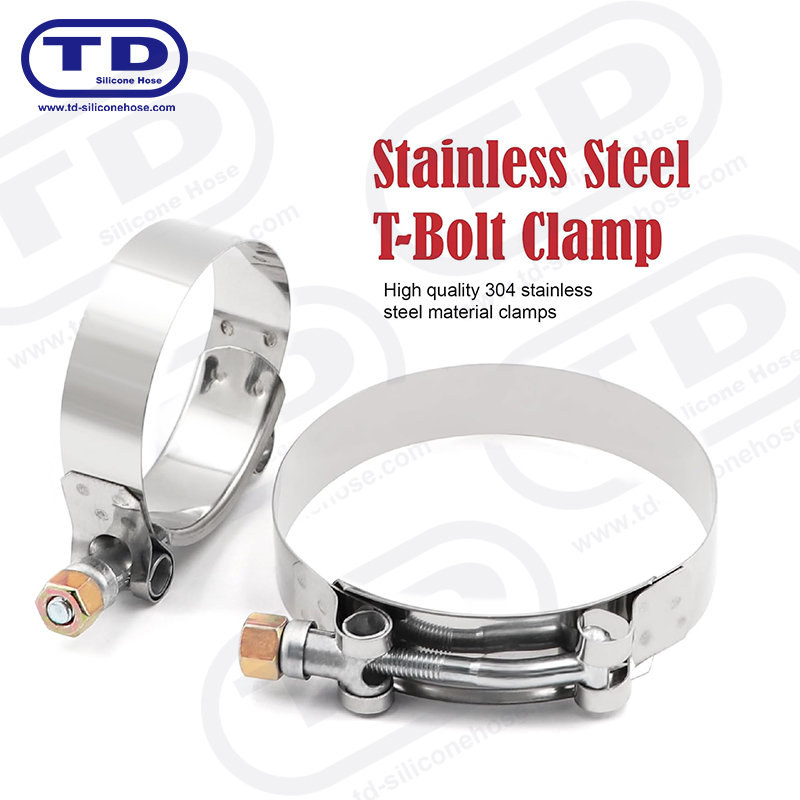 Heavy-Duty T-Bolt Silicone Hose ClampsCompare reusable stainless T-bolt and spring-reinforced clamps for turbo, intercooler, radiator and high-pressure silicone hose connections.View Product →
Labor is the variable most worth questioning. A straightforward upper hose on a transverse engine can be an hour; a hose buried under an intake manifold, or a system that needs a lengthy bleed, can run to two hours or more. At typical shop rates, that is the difference between a $150 job and a $300 one.
When a Single Hose Becomes a Hose Kit
If one hose has failed at the clamp, its neighbours are usually the same age and the same distance along the road to failure. Replacing a single hose is cheap now; replacing three separately over eighteen months means paying for coolant and labor three times. A kit bundles the upper and lower radiator hoses, sometimes bypass and heater lines, and often the matching clamps. That is why kits sit higher on the price list but frequently cost less per hose overall.
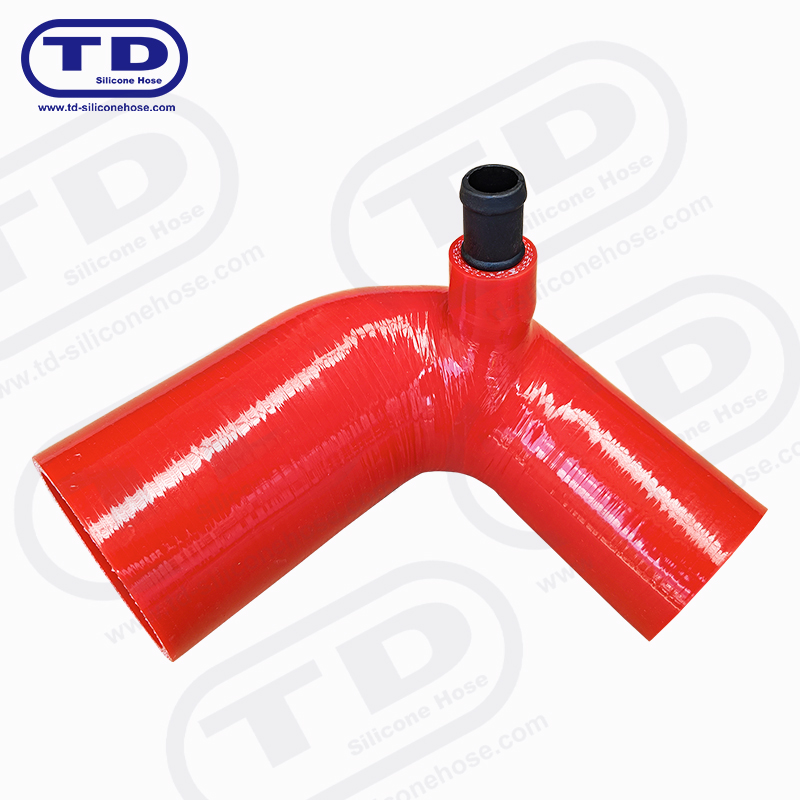 Application-Matched Silicone Cooling and Charge-Air Hose KitsRefresh a cooling or charge-air circuit with matched upper, lower, bypass, heater, turbo or intake hose sets, including clamp and hardware options.View Product →
Our own approach follows the same logic: we build stock-style replacements alongside complete kits, so you can buy one hose today or refresh the whole cooling circuit at once. You can browse the full vehicle silicone hose range to see how the parts group together by system rather than by part number.
How to Get an Accurate Price for Your Own Vehicle
- Measure the inside diameter at both ends. Radiator hoses are often two different sizes on the same hose.
- Note the shape and any molded branch or quick-connect fitting. A photograph beside a ruler saves a lot of back-and-forth.
- Check whether the quote includes clamps, coolant and a thermostat housing where the hose mounts to one.
- Decide on material before comparing prices, since rubber and silicone quotes are not like for like.
- Ask whether the price includes bleeding the system. Air left in a cooling circuit causes overheating that looks like a failed hose.
With those five details, most suppliers can give you a firm figure in minutes instead of a range that leaves you guessing.
Questions We Hear Most About Radiator Hose Pricing
Do I need to replace both radiator hoses at once?
Not always, but often it makes sense. The upper hose usually runs hotter and fails first, so inspect both. If one is soft, swollen or cracked at the clamp, replace it, and consider doing the pair while the system is already drained.
Can a universal hose replace a molded one?
Only when there is clearance and no sharp bend. A universal hose forced into a tight curve will kink and restrict coolant flow, which leads to overheating. Check the diameter and the routing before you cut.
Why do silicone hoses cost more?
Material cost, reinforcement plies and smaller production runs all add up. The trade-off is usually a much longer service life under heat and pressure, which lowers the cost per year even when the sticker price is higher.
Should I replace the clamps too?
Yes. Old clamps lose tension and are a common cause of repeat leaks. For silicone hoses, use a T-bolt or spring-reinforced clamp rather than a thin worm-drive band that can cut into the surface.
So what is the real answer to the question? Somewhere between the price of a coffee and the price of a decent dinner for two, most drivers will find their hose. What changes the final bill is not the hose alone but the shape, the material and the hours needed to fit it properly. Check the part, check the clamps, and check what the quote includes — that is how a $25 hose stays a $25 hose instead of becoming a $300 surprise.
If you are unsure which hose suits your engine, send us the diameter, the shape and a photo. We would rather help you buy the right part once than sell you two that almost fit.
Our Product //
Ningbo Tiandai Auto Parts Co., Ltd. All Rights Reserved. ALL RESERVED.
Wholesale Automotive Silicone Hose Manufacturers
