

 English
 中文简体
 русский
 Español
 عربى

Submit feedback
How Radiator Hoses Are Made: A Step-by-Step Silicone Hose Production Guide
Industry news-Content
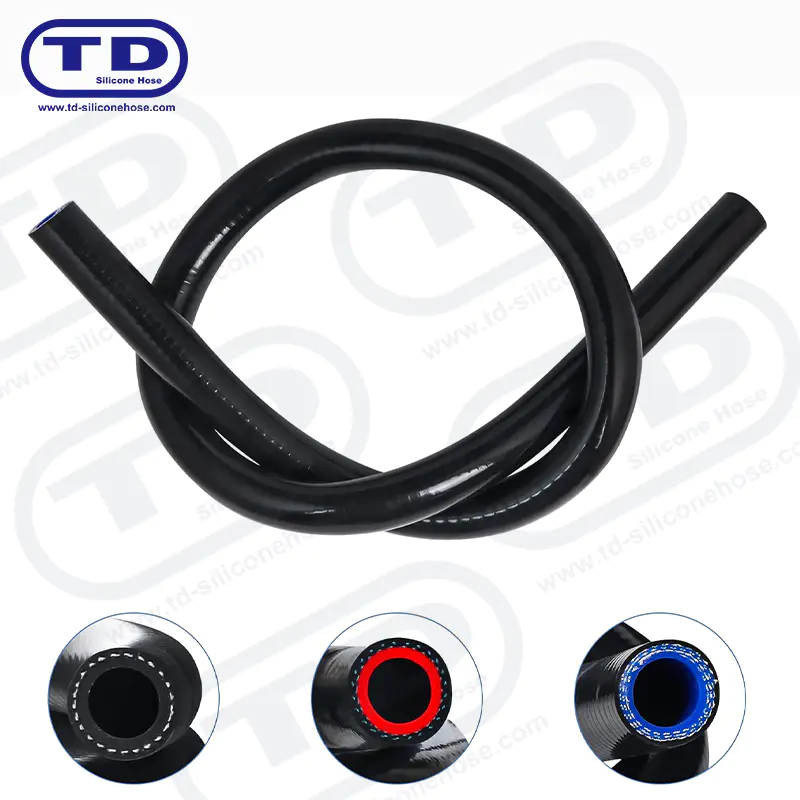
A radiator hose looks like a simple tube until you cut one open. Then you see the layers: a smooth inner liner, a reinforcement package, and an outer cover that has to survive heat, pressure, coolant, and years of vibration. At Ningbo Tiandai Auto Parts, we produce silicone hoses for cars, trucks, motorcycles, buses, and racing applications, so we see this part of the process every day. The exact recipe changes with the application, but the manufacturing route follows a clear sequence. Here is how radiator hoses are made, from raw compound to a pressure-tested part.
It Starts With the Compound, Not the Shape
Every hose begins as a formulation. For a silicone radiator hose, the base is silicone rubber, often blended with reinforcing fillers, heat stabilizers, pigments, and a curing agent. The compound must be clean and consistent because small changes in filler or catalyst can affect flexibility, compression set, and how well the hose bonds to its reinforcement. We test incoming material and keep mixed compound in controlled conditions before it reaches the extruder.
Reinforcement is chosen at the same stage. A radiator hose must hold its shape when the cooling system pressurizes and when the engine bay heats and cools. Polyester, aramid, or other textile braids and fabrics can provide that strength. The liner, reinforcement, and cover are designed as a system. If one layer is too thick or too thin, the finished hose may become stiff, kink, or lose burst strength.
Many original equipment hoses use EPDM rubber, while silicone is common in performance, replacement, and high-temperature applications. The broad steps are similar, but silicone needs cleaner handling and different cure control. That difference starts in the compound room, long before the hose takes its final shape.
Extrusion and Layering: Giving the Hose Its Wall
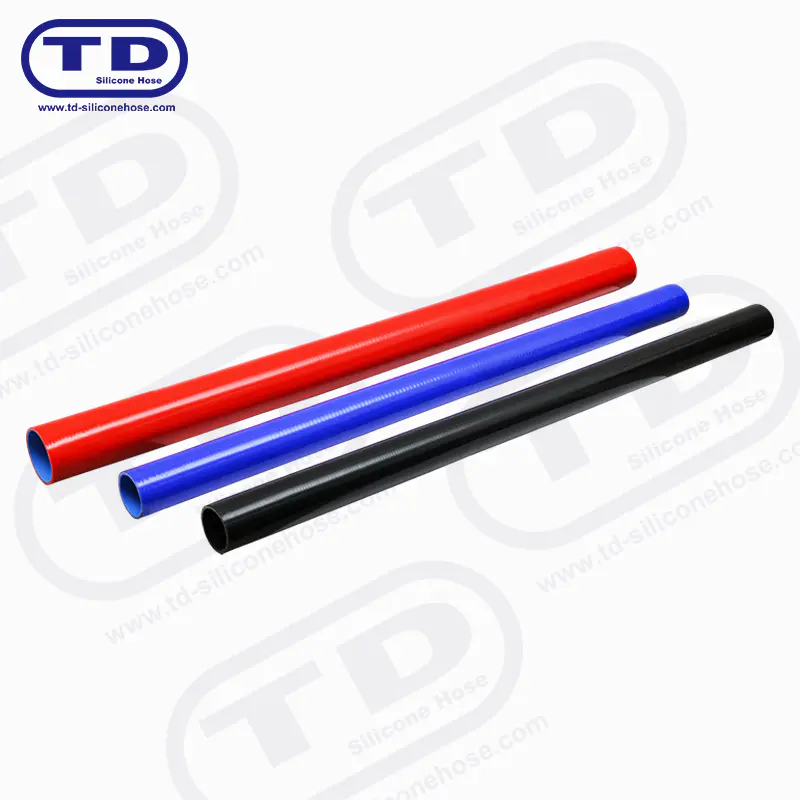
Extrusion is the first shape-making step. The compounded silicone is fed into an extruder, where a rotating screw pushes it through a die. The die sets the inner diameter and wall thickness of the liner. The extruded liner leaves the machine soft and uncured, like a thick, flexible tube.
Next comes reinforcement. Textile braid can be applied over the liner, or a fabric layer can be wrapped around it. Some constructions use more than one layer, depending on pressure and temperature requirements. Then an outer cover is extruded over the reinforcement, so the finished wall becomes a bonded sandwich rather than three separate tubes.
For a straight hose, this may be enough before cure. For a molded elbow or a complex radiator hose, the uncured hose is placed on a shaped mandrel. The mandrel holds the curve, prevents collapse, and sets the final centerline. The assembly is then prepared for vulcanization. This is the point where a good factory pays attention to the small things: mandrel cleanliness, layer alignment, and consistent wall thickness around the bend.
| Stage | What happens | Why it matters |
|---|---|---|
| Compound preparation | Silicone base, fillers, pigment, and curing agent are mixed and controlled. | Sets flexibility, heat resistance, and batch consistency. |
| Extrusion | The inner liner and outer cover are formed through dies. | Controls diameter, wall thickness, and surface quality. |
| Reinforcement | Textile braid or fabric is applied between the layers. | Provides pressure strength and shape stability. |
| Mandrel shaping | Uncured hose is placed on a curved or straight mandrel. | Holds the bend radius and prevents collapse during cure. |
| Vulcanization | Heat and pressure crosslink the silicone and bond the layers. | Turns soft compound into a durable, elastic hose. |
| Finishing and testing | Demolding, trimming, marking, measurement, and pressure checks. | Confirms fit, strength, and freedom from defects. |
Vulcanization: Where the Hose Becomes a Hose
Vulcanization turns the soft extruded compound into a durable rubber part. Heat and pressure activate the curing system, and the silicone crosslinks into a network that can recover after compression and resist heat aging. In silicone hose production, this is often done in an autoclave or a hot-air oven, with the hose supported by its mandrel. The temperature, time, and pressure must be matched to the compound and wall thickness.
During cure, the layers bond. The inner liner, reinforcement, and outer cover become one construction. If the cure is incomplete, the hose may feel soft or smell of uncured rubber; if it is overdone, the silicone can become brittle or lose flexibility. A factory that tracks cure records and validates each batch has a much better chance of delivering consistent radiator hoses.
After cure, the hose is cooled in a controlled way. Rapid cooling can stress a thick wall or a tight bend, so the schedule matters as much as the oven itself.
Demolding, Trimming, and the Details That Matter
Once cured, the hose is removed from the mandrel. For curved hoses, this step needs care: pulling too hard can tear the inner wall or distort the bend. The ends are trimmed square or to the specified profile, and the hose is cleaned. Printing, branding, and date or batch marks are applied if required.
Then come the checks. A radiator hose is not judged only by how it looks. The factory checks inner diameter, wall thickness, length, and bend angle. It may also run burst pressure, pressure cycling, vacuum collapse, and heat-aging tests. A visual inspection looks for lumps, voids, fabric show-through, cuts, and weak areas around the ends. Because a cooling system is a closed loop, a small defect can become a leak or a blockage later.
Traceability matters here. Keeping compound batch, cure batch, and test records linked helps a manufacturer answer questions if a hose fails in service. For a wider look at the full silicone hose manufacturing sequence, our full manufacturing guide covers the steps in more detail.
From Finished Hose to a Radiator That Fits
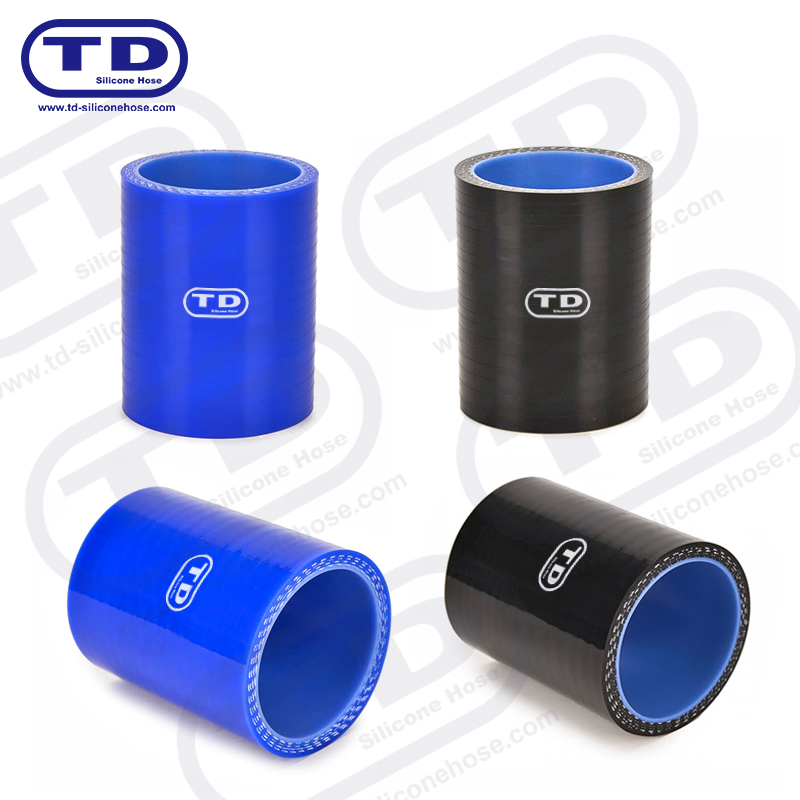
Radiator hoses are rarely generic. The upper and lower hoses on a vehicle follow the engine bay layout, clear accessories, and connect to specific radiator necks. A manufacturer may produce straight hose lengths, elbows, reducers, and custom-shaped hoses, then combine them into vehicle-specific kits. The goal is a part that installs without kinking, rubbing, or collapsing under suction.
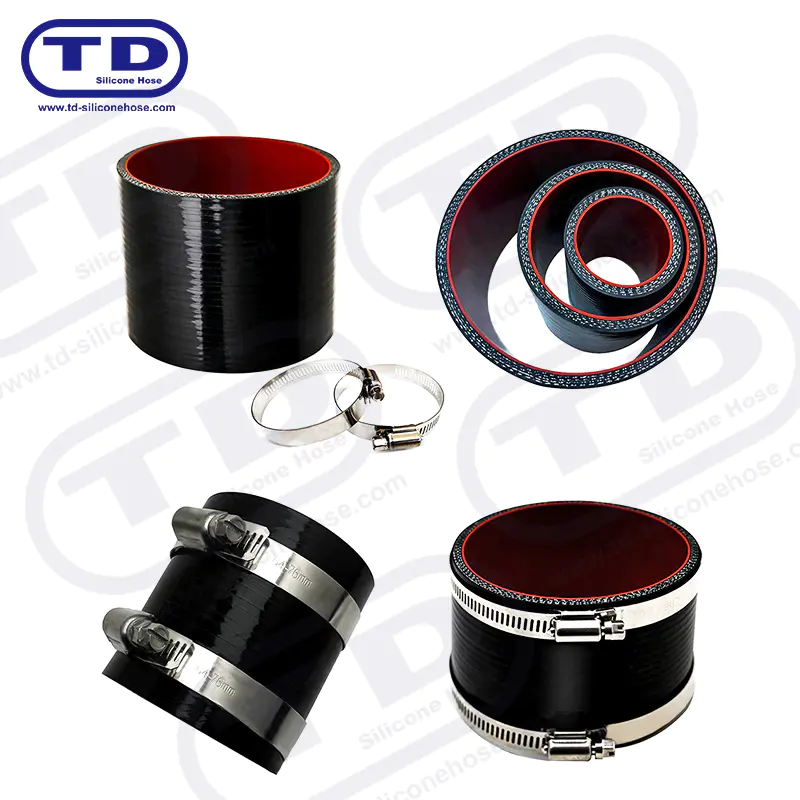
For direct replacement work, a molded car silicone radiator hose can be produced with the correct bend and wall thickness.
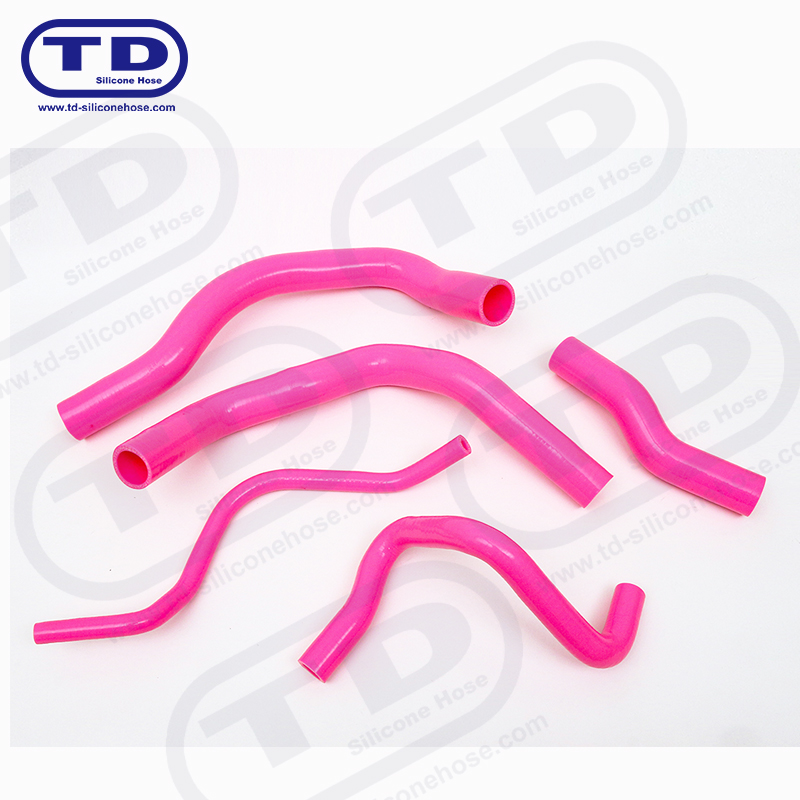 Molded Car Silicone Radiator HoseView this reinforced silicone radiator hose for direct replacement work, with matched bends, wall thickness and high-temperature cooling performance.View Product →
Workshops and builders often prefer a kit because it keeps the hose, clamps, and fitting details matched.
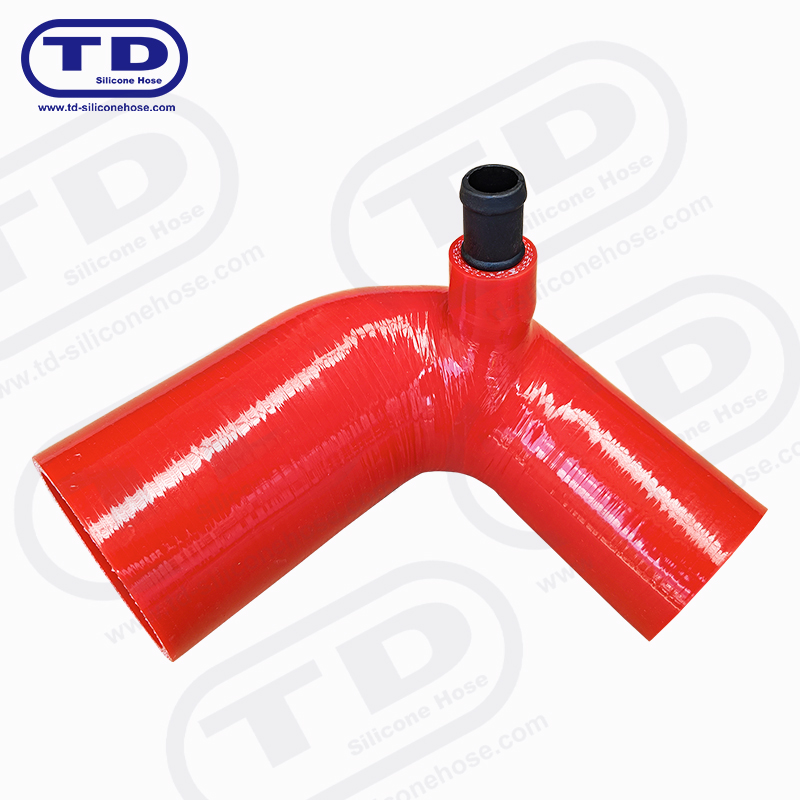 Complete Silicone Hose Kits for Cooling and IntakeBrowse complete application-matched kits that bundle cooling, charge-air and intake hoses with compatible clamps and fittings for workshop builds.View Product →
Clamps are part of the system, not an afterthought. A good clamp holds the hose without cutting into the silicone. T-bolt clamps with spring reinforcement can maintain tension as temperatures change.
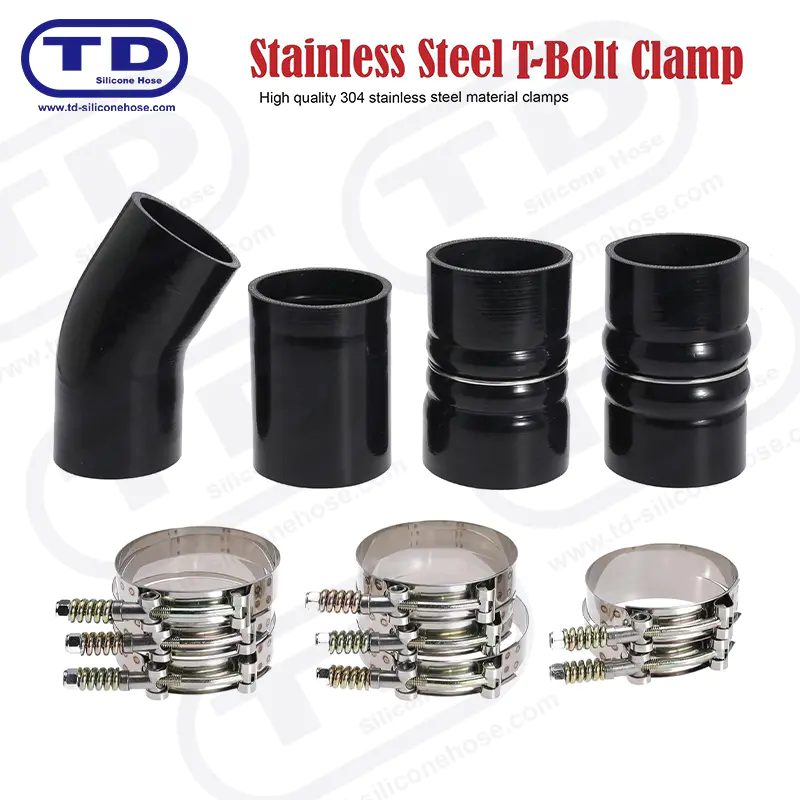 Spring-Reinforced T-Bolt Silicone Hose ClampsView these stainless-steel spring-reinforced T-bolt clamps that help maintain tension through thermal cycling and vibration in high-pressure hose connections.View Product →
What This Means When You Specify a Radiator Hose
When you buy a radiator hose, you are buying the result of every step above. Ask for the inner diameter, wall thickness, bend radius, reinforcement type, temperature range, and pressure rating. Ask how the hose was tested, not just whether it was tested. For silicone hoses, confirm that the compound is suitable for the coolant and the expected temperature. For a classic rubber hose, check the same details against the original specification.
A well-made radiator hose should feel firm but flexible, hold its shape, and fit the radiator neck and engine connection without forcing. The outside should be clean and consistent; the inside should be smooth and free of loose material. Those details come from good compound control, careful mandrel work, complete cure, and honest inspection.
At our factory, we would rather explain these steps than make a hose look mysterious. A radiator hose is a small part, but it carries the cooling system's pressure and heat every time the engine runs. Made well, it stays boring for a long time. That is exactly what a cooling system needs.
Our Product //
Ningbo Tiandai Auto Parts Co., Ltd. All Rights Reserved. ALL RESERVED.
Wholesale Automotive Silicone Hose Manufacturers
