

 English
 中文简体
中文简体 русский
 Español
 عربى
عربى
Submit feedback
How to Make Silicone Hoses: A Step-by-Step Guide to Silicone Meter Hose Manufacturing
Industry news-Content
- 1 How to Make Silicone Hoses: The Short Answer
- 2 What Materials Go Into a Silicone Hose
- 3 The Silicone Hose Manufacturing Process, Step by Step
- 4 Silicone Meter Hose Specifications You Should Know
- 5 Temperature Range and Chemical Resistance
- 6 Quality Checks That Separate Good Hoses From Bad Ones
- 7 Choosing the Right Silicone Meter Hose for Your Application
How to Make Silicone Hoses: The Short Answer
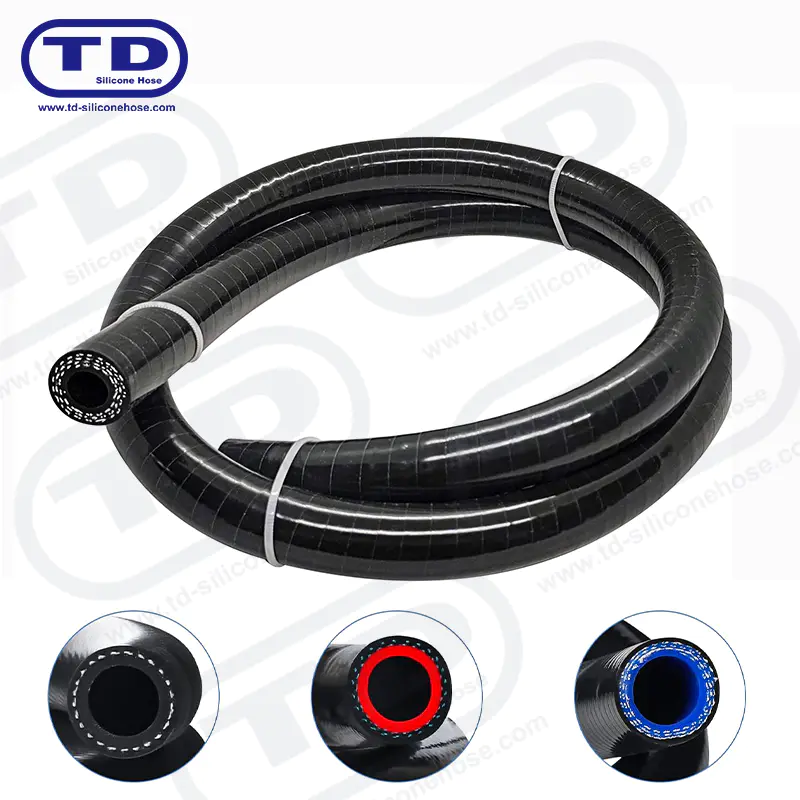
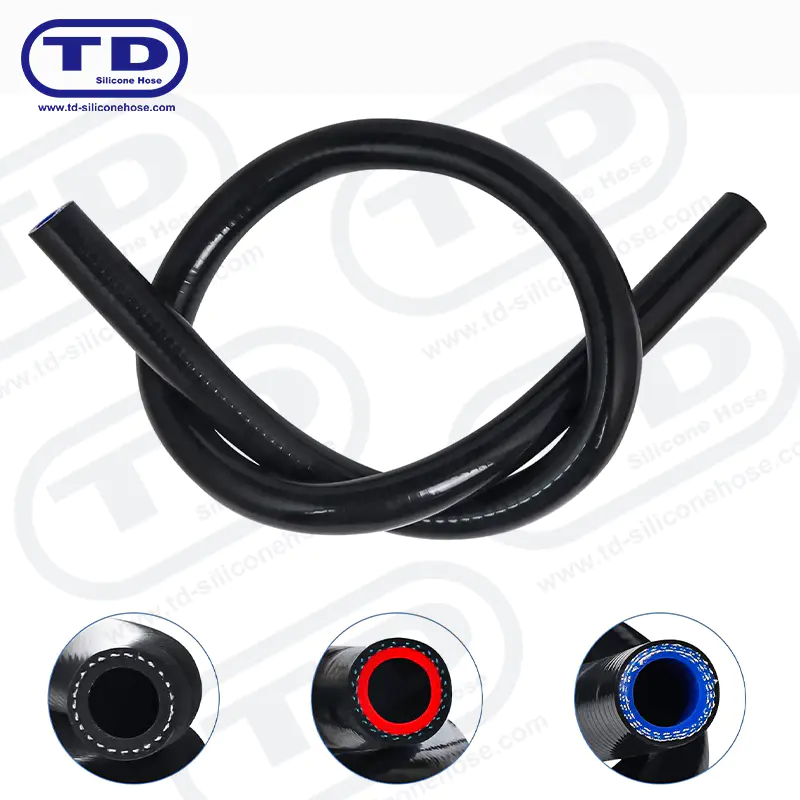
Silicone hoses are made by wrapping uncured silicone rubber sheets and reinforcing fabric around a steel mandrel, layer by layer, then curing the assembly under heat and pressure until it vulcanizes into a solid, flexible tube. The core stages are material compounding, calendering, mandrel wrapping, taping, autoclave curing, demoulding, and trimming. A typical silicone meter hose — sold in 1-meter lengths for coolant, intake, and industrial fluid-transfer lines — uses 3 to 5 plies of polyester or aramid reinforcement and takes roughly 45 to 90 minutes to cure fully, depending on wall thickness and diameter.
The rest of this article breaks down each production step, the materials involved, the specifications that define a quality meter hose, and how to judge whether a hose you're buying or building meets industry standards.
What Materials Go Into a Silicone Hose
Every silicone hose starts as raw silicone rubber — usually a platinum-cured or peroxide-cured elastomer chosen for purity, heat stability, and flexibility. This base material is blended with fillers and additives before it ever touches a mandrel.
Core Components
- Silicone rubber base — provides the heat, ozone, and UV resistance the hose is known for
- Reinforced fabric plies — polyester, aramid, or fiberglass mesh sandwiched between silicone layers to control burst pressure
- Curing agents — trigger vulcanization, the chemical process that turns soft compound into a solid elastic tube
- Pigments and fillers — control color and add properties like carbon black for UV protection
The reinforcement ply count is the single biggest factor in a hose's pressure rating. As a general rule, hoses under 50mm ID use a minimum of 3 plies, hoses between 50mm and 102mm use 4 plies, and anything above 102mm needs 5 plies or more to hold comparable working pressure.
The Silicone Hose Manufacturing Process, Step by Step
Manufacturing a silicone hose is a sequential build process, not a one-shot molding operation. Each stage has to be done correctly or the final hose will show weak spots, air traps, or uneven walls.
Step 1: Milling and Compounding
Raw silicone rubber and pigments are fed through a two-roll mill, which presses the compound between rollers until it forms a uniform sheet. This step, called milling, ensures the material has consistent thickness and no trapped air before it goes any further.
Step 2: Calendering
The milled compound is passed through a calendering machine that rolls it into thin, precisely measured sheets. These sheets become the individual layers that get wrapped around the mandrel later, so thickness accuracy at this stage directly determines the final hose wall thickness.
Step 3: Mandrel Wrapping and Building
A steel mandrel is shaped to match the internal geometry of the hose — straight, elbow, or a custom bend. Workers wrap alternating layers of silicone sheet and reinforcing fabric around the mandrel by hand or with a wrapping machine, building up the wall to the specified ply count. This is the stage that defines whether the finished hose is a simple silicone meter hose or a molded elbow with multiple bend angles.
Step 4: Taping
Binder tape is wound tightly around the wrapped layers to compress them together before curing. This holds every ply in place and forces out trapped air, which prevents bubbles or delamination in the final product. After curing, the tape is removed and discarded.
Step 5: Curing (Vulcanization)
The taped mandrel assembly goes into an autoclave or oven, where heat and pressure trigger vulcanization — the chemical reaction that cross-links the silicone molecules into a solid, elastic structure. Curing temperatures typically run between 150°C and 200°C, with cycle times ranging from 30 minutes for thin-wall small-diameter hoses to over 90 minutes for thick-wall large-diameter industrial hoses.
Step 6: Demoulding, Trimming, and Finishing
Once cured, the hose is pulled off the mandrel, the binder tape is stripped away, and excess material is trimmed from both ends. The hose then goes through visual and dimensional inspection to check for surface defects, wall consistency, and ID/OD accuracy before it's approved for sale.
Silicone Meter Hose Specifications You Should Know
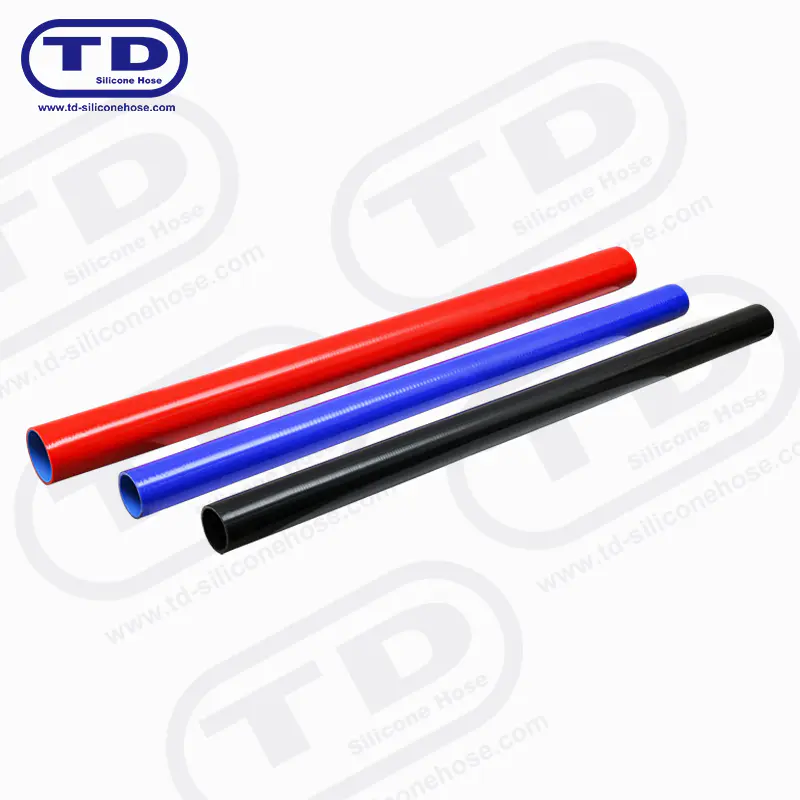
A "meter hose" simply refers to a straight silicone hose section sold in 1-meter lengths, the standard format for custom coolant, intake, and vacuum plumbing where the installer cuts and joins sections to fit their own layout. Specifications vary by diameter, but the table below shows typical figures for common sizes.
| Inner Diameter | Reinforcement Plies | Wall Thickness | Working Pressure | Burst Pressure |
|---|---|---|---|---|
| 13mm (1/2") | 3-ply | 4mm | ~80 psi | ~340 psi |
| 25mm (1") | 3-ply | 4.5mm | ~55 psi | ~232 psi |
| 76mm (3") | 4-ply | 5mm | ~26 psi | ~78 psi |
| 89mm (3.5") | 4-ply | 5.5mm | ~19 psi | ~78 psi |
Note the pattern: as inner diameter increases, working pressure drops even as ply count goes up. This is a structural reality of hose engineering, not a manufacturing shortcut — larger diameters have more surface area for internal pressure to act on, so the same wall construction yields a lower safe operating pressure. Working pressure is generally calculated at about one-third of burst pressure, giving a built-in safety margin for continuous use.
Temperature Range and Chemical Resistance
One of the main reasons manufacturers choose silicone over EPDM or standard rubber is thermal range. Properly cured silicone hose stays flexible and structurally sound across a much wider band than conventional rubber compounds.
- Standard silicone meter hose: -50°C to +180°C (-76°F to 356°F) continuous service
- High-temperature grades: up to +200°C to +250°C for turbo and exhaust-adjacent applications
- Cold-weather grades: down to -65°F (-54°C) for aircraft and cold-climate industrial use
Standard silicone hose is not formulated to resist petroleum-based fluids like fuel or oil — it will swell and degrade on contact. If a hose needs to carry fuel or oil, it needs a fluorosilicone inner liner bonded to the silicone outer layers during the wrapping stage, which is a materials decision made before construction begins, not something that can be added afterward.
Quality Checks That Separate Good Hoses From Bad Ones
Because silicone hose is hand-built layer by layer, quality control matters more here than in extruded or injection-molded parts. A few visible and measurable checks tell you whether a hose was made correctly.
- Run a finger along the inner bore — it should feel smooth with no ridges, wrinkles, or overlap lines from the wrapping stage
- Check wall thickness at several points around the circumference — variation of more than 0.5mm suggests uneven calendering or wrapping
- Look for air bubbles or blisters under the surface, which indicate trapped air that wasn't pressed out during taping
- Confirm the reinforcement ply count matches the diameter guidelines in the specifications table above
- Ask for the burst pressure test data, not just the working pressure rating — reputable manufacturers test and document both
A hose that skips proper taping or rushes the curing cycle can look fine on the outside while hiding weak adhesion between plies. This kind of defect usually only shows up under sustained pressure or heat cycling, which is exactly the condition the hose is meant to survive — so the inspection steps above matter more than a quick visual glance.
Choosing the Right Silicone Meter Hose for Your Application
Matching a hose to its job comes down to three variables: diameter, ply count, and fluid compatibility. Getting any one of these wrong either wastes money on unnecessary reinforcement or risks premature failure.
| Application | Priority Spec | Typical Ply Count |
|---|---|---|
| Coolant / radiator lines | Temperature range | 3-ply |
| Turbo / intercooler piping | Working pressure | 4-ply |
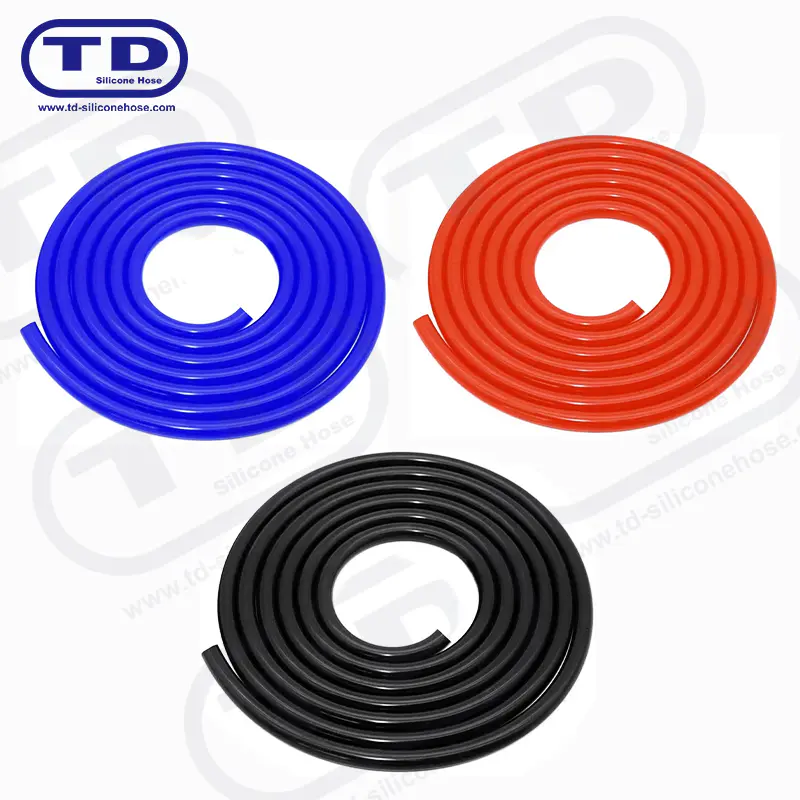
| Vacuum / breather lines | Flexibility, bend radius | 1 to 2-ply |
| Industrial fluid transfer | Chemical resistance | 3 to 5-ply |
For custom fabrication work, buying meter-length straight sections and joining them with hose couplers gives more flexibility than pre-molded shapes, since a single meter can be cut into several short connector pieces or joined end-to-end for longer runs. This is why the 1-meter straight format remains the standard stock unit across automotive, marine, and light industrial suppliers.
Our Product //
Ningbo Tiandai Auto Parts Co., Ltd. All Rights Reserved. ALL RESERVED.
Wholesale Automotive Silicone Hose Manufacturers
