

 English
 中文简体
中文简体 русский
 Español
 عربى
عربى
Submit feedback
Silicone Hoses: Everything You Need to Know
Industry news-Content
- 1 What Silicone Hoses Are Made Of
- 2 Types of Silicone Hoses and Their Uses
- 3 Silicone Hose Grades and Temperature Ratings
- 4 Silicone Hoses vs. Rubber Hoses: Key Differences
- 5 Where Silicone Hoses Are Used: Main Application Areas
- 6 Chemical Compatibility: What Silicone Hoses Can and Cannot Handle
- 7 How to Select the Right Silicone Hose
- 8 Installation Best Practices
- 9 How to Identify a Failing Silicone Hose
- 10 Silicone Hose Colors: Meaning and Practical Considerations
Silicone hoses are flexible tubing made from silicone rubber — a synthetic polymer with a silicon-oxygen backbone — that outperforms standard rubber hoses in temperature resistance, longevity, and dimensional stability. They handle continuous operating temperatures from -60°C to +180°C (-76°F to +356°F), and peak temperatures up to 220°C in short bursts, making them the preferred choice in automotive cooling systems, turbocharger plumbing, industrial fluid transfer, and medical equipment.
Unlike EPDM or natural rubber hoses that crack, harden, and degrade within 3 to 5 years under heat and pressure cycles, quality silicone hoses routinely last 10 years or more in demanding applications. This guide covers everything you need to know to select, use, and maintain silicone hoses correctly.
What Silicone Hoses Are Made Of
The base material is polydimethylsiloxane (PDMS), a silicone polymer that is compounded with reinforcing fillers, curing agents, and stabilizers before being extruded or molded into hose form. The raw silicone compound is then vulcanized — cured under heat and pressure — to cross-link the polymer chains and develop the hose's final mechanical properties.
Reinforcement Layers
Most silicone hoses used in pressure applications incorporate one or more layers of woven fabric reinforcement between the inner and outer silicone plies. Common reinforcement materials include:
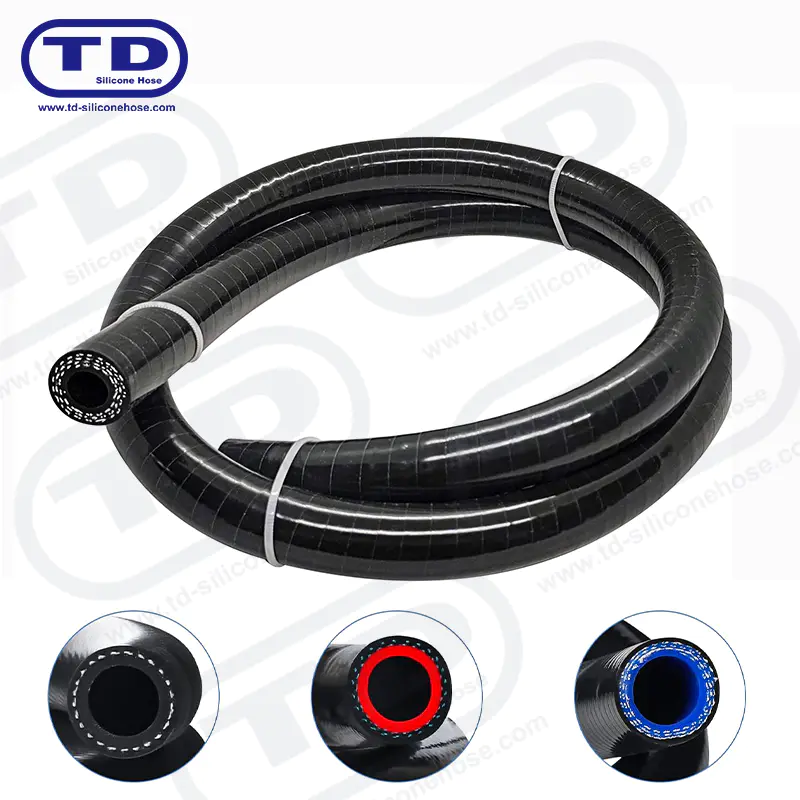
- Polyester fabric: The most common reinforcement. Provides good burst pressure resistance and flexibility. Standard in automotive and industrial hoses rated up to 0.3 to 0.7 MPa (43 to 100 psi) working pressure.
- Aramid (Kevlar) fiber: Used in high-pressure silicone hoses. Aramid-reinforced hoses can achieve working pressures of 1.5 to 2.5 MPa (218 to 363 psi) or higher, used in turbo boost lines and hydraulic applications.
- Fiberglass: Provides excellent heat resistance alongside the silicone rubber, used in exhaust-adjacent and high-temperature industrial hose assemblies.
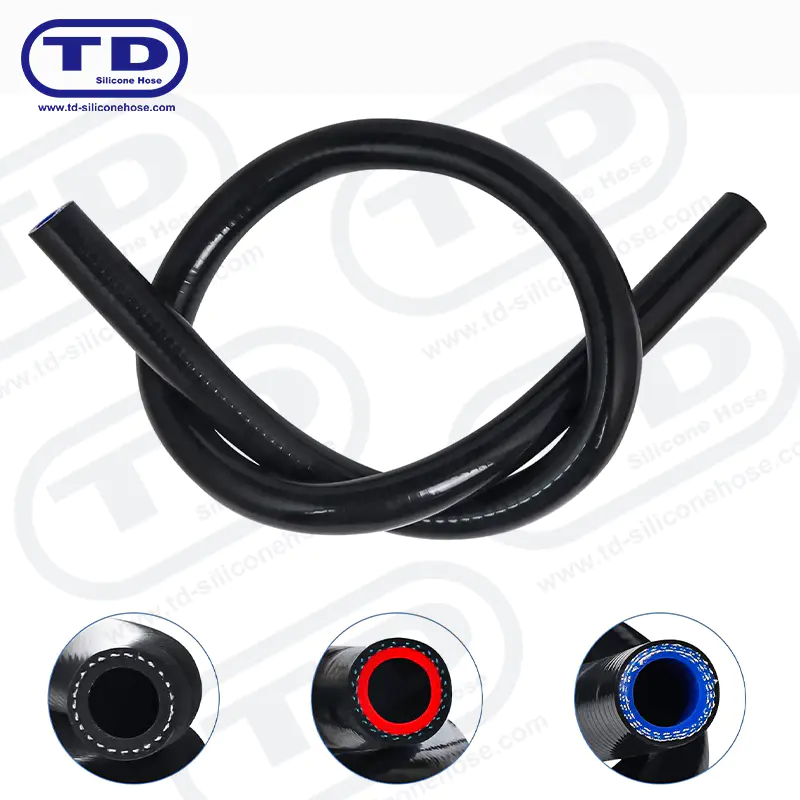
- Wire helix: Stainless steel or galvanized wire embedded in the hose wall prevents collapse under vacuum conditions — critical in suction lines, coolant inlet hoses, and vacuum systems.
Ply Construction and Wall Thickness
Silicone hoses are manufactured in 3-ply, 4-ply, 5-ply, and 6-ply configurations, with more plies providing higher burst pressure capacity and greater wall thickness. A standard 3-ply automotive hose has a wall thickness of approximately 5 to 6 mm, while a 6-ply performance hose may have walls of 8 to 10 mm. Thicker walls improve pressure tolerance but reduce flexibility.
Types of Silicone Hoses and Their Uses
Silicone hoses are manufactured in a wide range of shapes and configurations to suit different plumbing geometries. Choosing the correct type from the start avoids unnecessary bends, stress points, and flow restrictions.
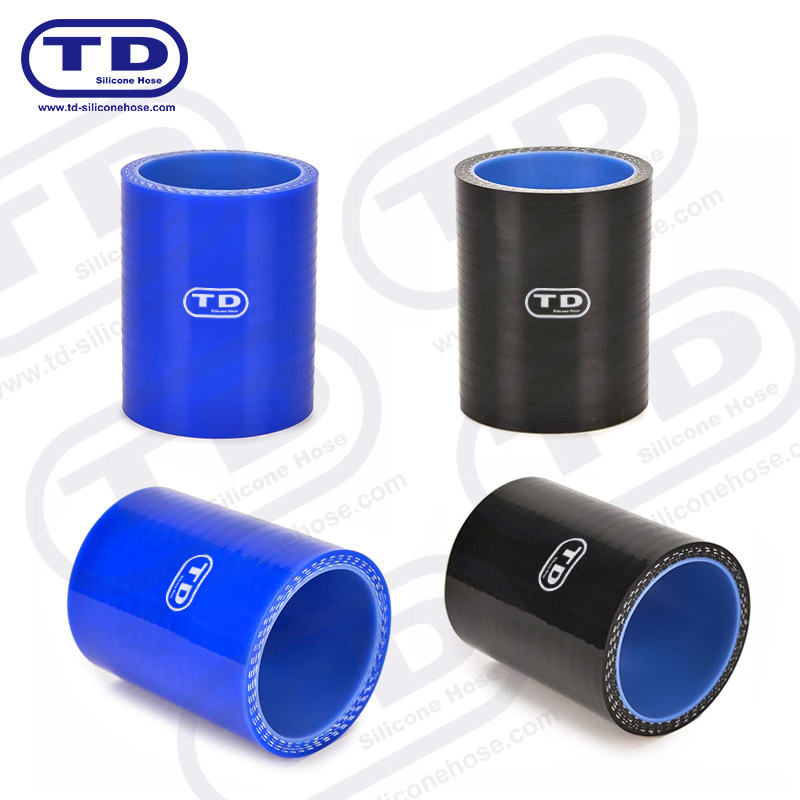
Straight Hoses
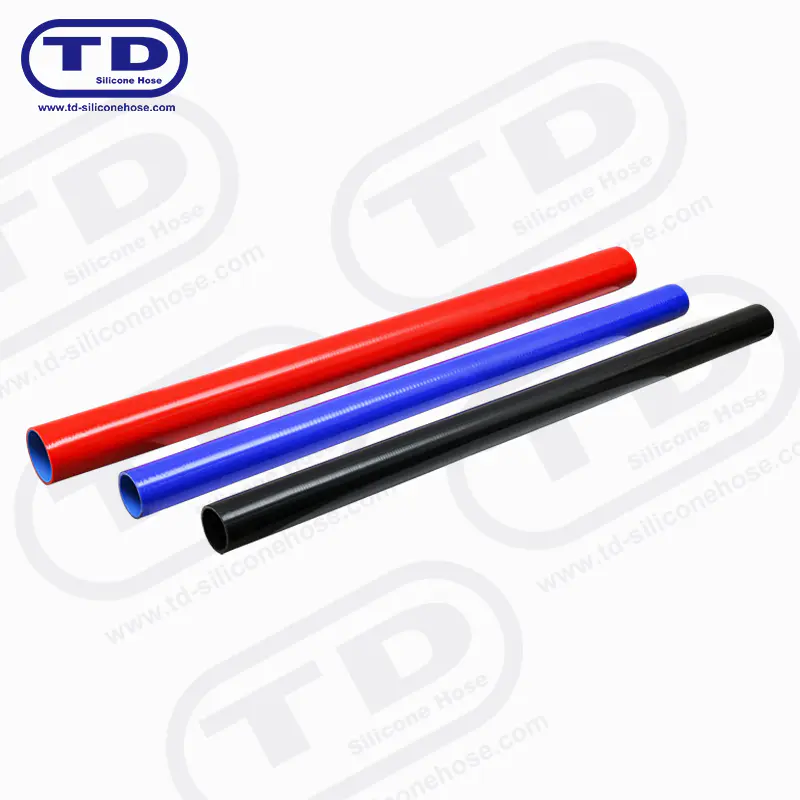
The simplest form — straight cylindrical tubes available in lengths from 100 mm to 1,000 mm. Used to connect co-axial ports, extend existing hose runs, or as reducer hoses when fitted in different inner diameters at each end. Standard lengths are typically 500 mm (20 inches) for automotive and industrial use.
Elbow Hoses (45°, 90°, 135°, 180°)
Pre-formed elbow hoses are molded at fixed angles to route fluid around obstacles, engine components, or chassis members without kinking. The 90° elbow is the most widely used in automotive cooling and intercooler systems. Using a pre-formed elbow rather than forcing a straight hose around a bend eliminates the collapse risk at the bend radius and maintains consistent internal flow area.
Reducer Hoses
Reducer hoses have different internal diameters at each end, allowing connection between pipes or ports of different sizes. Available in straight and elbow reducer configurations. Common in automotive applications where the radiator inlet and the engine coolant outlet are different diameters, or in turbo systems where the intercooler pipe size changes.
T-Piece and Y-Piece Hoses
Three-port hoses used where a fluid line needs to split or branch. Common in coolant systems where a heater circuit taps off from the main coolant loop, or in vacuum systems with multiple connection points.
Corrugated and Flexible Hoses
The corrugated outer profile allows the hose to flex and bend without kinking, making these types suitable for applications with vibration, movement between components, or tight routing paths. Corrugated hoses are widely used in turbocharger air inlet systems and industrial ventilation where flex movement is continuous.
Vacuum and Suction Hoses
These hoses incorporate a wire helix or rigid internal spiral to prevent the hose wall from collapsing inward under negative pressure. Without the internal support, standard pressure hoses would collapse under vacuum conditions, blocking flow entirely. Used in vacuum pump lines, coolant inlet hoses, and industrial suction transfer.
Silicone Hose Grades and Temperature Ratings
Not all silicone hoses are the same grade, and selecting the wrong grade for the operating environment is a common cause of premature failure. The following table summarizes the main silicone grades used in hose manufacturing:
| Grade | Continuous Temp Range | Peak Temp (short term) | Typical Application |
|---|---|---|---|
| Standard (VMQ) | -55°C to +180°C | +200°C | Automotive cooling, general industrial |
| High-Temperature (HT) | -60°C to +220°C | +250°C | Turbocharger systems, exhaust-adjacent |
| Food Grade (FDA) | -60°C to +200°C | +230°C | Food processing, beverage, pharmaceutical |
| Medical Grade (USP Class VI) | -60°C to +200°C | +220°C | Medical devices, drug fluid transfer |
| Fluorosilicone (FVMQ) | -65°C to +175°C | +200°C | Fuel systems, aviation, solvent exposure |
Silicone Hoses vs. Rubber Hoses: Key Differences
The decision between silicone and EPDM or natural rubber hoses involves trade-offs in cost, longevity, chemical resistance, and application suitability. Understanding these differences prevents misapplication in either direction.
| Property | Silicone Hose | EPDM Rubber Hose |
|---|---|---|
| Continuous temperature limit | Up to +180°C (+220°C HT grade) | Up to +150°C |
| Cold temperature flexibility | Remains flexible to -60°C | Stiffens below -40°C |
| Service life | 10–15 years typical | 3–5 years typical |
| Oil and fuel resistance | Poor (standard silicone) | Moderate |
| Water and steam resistance | Excellent | Good |
| UV and ozone resistance | Excellent | Good |
| Relative cost | 3–5× higher than EPDM | Lower upfront cost |
| Pressure rating (reinforced) | Up to 2.5 MPa (363 psi) | Up to 1.5 MPa (218 psi) |
The key takeaway: silicone is the right choice where heat, longevity, or cold-weather flexibility is critical. EPDM remains cost-effective for standard coolant and water applications where temperatures stay below 130°C and replacement every few years is acceptable.
Where Silicone Hoses Are Used: Main Application Areas
Silicone hoses appear across a broader range of industries than most people realize. Their inertness, temperature range, and flexibility make them valuable wherever standard rubber would degrade prematurely.
Automotive Cooling and Intercooler Systems
The largest single market for silicone hoses. Radiator hoses, heater hoses, bypass hoses, and intercooler pipes in performance and modified vehicles are upgraded to silicone for improved lifespan and heat resistance. Turbo-charged engines where boost pressures exceed 0.8 bar (12 psi) and underhood temperatures exceed 150°C benefit especially from silicone over EPDM.
Turbocharger and Intake Systems
Silicone couplers and elbow hoses connect the turbocharger outlet, intercooler, and intake manifold in both OEM and aftermarket turbo systems. The combination of elevated boost pressure and high air temperatures — intake air temperatures can reach 80°C to 120°C before intercooling — demands a hose material that maintains its shape and seal integrity under combined thermal and pressure stress.
Food and Beverage Processing
FDA-compliant and EC 1935/2004-compliant silicone hoses are used to transfer liquids, pastes, and gases in food processing, brewing, dairy, and pharmaceutical manufacturing. Silicone is tasteless, odorless, non-toxic, and can be steam-sterilized at 121°C to 134°C repeatedly without degrading, satisfying strict hygiene and sanitation requirements.
Medical and Pharmaceutical Equipment
USP Class VI and ISO 10993-compliant silicone hoses are used in peristaltic pumps, dialysis machines, respiratory equipment, and drug fluid transfer systems. The material's biocompatibility and resistance to autoclave sterilization cycles at up to 200°C make it irreplaceable in critical medical applications where contamination risk must be eliminated.
Industrial Heating, Cooling, and Chemical Transfer
Industrial plants use silicone hoses in hot water circulation systems, steam condensate return lines, chemical dosing systems, and clean-room ventilation. The resistance to ozone, UV radiation, and extreme temperatures makes silicone particularly valuable in outdoor or harsh environment industrial installations where EPDM would require frequent replacement.
Aerospace and Defense
Aerospace-grade silicone hoses certified to MIL-spec or AS standards are used in aircraft cooling systems, cabin pressure systems, and avionics cooling loops. The extreme temperature range from high-altitude cold (-55°C) to engine-adjacent heat (+180°C and above) matches silicone's performance envelope better than any other flexible hose material.
Chemical Compatibility: What Silicone Hoses Can and Cannot Handle
Silicone's chemical resistance profile is specific. Understanding what it tolerates and what it does not is critical to avoiding hose degradation and contamination of the fluid being transferred.
What Standard Silicone Hoses Resist Well
- Water, steam, and hot water up to the rated temperature limit
- Dilute acids and dilute alkalis
- Ethylene glycol coolant (standard automotive antifreeze)
- Ozone, UV radiation, and weathering
- Air, oxygen, and most gases
- Many alcohols and food-grade cleaning agents
What Standard Silicone Hoses Do NOT Resist Well
- Petroleum-based oils and fuels: Standard silicone (VMQ) swells and degrades rapidly in contact with gasoline, diesel, engine oil, or hydraulic oil. Use fluorosilicone (FVMQ) for fuel and oil service.
- Concentrated acids and strong alkalis: High-concentration sulfuric acid, hydrochloric acid, or sodium hydroxide can degrade silicone at elevated temperatures.
- Chlorinated solvents: Methylene chloride, trichloroethylene, and similar solvents attack the silicone polymer structure.
- Steam above 150°C (continuous): Prolonged exposure to saturated steam above the hose's rated temperature causes hydrolytic degradation of the silicone polymer chains.
How to Select the Right Silicone Hose
Correct hose selection requires matching six key parameters to the demands of the application. Getting any one of them wrong is sufficient to cause premature failure.
- Internal diameter (ID): Match the hose ID exactly to the pipe or fitting OD it will connect to. Silicone hoses are sized by their nominal internal diameter, typically in 1 mm increments from 6 mm to 200 mm. A hose stretched over an oversized fitting is under permanent tension and will fail at the clamp zone.
- Temperature range: Identify both the maximum continuous operating temperature and any peak temperatures. Select a grade rated at least 20°C above the maximum expected operating temperature to provide a safety margin.
- Pressure requirement: Determine the maximum working pressure including pressure spikes (water hammer, boost pressure peaks). Divide the hose's burst pressure by a safety factor of at least 3:1 to 4:1 to confirm adequate working pressure rating.
- Fluid compatibility: Confirm the fluid being transferred is compatible with standard silicone. If oils, fuels, or solvents are involved, specify fluorosilicone (FVMQ). If food or pharmaceutical contact is required, confirm the appropriate regulatory compliance (FDA, USP Class VI).
- Hose geometry: Select straight, elbow, reducer, or T-piece hoses based on the routing geometry. Never force a straight hose around a tight bend — use a pre-formed elbow instead to avoid kinking and flow restriction.
- Vacuum vs. pressure service: If the hose will be under vacuum (suction side of a pump, coolant inlet), specify a wire-reinforced or helix-supported hose to prevent collapse.
Installation Best Practices
Even the highest-quality silicone hose will fail prematurely if installed incorrectly. Follow these guidelines to ensure a leak-free, long-lasting installation:
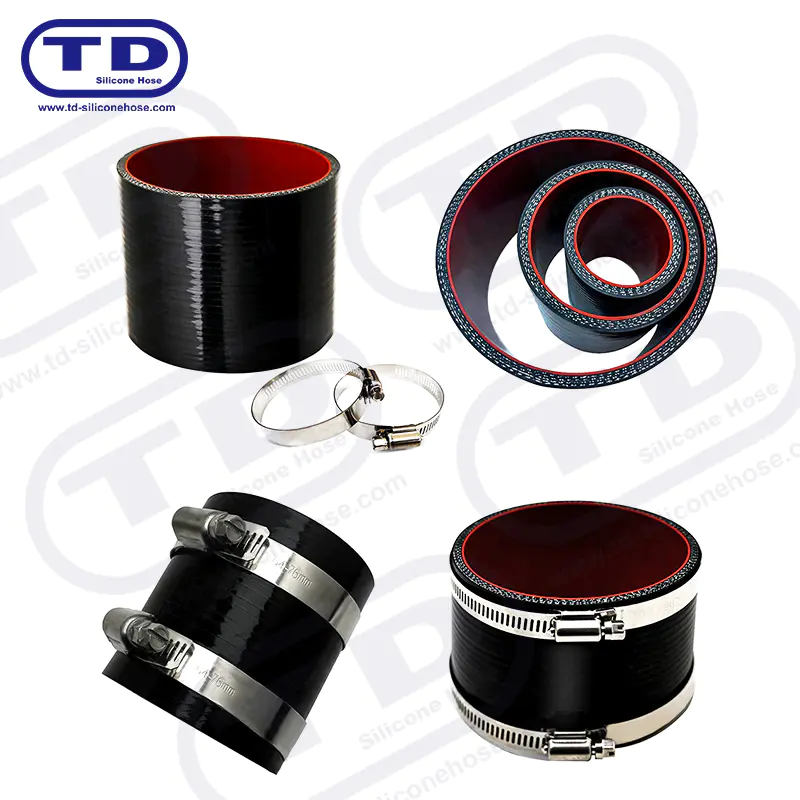
- Use the correct clamp type: T-bolt clamps or constant-tension clamps are recommended for silicone hoses over standard worm-drive hose clamps. T-bolt clamps distribute clamping force evenly around the circumference without cutting into the soft silicone wall. If using worm-drive clamps, torque them to the manufacturer's specification — typically 2 to 4 Nm for standard automotive hose clamps.
- Position clamps correctly: Place the clamp within the first 10 to 15 mm of the fitting insertion zone — past the bead or step on the pipe/fitting where applicable. Never clamp at the very end of the hose.
- Minimum overlap: The hose should overlap onto the fitting by at least 1.5× the hose internal diameter. For a 50 mm ID hose, the fitting should be inserted at least 75 mm into the hose end.
- Avoid sharp bends: Never route a silicone hose at a bend radius tighter than the hose's minimum bend radius specification — typically 3× the internal diameter for standard hoses. Tight bends reduce the internal bore and create fatigue stress at the bend point.
- Do not use sealant or thread tape on barb fittings: Silicone hoses form a seal by compression against the fitting. Adding PTFE tape or sealant can prevent the hose from seating correctly and creates a slippery surface that promotes hose blowoff under pressure.
- Re-torque clamps after first heat cycle: Silicone compresses slightly after the first thermal expansion cycle. Re-tighten clamps after the system reaches operating temperature and cools down once to ensure the seal remains tight.
How to Identify a Failing Silicone Hose
Silicone hoses degrade slowly and rarely fail catastrophically without warning signs. Recognizing these signs early prevents coolant loss, boost leaks, or fluid contamination:
- Surface cracking or hardening: A silicone hose that cracks when bent or feels hard and brittle has been exposed to temperatures or chemicals beyond its rated limits. Replace immediately.
- Swelling or delamination: Soft, puffy, or swollen areas indicate chemical attack, typically from oil or fuel contamination on a standard silicone hose. The reinforcement layers may be separating internally.
- Leaks at clamp zones: White residue (coolant deposits) or oil staining around hose clamps indicates a slow leak. Check clamp torque first; if re-torquing does not resolve the leak, the hose end has deformed or been cut by the clamp and the hose needs replacement.
- Discoloration: Yellowing or brown discoloration on a silicone hose that was originally red or blue indicates sustained overheating. The hose may still hold pressure but will have reduced flexibility and life expectancy.
- Boost or vacuum leaks (automotive): A hissing sound from the intake system under load, reduced power, or boost gauge readings below target often indicate a silicone coupler has developed a leak or has blown off a fitting.
Silicone Hose Colors: Meaning and Practical Considerations
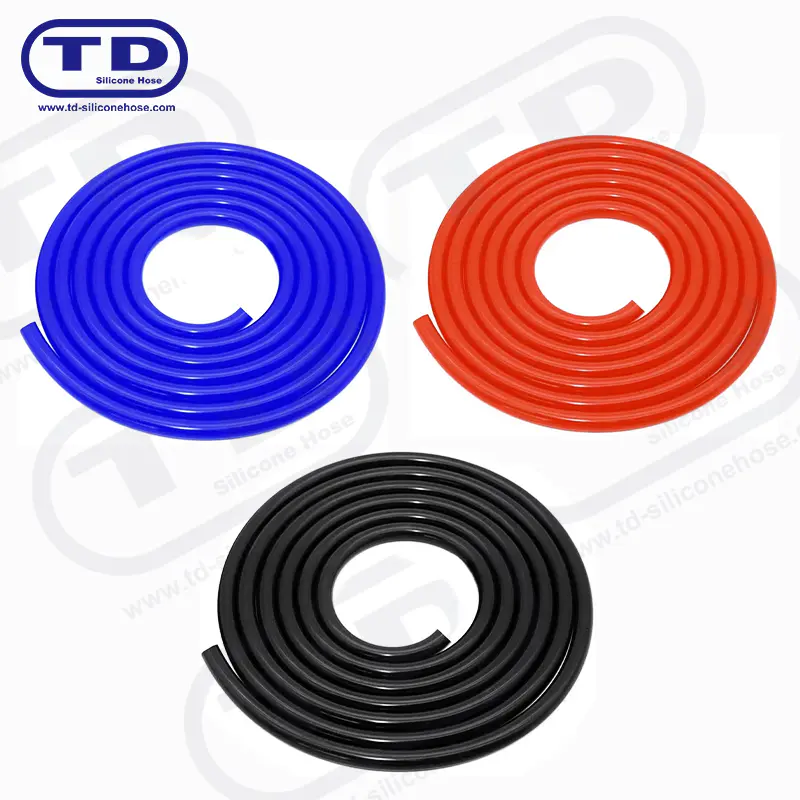
Silicone hoses are manufactured in a wide range of colors — red, blue, black, green, yellow, and others. In most cases, color is aesthetic rather than functional and does not indicate different grades or temperature ratings. The same base compound can be pigmented to any color during manufacturing.
Exceptions to note:
- Translucent or clear silicone is typically used in food-grade and medical-grade applications, where visual inspection of fluid flow and cleanliness inside the hose is required. The clarity is a functional specification, not purely cosmetic.
- Black silicone hoses sometimes incorporate carbon black as a UV stabilizer, providing marginally better UV resistance for outdoor applications — though standard silicone already has excellent UV resistance without added carbon.
- In some industrial settings, color-coding hoses by service (blue for water, red for heat, green for hydraulic, etc.) is a maintenance practice to prevent misconnection — but this is a facility-level convention, not a manufacturing standard.
Our Product //
Ningbo Tiandai Auto Parts Co., Ltd. All Rights Reserved. ALL RESERVED.
Wholesale Automotive Silicone Hose Manufacturers
