

 English
 中文简体
中文简体 русский
 Español
 عربى
عربى
Submit feedback
How Are Silicone Hoses Made? A Step-by-Step Guide from a Silicone Hose Factory
Industry news-Content
- 1 What a Silicone Hose Is Actually Made Of
- 2 Step 1: Compounding the Raw Silicone
- 3 Step 2: Preparing the Reinforcement Plies
- 4 Step 3: Wrapping and Shaping on the Mandrel
- 5 Extrusion: The Alternative Route for Straight Tubes
- 6 Step 4: Vulcanization and Post-Curing
- 7 Step 5: Finishing and Trimming
- 8 Testing: Where Quality Is Proven
- 9 How Each Stage Shapes the Finished Hose
- 10 Special Constructions for Demanding Jobs
- 11 What This Means When You Choose a Supplier
As a silicone hose manufacturer based in Ningbo, China, one of the questions we hear most often from new customers is a refreshingly direct one: how are silicone hoses actually made? It is a fair question. On the shelf, a finished hose looks deceptively simple, just a shaped tube with a smooth, lightly textured surface. In reality, every high-quality silicone hose is the result of precise compounding, hand-skilled wrapping, tightly controlled curing, and relentless testing. In this article, we walk you through the entire production process exactly as it happens on our factory floor, so you know what separates a hose that lasts for years from one that fails early.
What a Silicone Hose Is Actually Made Of
Production begins with the material itself. The base of every hose is raw silicone rubber gum, typically a VMQ grade selected for automotive service. On its own, raw gum is soft and weak, so it is blended with other ingredients to create a usable compound:
- VMQ silicone gum, which provides the elastic, heat-resistant foundation
- Reinforcing fillers such as fumed silica, which deliver strength and tear resistance
- Pigments, which produce the black, blue, red, or custom colors our customers specify
- Curing agents, which allow the compound to cross-link and set permanently during vulcanization
This chemistry is why silicone stays flexible from around -60°C up to +230°C, resists ozone, UV rays, and modern coolant additives, and never turns brittle with age. That performance envelope is the reason silicone has become the default choice for radiator, intercooler, and heater circuits in performance cars, trucks, buses, and motorcycles.
Step 1: Compounding the Raw Silicone
The gum and its ingredients are mixed on two-roll milling machines until the batch is perfectly homogeneous. Uniformity matters more than most people realize: if the filler is unevenly dispersed, the finished hose carries hidden soft spots that can balloon or split under pressure. Color pigments are folded in at this stage too, which is why consistent batch-to-batch color is a reliable sign of a disciplined mixing operation. Before any compound is released to production, we verify its hardness and viscosity against the recipe specification.
Step 2: Preparing the Reinforcement Plies
Silicone rubber on its own stretches easily and can collapse under vacuum, so pressure-rated hoses are built as a laminate. Polyester or aramid fabric is calendered, meaning it is coated with a thin, even layer of the same silicone compound, then cut into plies on the bias, usually at around 45 degrees to the hose axis. Wrapped in alternating directions, these plies give the hose strength in every direction while preserving flexibility, and the number of plies sets the pressure rating. Where suction or pulsation is expected, we go further and embed a steel wire helix, which holds the hose open under negative pressure where a fabric-only construction would flatten.
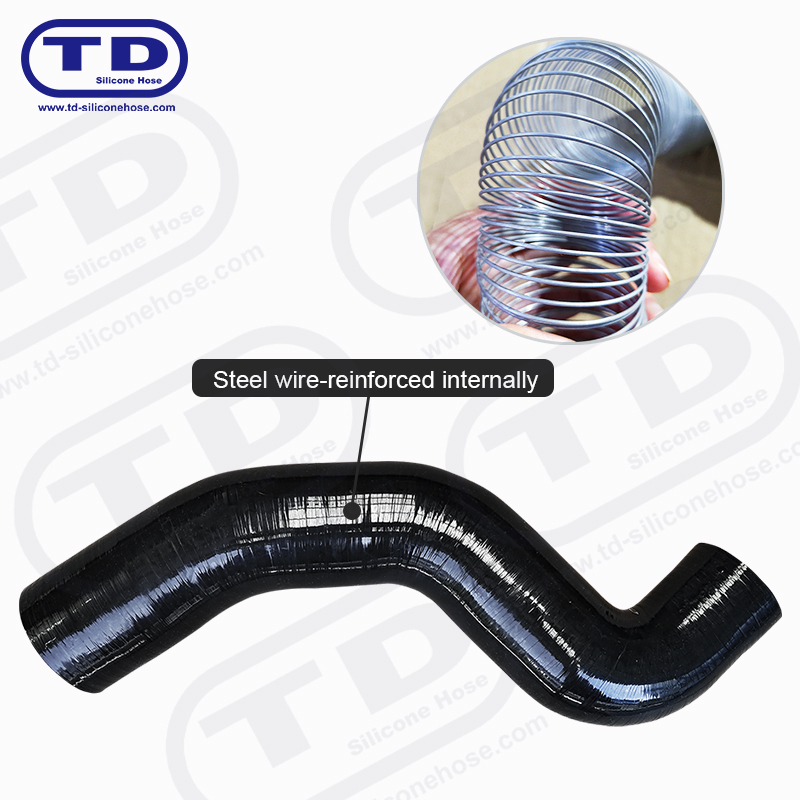 Wire Reinforced Silicone Hose for High-Pressure ApplicationsThis wire reinforced silicone hose resists vacuum collapse where fabric-only laminates flatten. Its steel helix and 3-4 ply construction suit turbo and intercooler piping, matching the ply-count pressure discussion above.View Product →
Step 3: Wrapping and Shaping on the Mandrel
Shaped hoses such as elbows, reducers, and hump couplers are built by hand around polished aluminum mandrels. Each mandrel is coated with a release agent, the silicone inner liner goes on first, and then every reinforcement ply is applied wet, at controlled tension and overlap. The wrap angle determines how the finished hose flexes and how it distributes internal pressure. For bends, the plies are laid and folded around the curve, which is what allows our elbows to hold a crisp, repeatable radius without wrinkles or thin spots. A nylon tape wrap is applied as the outermost layer; it compresses the whole construction during curing and leaves the fine crosshatch pattern you see on a quality silicone hose surface.
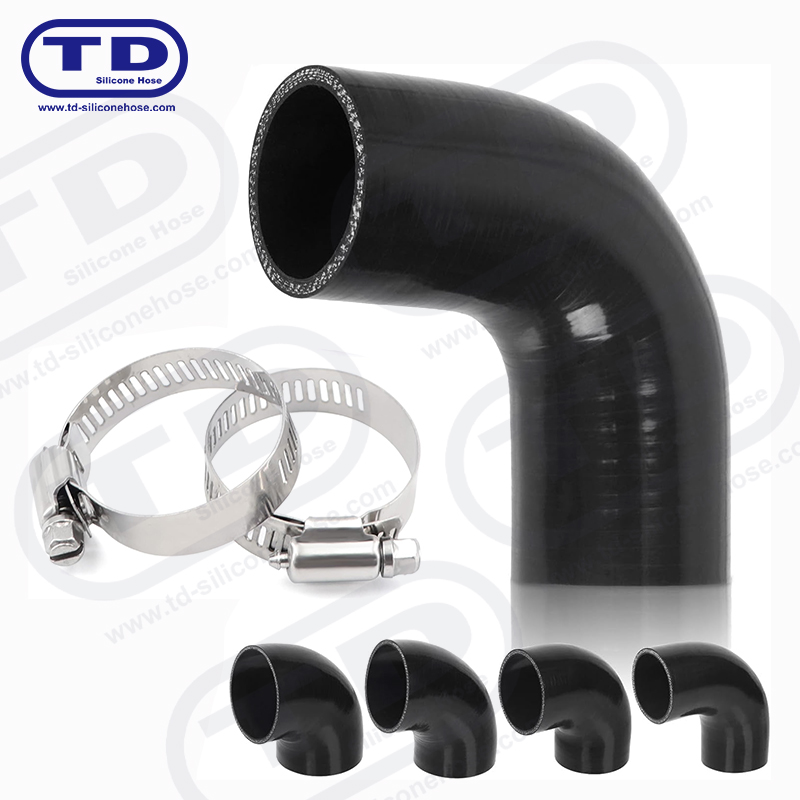 Reinforced Silicone 90° Elbow HoseElbows like this are mandrel-wrapped, with plies folded around the curve to keep a crisp radius without thin spots. Polyester-reinforced, it handles -50°C to 250°C for turbo, intercooler, and intake piping.View Product →
Extrusion: The Alternative Route for Straight Tubes
Straight couplers do not always need a mandrel. For long production runs, the compound can be pushed through a die and cured in continuous lengths, then cut and finished to size. Extrusion is fast and dimensionally very consistent, which suits high-volume orders of standard straight sections, while mandrel wrapping remains the tool of choice for complex geometries. Whichever route a hose takes, the next stage of production is exactly the same.
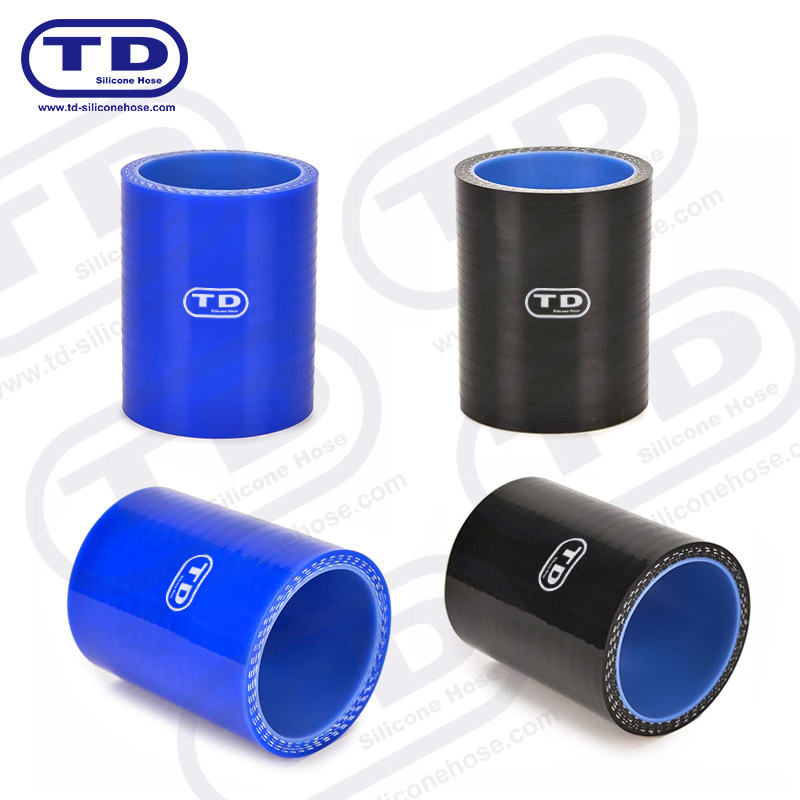 Multi-Ply Silicone Straight Hose CouplerStraight couplers like this can be extruded for consistent dimensions in high-volume runs, then fully cured and post-cured. The result is a stable, temperature-resistant coupler rated -50°C to 250°C.View Product →
Step 4: Vulcanization and Post-Curing
Once wrapped, the hose enters a steam autoclave, where it is cured under heat and pressure, typically at around 160°C to 170°C. Inside the autoclave, the curing agents trigger cross-linking: the long polymer chains lock into a stable three-dimensional network, transforming soft, tacky compound into a permanently elastic body. After autoclaving, the hoses are post-cured in hot-air ovens for several hours. This second heating stage drives off curing by-products and stabilizes the material, improving compression set and long-term temperature resistance. Shortening or skipping post-cure is one of the quiet ways to cut production costs, and the penalty shows up months later as surface tackiness or premature hardening.
Step 5: Finishing and Trimming
When curing is complete, the mandrels are stretched and extracted, and the hoses move to the finishing bench. Here they are cut to length with sharp blades for clean, square ends, trimmed, and punched where a T-shape or branch connection is required. Every hose is then washed, dried, and inspected visually inside and out. Small details at this stage, such as a perfectly square cut end, decide whether the hose seals cleanly under a clamp on the very first attempt.
Testing: Where Quality Is Proven
A hose earns its specification in the test lab, not on the shop floor. Under our IATF 16949 quality management system, every batch passes through a defined inspection routine:
- Dimensional checks of bore, wall thickness, and length against calibrated gauges
- Pressure decay and leak testing on samples from each production batch
- Periodic burst testing to confirm the safety margin built into the design
- Vacuum testing for wire-reinforced constructions that must resist collapse
- Visual inspection of surface finish, color consistency, and interior cleanliness
Traceability is part of the same discipline. If a customer ever reports an issue, we can trace the hose back to its compound batch and curing record, identify the cause, and correct the process instead of guessing.
How Each Stage Shapes the Finished Hose
It helps to see the process as a chain in which every link controls a different property of the product you finally install:
| Production Stage | What It Controls in the Finished Hose |
|---|---|
| Compounding | Temperature resistance, hardness, and color |
| Ply calendering and wrapping | Flexibility, pressure rating, and shape accuracy |
| Vulcanization | Elasticity and long-term durability |
| Post-curing | Surface quality and dimensional stability |
| Finishing and testing | Fit, sealing, and everyday safety |
Special Constructions for Demanding Jobs
The same production line extends to specialized builds. A fluorosilicone lined hose adds an inner barrier for contact with fuel and oil vapors, aluminum wrapped hoses reflect radiant heat in crowded engine bays, and matte surface hoses serve show and race builds where appearance matters as much as durability. The lesson from our factory floor is simple: manufacturing flexibility is what turns a silicone compound into a real solution, because geometry, reinforcement, and surface treatment can each be adapted to the job at hand.
What This Means When You Choose a Supplier
After years of producing nine product series and more than 1,500 items for passenger cars, trucks, buses, motorcycles, and increasingly hydrogen fuel cell systems, we have learned that the questions worth asking any supplier are the process questions: How many plies? What curing schedule? What test reports accompany the batch? A manufacturer who answers those clearly is a manufacturer who truly controls production. If you would like to go deeper, we have published a full manufacturing guide that expands on every stage described here, and our team is always happy to discuss the right construction for your application.
Our Product //
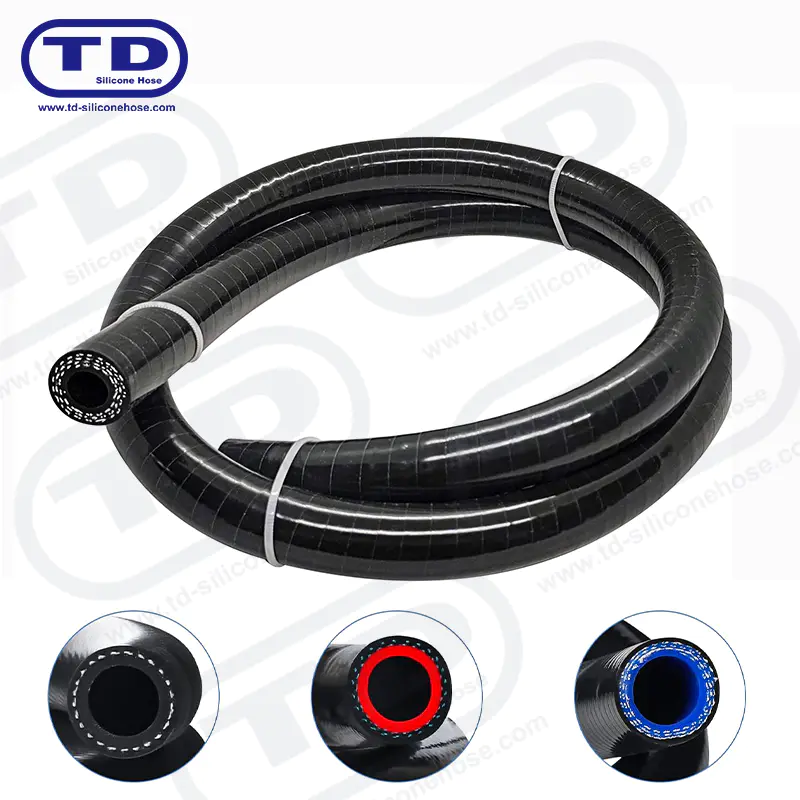
Ningbo Tiandai Auto Parts Co., Ltd. All Rights Reserved. ALL RESERVED.
Wholesale Automotive Silicone Hose Manufacturers
