

 English
 中文简体
中文简体 русский
 Español
 عربى
عربى
Submit feedback
How to Cut Silicone Hoses: Tools, Tips & Clean Cuts
Industry news-Content
- 1 Why Cutting Silicone Hoses Requires the Right Approach
- 2 Best Tools for Cutting Silicone Hoses
- 3 Step-by-Step: How to Cut a Silicone Hose Cleanly
- 4 How to Use a Rotary Hose Cutter on Silicone
- 5 Cutting Silicone Hoses by Type and Application
- 6 Common Mistakes When Cutting Silicone Hoses
- 7 How to Measure Silicone Hose Length Before Cutting
- 8 After the Cut: Fitting, Clamping, and Sealing
- 9 Safety Tips When Cutting Silicone Hoses
- 10 Quick Reference: Cutting Method by Hose Size
The best way to cut a silicone hose is with a sharp razor blade or a dedicated hose cutter, using a single clean stroke perpendicular to the hose axis. A clean, square cut ensures a leak-free seal when the hose is connected to fittings or couplers. Tearing, sawing, or using dull blades results in ragged edges that compromise fit and performance. This guide covers every method, tool comparison, and technique you need for precise silicone hose cuts every time.
Why Cutting Silicone Hoses Requires the Right Approach
Silicone is fundamentally different from rubber, vinyl, or plastic tubing. It is highly elastic, flexible, and tear-resistant, which makes it durable in service but tricky to cut cleanly. Silicone hoses are commonly used in automotive cooling systems, turbocharger induction systems, medical equipment, food-grade fluid transfer, and HVAC applications — all contexts where a precise, leak-free connection is non-negotiable.
A poorly cut silicone hose can cause several problems:
- Uneven seating on barbed fittings, leading to fluid leaks under pressure
- Angled cuts that prevent hose clamps from sealing uniformly
- Torn inner liners or reinforcement layers that weaken pressure tolerance
- Frayed edges that attract debris in food-grade or medical environments
Most silicone hoses used in automotive applications are rated for pressures of 30–100 PSI depending on wall thickness and ply count. A compromised cut can cause failure well below these ratings.
Best Tools for Cutting Silicone Hoses
Tool selection depends on hose diameter, wall thickness, and how many cuts you need to make. Here is a comparison of the most commonly used options:
| Tool | Best For | Cut Quality | Notes |
|---|---|---|---|
| Razor blade / box cutter | Small to medium hoses (up to 2") | Excellent if sharp | Replace blade frequently; one-pass cut |
| Rotary hose cutter | All diameters, high-volume work | Very clean, consistent | Best professional option; ~$20–$60 |
| Scissors (heavy-duty) | Thin-wall or small-diameter hoses | Good with sharp blades | Can distort hose during cutting |
| Utility knife | General cutting, thick walls | Good with proper technique | Use a cutting guide for straight lines |
| Hacksaw or hand saw | Not recommended | Poor — tears and frays | Saw teeth shred silicone fibers |
| Angle grinder / power tools | Not recommended | Very poor | Generates heat; melts and warps silicone |
For most DIY automotive or shop applications, a sharp utility razor or a rotary tube cutter is the optimal choice. Avoid any tool that requires multiple back-and-forth strokes, as silicone's elasticity causes it to pull and deform under sawing motions.
Step-by-Step: How to Cut a Silicone Hose Cleanly
Follow this method for a precise, square cut using a razor blade or utility knife — the most accessible setup for most users.
What You Will Need
- Sharp razor blade or utility knife (new or freshly changed blade)
- Cutting mat or flat wooden surface
- Tape measure and fine-tip permanent marker
- Masking tape or painter's tape
- A rigid square or right-angle guide (optional but recommended)
The Cutting Process
- Measure and mark the cut location — Use a tape measure to find the correct length. Mark the cut line with a permanent marker around the full circumference of the hose. A wrap of masking tape around the mark helps maintain a straight guideline.
- Place the hose on a flat, stable surface — Lay the hose flat on a cutting mat. Do not hold it freehand — an unsupported hose flexes during cutting, resulting in angled or uneven cuts.
- Insert a rigid support if needed — For larger or thicker hoses (over 1.5" diameter), slide a wooden dowel, PVC pipe section, or metal mandrel inside the hose at the cut point. This prevents the hose from compressing under blade pressure and produces a rounder, cleaner cut.
- Score the cut line lightly first — With your razor or knife, run the blade along the marked line without cutting all the way through. This establishes the path and prevents the blade from drifting.
- Make a single firm cutting stroke — Apply steady downward pressure and cut through in one continuous pass. Do not saw back and forth. Rotate the hose slightly if necessary and repeat the single-stroke method around the circumference.
- Inspect the cut edge — Check that the cut face is flat, square, and free from tears or ragged edges. Run your finger lightly across the cut end — it should feel smooth and even.
- Trim any imperfections — If a small area is uneven, use a fresh blade to trim only that section flush, rather than cutting a new piece from the hose.
How to Use a Rotary Hose Cutter on Silicone
A rotary hose cutter (also called a tube cutter or pipe cutter adapted for flexible hose) gives the cleanest and most consistent results, especially for hoses over 1 inch in diameter.
- Open the cutter jaws and position the cutting wheel directly on your marked line.
- Tighten the adjustment knob until the wheel contacts the hose surface with slight pressure. Do not overtighten — silicone compresses, and excessive clamping deforms the hose wall before the cut begins.
- Rotate the cutter one full revolution around the hose while maintaining consistent pressure.
- Increase tension slightly after each revolution by a quarter-turn of the adjustment knob.
- Continue rotating until the hose separates cleanly. For a 2-inch, 4-ply silicone hose, this typically takes 4–6 rotations.
The rotary method produces a perfectly perpendicular cut and slightly compresses the cut edge, which actually improves the seal when sliding over barbed fittings.
Cutting Silicone Hoses by Type and Application
Different silicone hose configurations require slightly adjusted approaches:
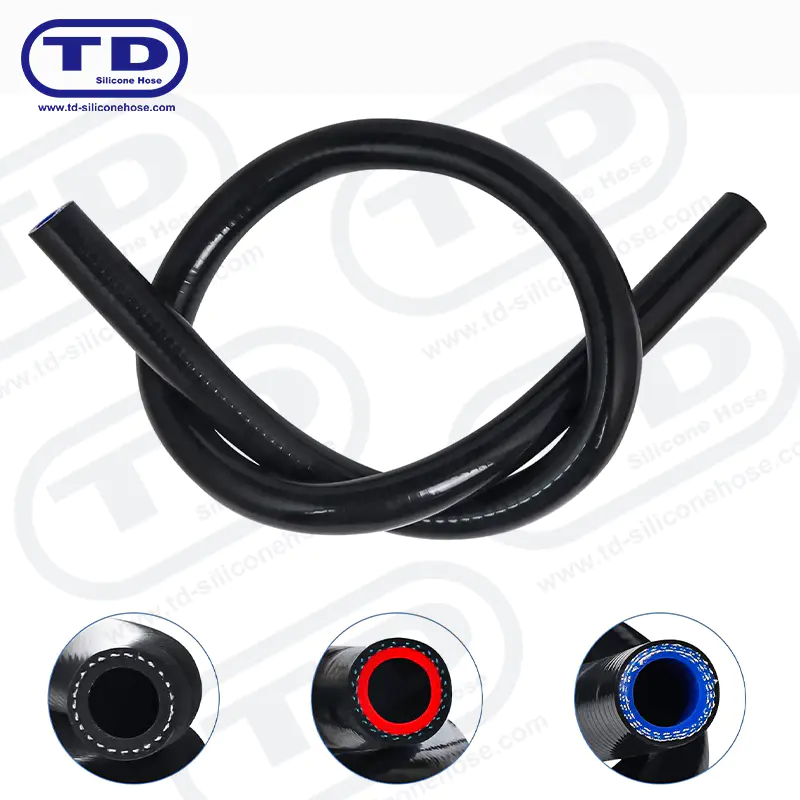
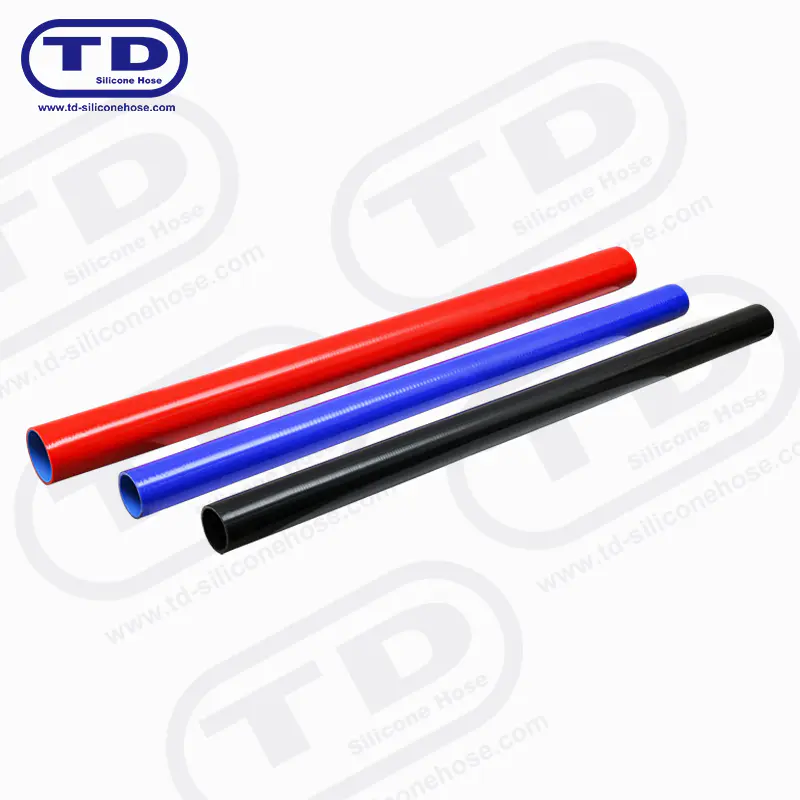
Straight Silicone Hoses
The simplest to cut. Lay flat on a cutting mat, use masking tape as a guide, and cut with a razor blade or rotary cutter. Diameters from ¼ inch to 4 inches all follow the same process — larger diameters benefit more from an internal mandrel or a rotary cutter.
Elbow and Reducer Silicone Hoses
Cutting a 45° or 90° silicone elbow hose to adjust its straight leg length requires care. Only cut the straight end sections, never attempt to cut through the curved portion — the compressed fibers in the bend make clean cuts nearly impossible and weaken the hose structurally. Mark the straight section at least ½ inch from the start of the bend before cutting.
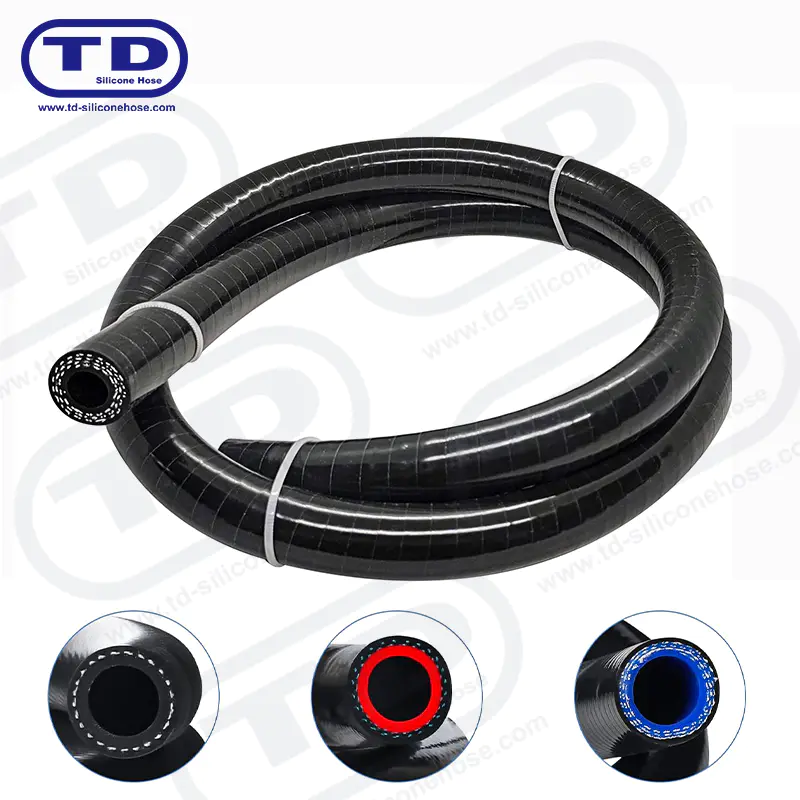
Reinforced Multi-Ply Silicone Hoses
High-performance automotive and industrial silicone hoses often feature 3 or 4 polyester fabric reinforcement layers sandwiched between silicone plies. These are significantly harder to cut. Use a rotary cutter or apply multiple single-pass razor cuts, re-scoring each layer. A blade that cuts cleanly through 1-ply hose will often deflect on reinforced hose — replace it or apply more deliberate pressure at the reinforcement layer.
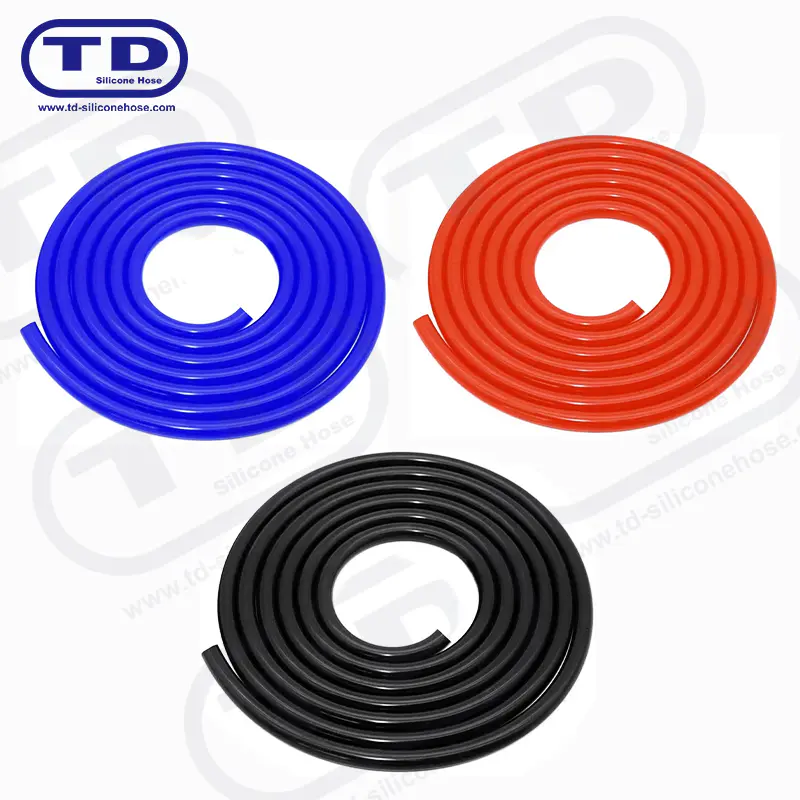
Food-Grade and Medical Silicone Tubing
For FDA-compliant or pharmaceutical-grade silicone tubing, cleanliness matters as much as precision. Use a sterile or alcohol-wiped blade and cut on a clean surface. Never use a blade that has touched lubricants, metal, or other contaminants. Thin-wall tubing (wall thickness under 2mm) is best cut with sharp scissors or a razor blade — rotary cutters may crush the walls of very small-diameter tubing.
Common Mistakes When Cutting Silicone Hoses
| Mistake | What Happens | How to Avoid It |
|---|---|---|
| Using a dull blade | Tearing, dragging, uneven edge | Always use a fresh or new blade |
| Sawing back and forth | Frayed edges, torn fibers | Single-stroke cutting only |
| Cutting freehand without support | Angled, crooked cut | Use a flat surface and guide tape |
| No internal support for thick hoses | Collapsed oval cut, not round | Insert mandrel or dowel before cutting |
| Cutting through the bend of an elbow | Structurally weakened hose | Only cut straight sections |
| Using heat to cut | Melted edges, toxic fumes | Never use a hot knife or flame on silicone |
How to Measure Silicone Hose Length Before Cutting
Accurate measurement prevents wasted material and ensures the cut hose fits correctly between fittings. Silicone hoses are often sold by the foot or in specific lengths, and a single bad measurement on a $30–$80 performance silicone hose is a costly error.
- Measure the distance between fittings on the installed side first, accounting for how far the hose slides over each barb (typically ¾ inch to 1½ inches per end depending on fitting size).
- For replacement hoses, measure the old hose before removing it to capture its exact length.
- Use a flexible tape measure or a length of string to follow curved routing paths, then measure the string against a ruler.
- Always cut slightly long on the first attempt — you can trim a hose shorter but cannot add back cut material.
After the Cut: Fitting, Clamping, and Sealing
A clean cut is only valuable if the installation is done correctly. Once your silicone hose is cut:
Sliding the Hose onto Fittings
Silicone hoses can be stiff, especially in cooler temperatures. Applying a small amount of silicone-based lubricant or soapy water to the fitting barb allows the hose to slide on without distorting the cut end. Never use petroleum-based lubricants — they degrade silicone over time.
Positioning Hose Clamps Correctly
Position the clamp at least ¼ inch back from the cut edge, directly over the first barb or bead of the fitting. Placing a clamp too close to the edge on a ragged or angled cut allows the hose to peel back under pressure. Worm-drive clamps or T-bolt clamps are preferred for silicone in automotive applications.
Pressure Testing After Installation
For any pressurized application, perform a low-pressure leak test at 10–15 PSI before returning the system to full operating pressure. Inspect the cut end of the hose around the clamp for any signs of seepage, bubbling, or deformation.
Safety Tips When Cutting Silicone Hoses
- Use cut-resistant gloves when working with razor blades, especially when applying force through thick, multi-ply hose walls.
- Always cut away from your body and keep fingers well clear of the blade path — silicone resistance can cause blades to slip suddenly.
- Dispose of used razor blades in a puncture-resistant sharps container or blade bank — never loose in a trash bag.
- Do not cut silicone hoses that are still connected to pressurized or hot fluid systems — always depressurize and cool the system first.
- Work in a well-ventilated area if the hose has been used with chemicals, fuels, or coolants — residue may be present inside the hose bore.
Quick Reference: Cutting Method by Hose Size
| Hose Diameter | Wall Thickness | Recommended Tool | Internal Support Needed? |
|---|---|---|---|
| Under ½ inch | Thin (1–2mm) | Sharp scissors or razor blade | No |
| ½ inch to 1 inch | Medium (2–4mm) | Razor blade or utility knife | Optional |
| 1 inch to 2 inches | Medium-thick (4–6mm) | Rotary hose cutter or utility knife | Recommended |
| Over 2 inches | Thick (6mm+), multi-ply | Rotary cutter or scored razor | Required |
Our Product //
Ningbo Tiandai Auto Parts Co., Ltd. All Rights Reserved. ALL RESERVED.
Wholesale Automotive Silicone Hose Manufacturers
