

 English
 中文简体
中文简体 русский
 Español
 عربى
عربى
Submit feedback
Silicone Meter Hose: Properties, Applications, and How to Select the Right Size
Industry news-Content
- 1 What Is a Silicone Meter Hose?
- 2 Why Dimensional Accuracy Matters
- 3 Key Properties of Silicone Meter Hose Material
- 4 Silicone Meter Hose vs. Rubber and PVC
- 5 Applications in Liquid Transfer and Fluid Measurement
- 6 How to Select the Right Silicone Meter Hose
- 7 Installation and Maintenance Best Practices
- 8 Quality Considerations When Choosing a Manufacturer
A test engineer at an engine laboratory watches a coolant additive reading drift by 3.5 percent between two identical batches. The dosing pump is brand new, the flow sensor was calibrated that morning, and the only component that has not been checked is the short silicone tube connecting the reservoir to the pump. This scene repeats every day in laboratories, food plants, pharmaceutical lines, and engine test cells, and it is exactly why a silicone meter hose should be selected with the same rigor as the pump itself.
A meter hose has one primary job: to deliver a predictable, repeatable flow so that the liquid passing through it can be measured, dosed, or transferred with confidence. The silicone material matters, but what really determines performance is how consistently the hose is manufactured and how well it is matched to the application.
What Is a Silicone Meter Hose?
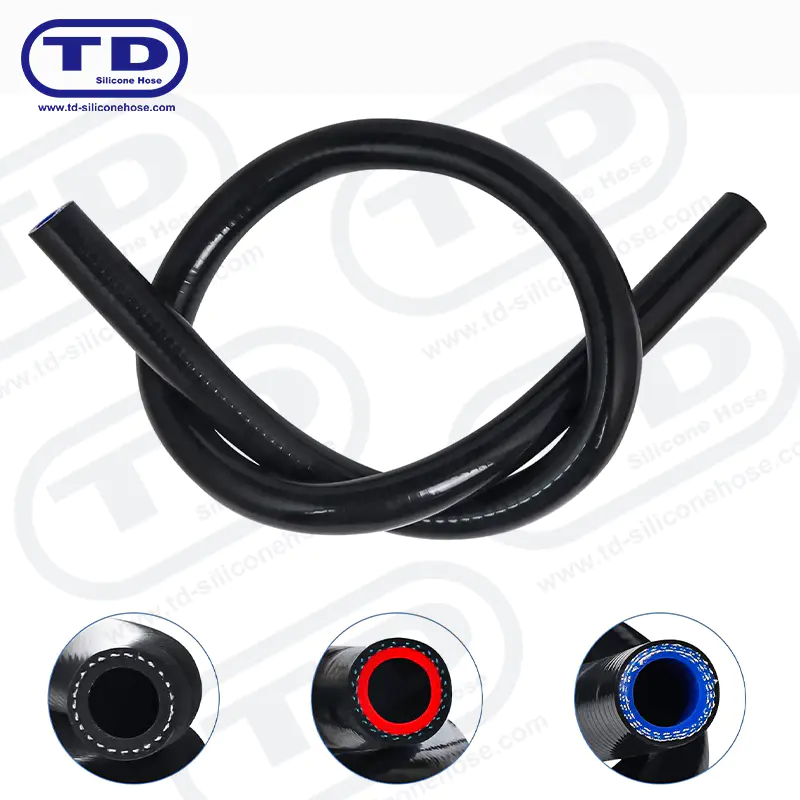
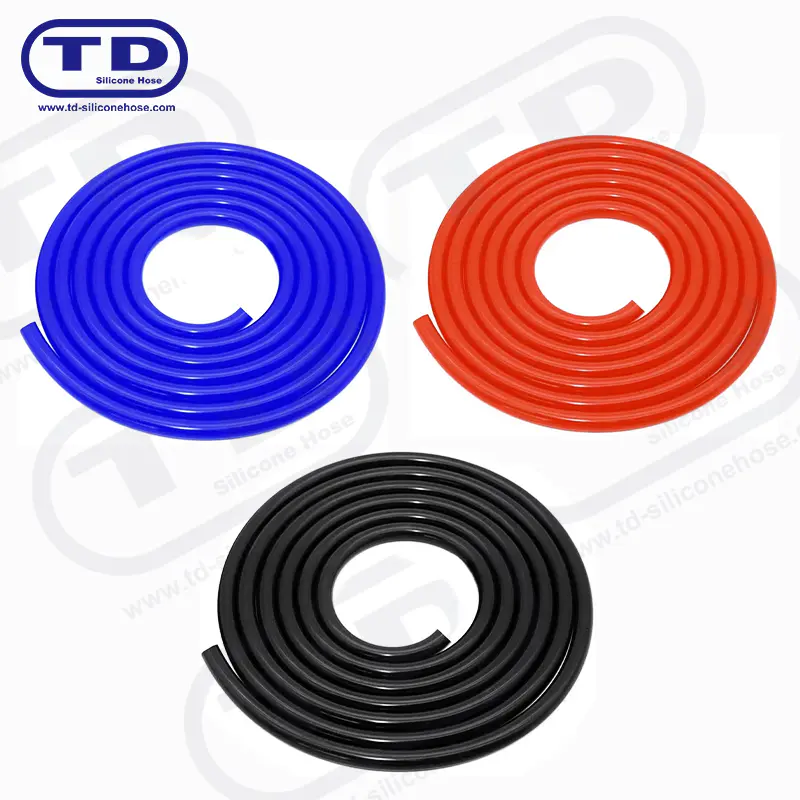
A silicone meter hose is an extruded silicone tube designed for liquid transfer and fluid measurement applications that demand dimensional accuracy and consistent flow behavior. It belongs to the same family as universal silicone hoses, but it differs from a general-purpose straight hose in one important way: it is specified with tighter attention to inner diameter, wall thickness, and bore smoothness.
The goal is a hose that behaves identically along its entire length. When the bore is held to a tight tolerance and the inner surface stays smooth, the relationship between pressure and flow becomes predictable. That predictability is what allows a pump, a flow meter, or an operator to meter liquid accurately. Many process facilities select a silicone meter hose with verified bore tolerances rather than choosing by price alone, because the tolerance directly affects how much fluid actually moves through the line.
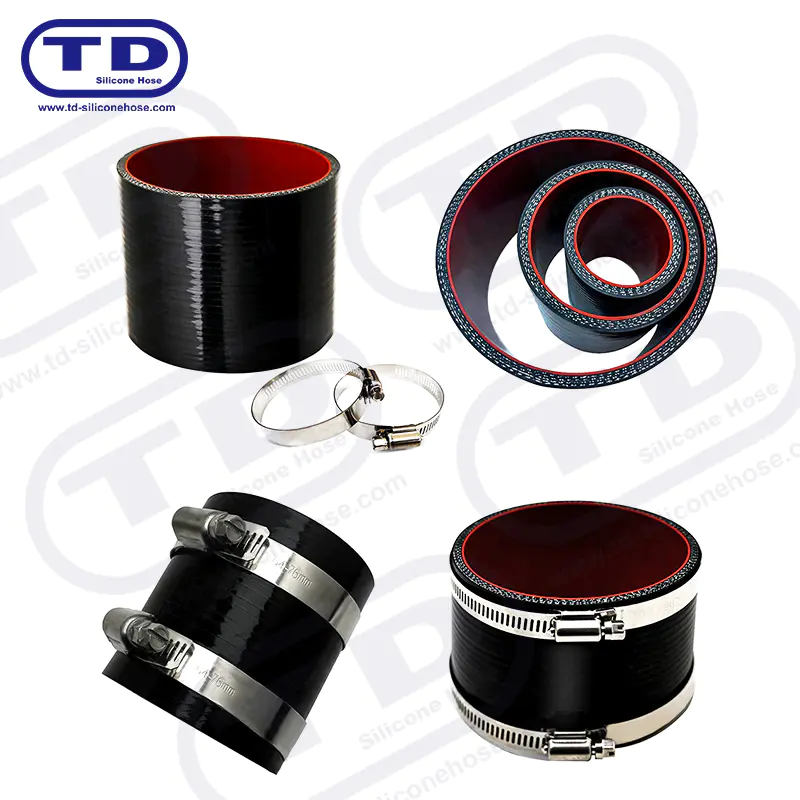
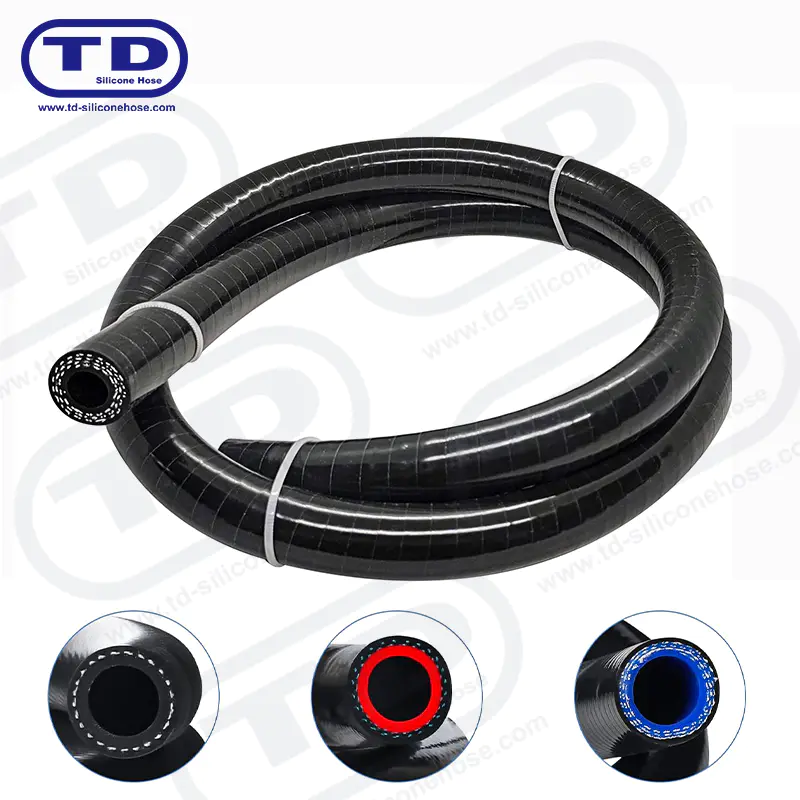 Wholesale Silicone Meter Hose Suppliers, ManufacturersNingbo Tiandai Auto Parts Co., Ltd. is China Silicone Meter Hose Manufacturers and Silicone Meter Hose Suppliers, offer Wholesale Silico...View Product →
Why Dimensional Accuracy Matters
The physics explains why this is so critical. Flow through a circular tube scales with roughly the fourth power of the radius. A change of only 0.1 mm in the bore of a 10 mm ID hose changes the cross-sectional area by about 2 percent, but it can shift the volumetric flow by more than 4 percent. If your process requires dosing accuracy of plus or minus 1 percent, that small dimensional drift can be the difference between a passing batch and a rejected one.
A meter hose addresses this in three ways. First, the extrusion process controls the bore to a consistent specification along the full length. Second, the smooth inner wall minimizes turbulence and pressure loss. Third, silicone resists swelling when exposed to many fluids, so the internal dimension does not grow or deform during service. Together, these factors keep the flow steady and the measurement reliable.
Key Properties of Silicone Meter Hose Material
Temperature resistance is the most widely recognized strength of silicone. A well-formulated silicone meter hose remains flexible from roughly -60°C up to 200°C, depending on the compound and the manufacturer's specification. It does not stiffen and crack in cold environments the way PVC does, and it does not harden or lose flexibility under sustained heat the way many rubber compounds eventually do.
Flexibility and kink recovery also matter in a metering line. A clamping system or peristaltic pump compresses the tube repeatedly, and the tube must return to its original shape every cycle. Silicone offers a combination of softness and wall strength that supports both tight routing and reliable shape recovery.
Chemical compatibility is another deciding factor. Silicone handles water, alcohols, diluted acids, and many cleaning agents without degrading, and it does not leach plasticizers or other migratory additives into the fluid. This is why food-grade and pharmaceutical lines frequently rely on it.
Finally, the non-porous bore resists buildup and flushes clean easily, which keeps the flow path clear between product changeovers.
Silicone Meter Hose vs. Rubber and PVC
Choosing between silicone, rubber, and PVC is usually a trade-off between performance and cost. The comparison below summarizes typical characteristics of each material in metering and liquid transfer service.
| Property | Silicone Meter Hose | Rubber Hose | PVC Tubing |
|---|---|---|---|
| Typical temperature range | -60°C to 200°C | -40°C to 120°C | -10°C to 60°C |
| Cold flexibility | Excellent | Good | Poor; stiffens |
| Dimensional stability | High | Moderate | Moderate |
| Chemical resistance | Good | Varies by compound | Moderate; may leach plasticizers |
| Food-grade availability | Common | Limited | Available, with additives |
| Relative cost | Higher | Moderate | Lower |
These are general trends rather than fixed values. The actual performance of any hose depends on the specific compound and manufacturing process, so confirm the details with the supplier before choosing a material for a critical line.
Applications in Liquid Transfer and Fluid Measurement
Silicone meter hose appears wherever precise volumes need to move from one point to another. The advantages of silicone meter hose in liquid transfer become obvious in applications that combine repeated cleaning, temperature swings, and accuracy requirements.
- Laboratory and analytical instruments, where small-diameter lines must deliver consistent sample volumes.
- Food and beverage processing, where food-grade silicone survives hot wash-down cycles and does not affect the product.
- Pharmaceutical and biotechnology transfer, where smooth surfaces, low extractables, and sterilizability are essential.
- Automotive and engine test systems, where silicone handles hot coolant and elevated under-hood temperatures without losing dimensional stability.
- Peristaltic pump and dosing equipment, where the tube must flex through millions of compression cycles and still return to its original shape.
How to Select the Right Silicone Meter Hose
Selection starts with the fluid, the temperature, and the accuracy target. Once those are defined, six specifications deserve close attention.
- Inner diameter and tolerance. Match the nominal bore to your flow rate and connection size, and ask the supplier for the tolerance. A hose that varies along its length will produce inconsistent metering.
- Wall thickness. Thinner walls flex more easily and work better in peristaltic pumps; thicker walls handle higher pressure and resist collapse under vacuum.
- Durometer, or Shore A hardness. Softer tubes compress with less force and seal easily, while harder tubes hold their shape better in low-pressure or suction service.
- Temperature and pressure rating. Confirm both values for your specific fluid and operating cycle.
- Minimum bend radius. Compare it with the tightest route in your equipment to avoid kinking that blocks flow.
- Certifications and compliance. If the hose carries food, beverages, or pharmaceutical products, verify the food-grade and cleanability standards it meets.
Installation and Maintenance Best Practices
A precisely made meter hose will still fail in service if it is clamped or routed incorrectly. The most common mistake is over-tightening a traditional worm-gear clamp on silicone. Silicone is softer than rubber, and an over-tightened clamp leaves a permanent groove that narrows the bore and disturbs flow. A silicone hose clamp with a smooth or wide band distributes the clamping force more evenly and protects the tube wall.
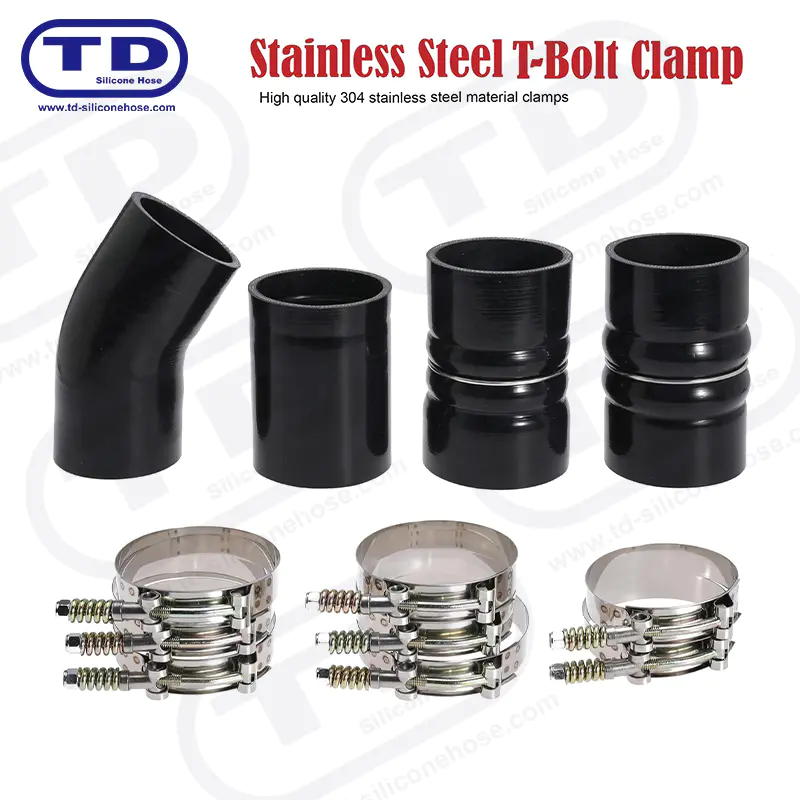 Custom Silicone Hose Clamp Manufacturers, OEM/ODM FactoryAs China Silicone Hose Clamp Manufacturers and customSilicone Hose Clamp Factory, Ningbo Tiandai Auto Parts Co., Ltd. supply OEM Silicone...View Product →
Where the hose joins a rigid pipe or component, an aluminum fitting creates a clean transition and prevents the hose from collapsing at the fitting edge. Aluminum also handles the same temperature range as silicone, so the connection does not become a weak point.
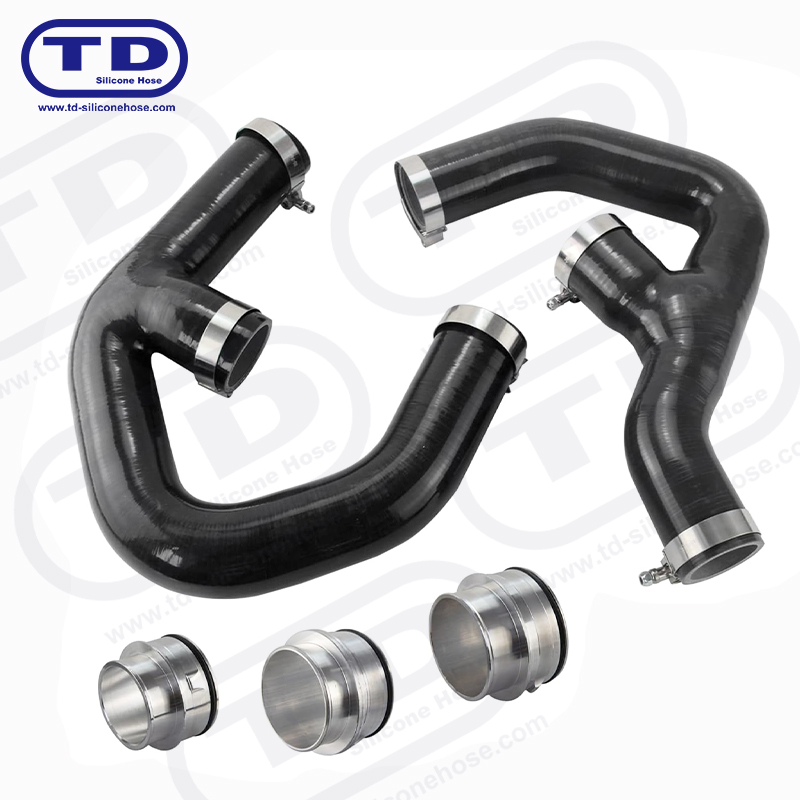 Wholesale Aluminum Fitting Suppliers, ManufacturersNingbo Tiandai Auto Parts Co., Ltd. is China Aluminum Fitting Manufacturers and Aluminum Fitting Suppliers, offer Wholesale Aluminum Fit...View Product →
Avoid bends tighter than the published minimum radius, support long horizontal runs to prevent sagging, and inspect the hose regularly for hardening, cracking, or discoloration. Silicone is durable, but no material lasts forever once it is exposed to heat cycling, chemicals, and mechanical stress.
Quality Considerations When Choosing a Manufacturer
The performance of a silicone meter hose starts on the extrusion line. A silicone hose manufacturer that controls raw material formulation, extrusion parameters, and final inspection will deliver a product with consistent bore dimensions and predictable properties. That consistency is what you are actually paying for when you choose a meter hose over a commodity tube.
Ask for published specifications on bore tolerance, temperature range, and hardness. Confirm that the factory operates a recognized quality management system and can document the material grade used in each batch. These details matter because a hose that looks identical on the outside can behave very differently on the inside, and the difference shows up in your flow readings.
Buying a silicone meter hose on outside diameter and price alone is the fastest way to introduce hidden error into a process. Define the accuracy you need, verify the bore specification, confirm the material matches your fluid and temperature, and clamp and route the hose with the same care you give the pump. When those details are aligned, a silicone meter hose becomes one of the most reliable components in the system.
Our Product //
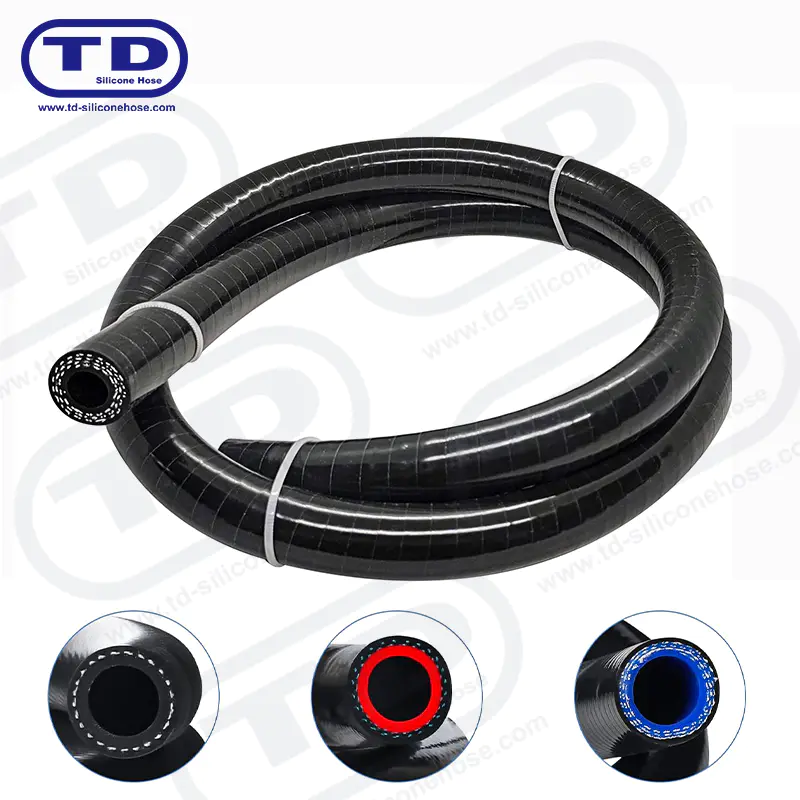
Ningbo Tiandai Auto Parts Co., Ltd. All Rights Reserved. ALL RESERVED.
Wholesale Automotive Silicone Hose Manufacturers
