

 English
 中文简体
中文简体 русский
 Español
 عربى
عربى
Submit feedback
Guide to Silicone Straight Hose: Sizing, Tolerances, Pressure Ratings, and More
Industry news-Content
At 180°C under the hood, a 45 mm silicone straight hose can continue to carry coolant without softening, but the same hose can fail in minutes if it is undersized or reinforced with the wrong fabric. The simple shape is deceptive: a straight silicone hose is not one product but a range of constructions chosen by inner diameter, wall thickness, number of plies, temperature rating, and clamp fit. This guide explains how to evaluate those parameters so you can pick a hose that lasts instead of one that only looks correct when installed.
What Is a Silicone Straight Hose?
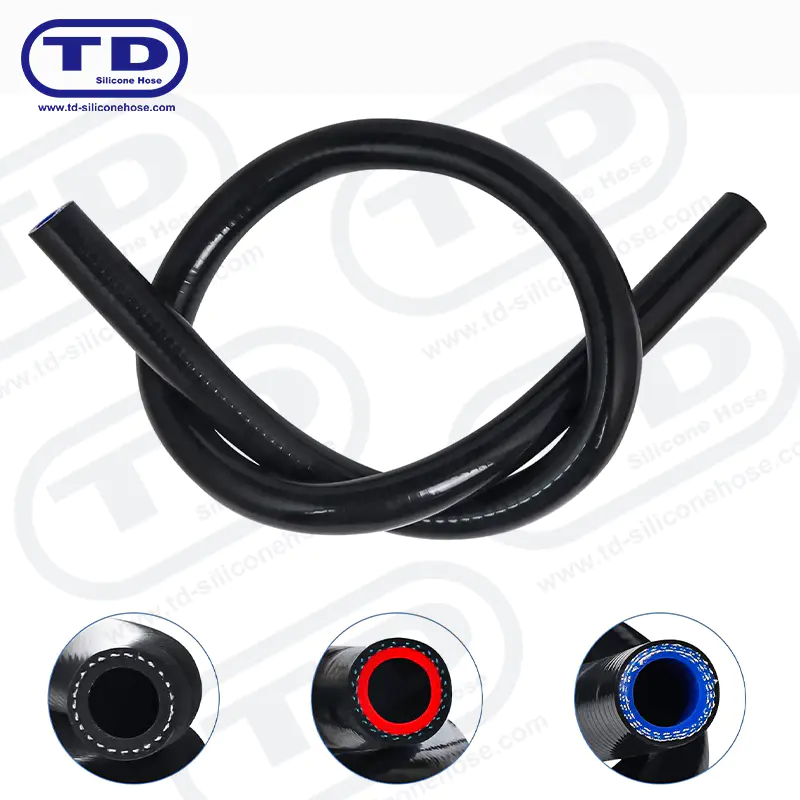
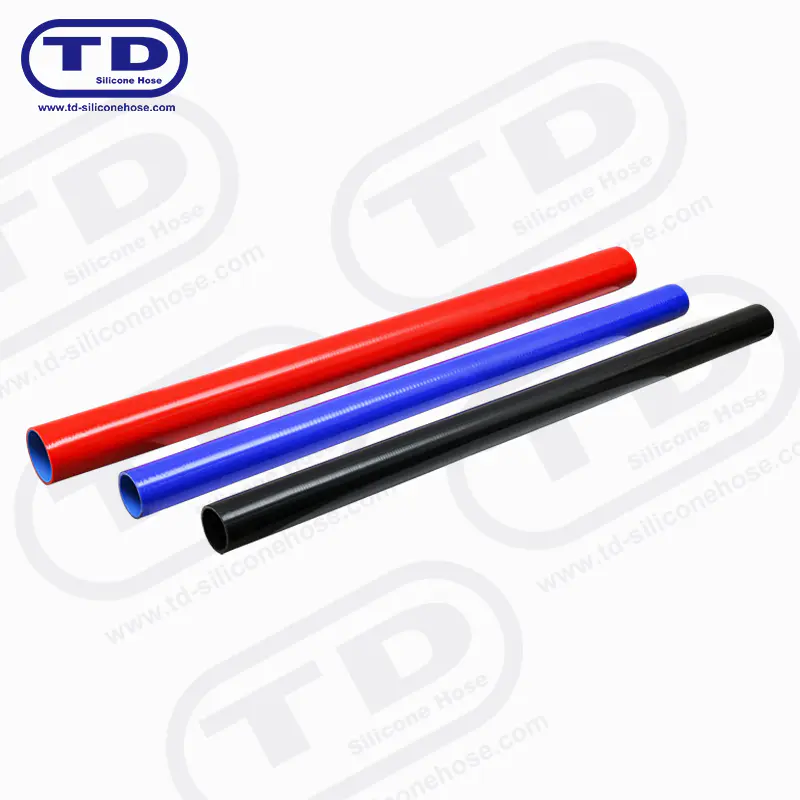
A silicone straight hose is a cylindrical, reinforced silicone tube that connects two points in a fluid or air system without changing the direction of the flow. Unlike elbow hoses, which introduce a fixed bend, a straight hose is used for linear runs between radiators, coolant reservoirs, charge air coolers, throttle bodies, vacuum manifolds, and other components. It can be cut to length and combined with elbows, reducers, and hump hoses to form a complete custom pipe run.
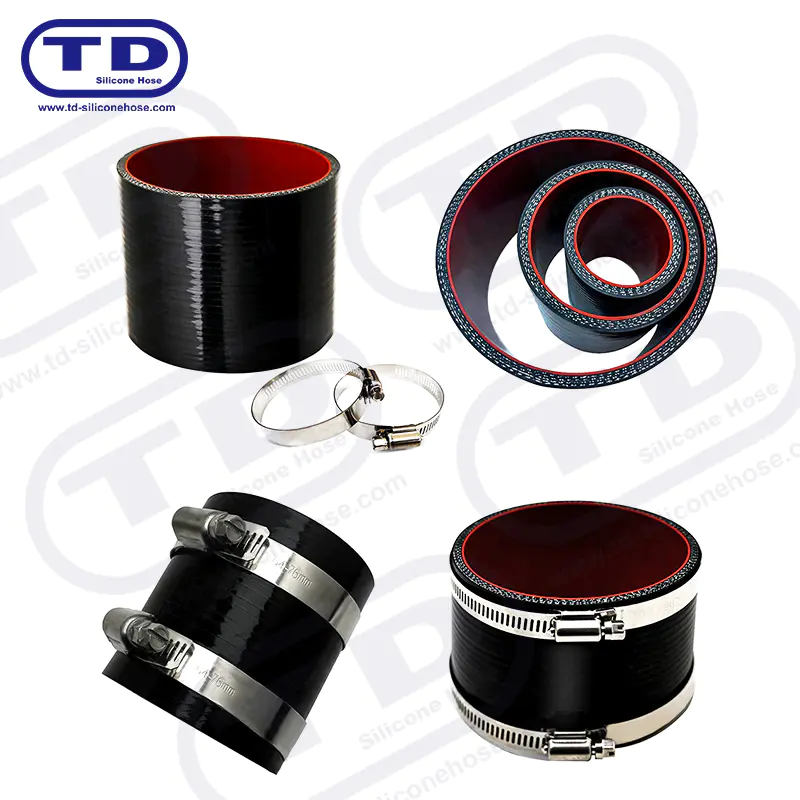
The construction matters more than the outer look. Most straight silicone hoses use a multi-layer wall: an inner silicone layer, one or more reinforcing fabric plies (usually polyester or aramid), and an outer silicone layer. The reinforcement gives the hose its pressure capability, while the silicone provides flexibility, temperature resistance, and resistance to coolant, oil mist, and ozone. For common cooling and intercooler work, a 4-ply polyester-reinforced wall is a practical default because it balances rigidity, burst pressure, and ease of clamping. Our reinforced silicone straight hose follows this construction and is stocked in a range of diameters suitable for engine bays and workshop replacements.
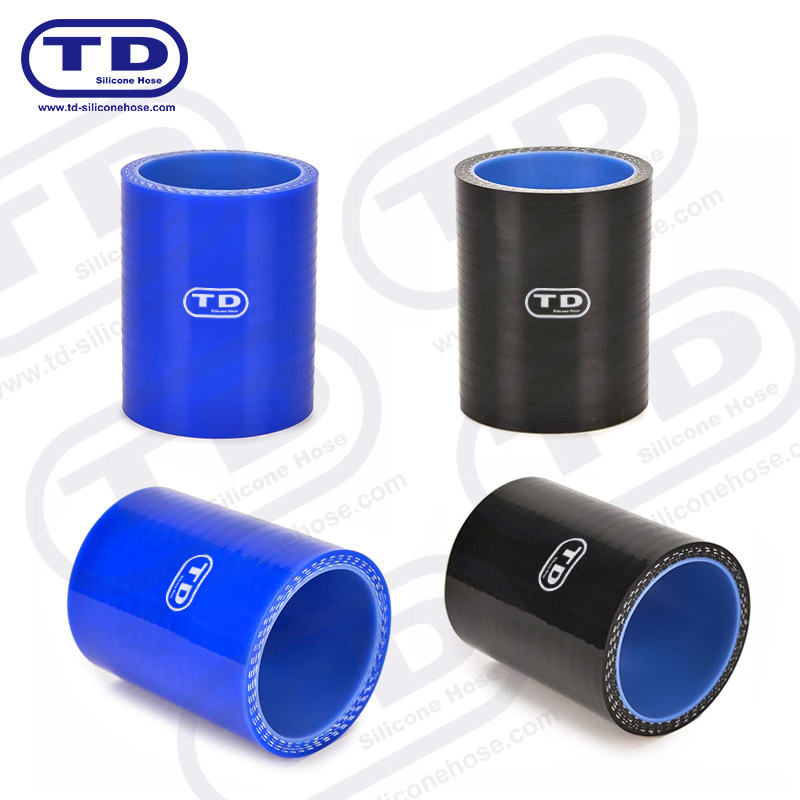 Wholesale Silicone Straight Hose Suppliers, ManufacturersNingbo Tiandai Auto Parts Co., Ltd. is China Silicone Straight Hose Manufacturers and Silicone Straight Hose Suppliers, offer Wholesale ...View Product →
Why Choose Silicone Over Rubber?
Silicone performs better than standard EPDM rubber on temperature, and it remains flexible down to -60°C while resisting continuous heat up to about 200°C depending on grade. That is why silicone hoses have become common on modified cars, turbocharged engines, trucks, and buses: they do not harden, crack, or collapse as quickly as rubber when exposed to heat cycles and coolant. In a direct silicone versus rubber hose comparison, silicone usually wins on service life and appearance, but it also costs more, so the decision should be based on operating temperature, pressure, and how the vehicle is used.
The practical conclusion: for radiator coolant lines, charge air systems, and vacuum circuits that see above-normal underhood heat, silicone straight hoses are a dependable upgrade. For budget-oriented repairs on a low-stress daily driver, rubber may still be adequate. The key is to check the actual duty, not just the material name.
Critical Specifications to Check
Buying a silicone straight hose is a small decision that becomes a big problem if the specification is wrong. Focus on these five points before adding the hose to cart or sending a purchase order.
- Inner diameter: This must match the outer diameter of the metal or plastic fitting with a small interference fit. Too large causes coolant bypass and clamp leakage; too small is difficult to install and can tear the silicone.
- Wall thickness: A thicker wall adds pressure resistance and insulation, but it also reduces flexibility and increases the clamp size needed. Common walls range from 3 mm to 6 mm for automotive hoses.
- Reinforcement plies: More plies generally raise burst pressure and resistance to vacuum collapse. For coolant, 4-ply is typical; for turbo intake pipes, 4 to 6 plies are common.
- Temperature rating: Look for continuous rating, not just a flash point. High-quality silicone can handle -60°C to 200°C continuously, with short-term peaks in some constructions up to 230°C.
- Pressure rating: Working pressure depends on inner diameter and construction. A 3 bar rating is common for large coolant hoses, while smaller intercooler hoses can be rated higher. Burst pressure is usually at least three times the working pressure.
The table below shows typical values for a general-purpose reinforced silicone straight hose. Always confirm the exact values with the manufacturer because construction details change the numbers.
| Parameter | Typical Range | Influence on Selection |
|---|---|---|
| Inner diameter | 6 mm to 76 mm | Determines fit to fittings and maximum flow rate. |
| Wall thickness | 3 mm to 6 mm | Affects pressure rating, stiffness, and clamp size. |
| Continuous temperature | -60°C to 200°C | Defines coolant and charge air suitability. |
| Working pressure | 3 bar to 10 bar | Guides whether the hose suits low or high pressure systems. |
| Burst pressure | 9 bar to 30 bar | Provides safety margin for spikes and surges. |
How to Choose the Right Size and Fit
The most reliable way to size a straight silicone hose is to measure the outer diameter of the fitting it will slide over. Do not measure the old hose outer diameter by itself, because the old hose may have stretched or worn. Use a caliper at the midpoint of the fitting, then select a hose with an inner diameter slightly smaller than the fitting outer diameter. A 0.5 mm to 1 mm interference is common for standard automotive hose, although thicker walls and larger diameters can tolerate a few tenths more.
Straight hoses are also the easiest section to cut: a clean, square cut with a sharp blade avoids pinch points and makes the clamp seat evenly. A poorly cut end is one of the most common causes of leaks in a newly installed hose. Detailed techniques are covered in a separate automotive silicone hose installation guide, but the short version is: measure twice, cut once, and always use a properly sized clamp.
Common Applications and Pairing with Other Hoses
Straight silicone hoses are used wherever a simple connection is needed in a rigid pipe system. In engine cooling, they connect the radiator to the coolant outlet and the thermostat housing to the heater circuit. In turbocharged engines, they connect intercooler outlets to the throttle body and the compressor outlet to the intercooler inlet. They also appear in vacuum systems, fuel tank vent lines, and industrial air or water circuits that need a chemically stable, heat-resistant tube.
For a complete layout, straight sections are rarely the only component. You will often combine them with elbows, reducers, and hump hoses to deal with the geometry around the engine bay. If the hose path includes a sharp 90 degree turn, a silicone 90 degree elbow hose is a better choice than trying to bend a straight section and risk kinking it.
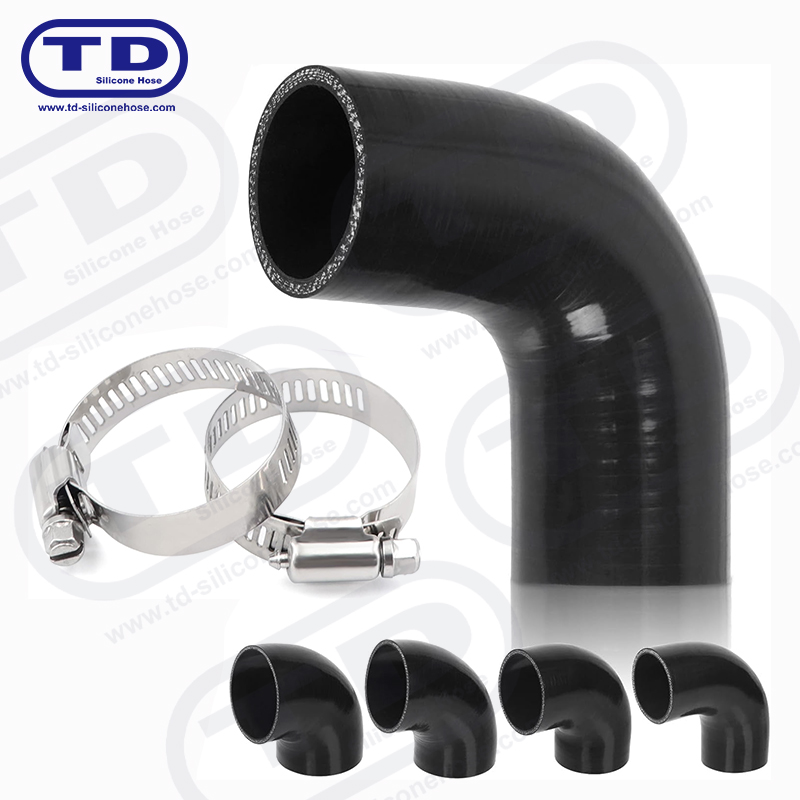 Wholesale Silicone 90° Elbow Hose Suppliers, ManufacturersNingbo Tiandai Auto Parts Co., Ltd. is China Silicone 90° Elbow Hose Manufacturers and Silicone 90° Elbow Hose Suppliers, offer Wholesal...View Product →
For systems with high vacuum, frequent movement, or low-pressure but pulsating flow, a wire reinforced silicone hose can maintain a stable cross-section and prevent collapse where a standard fabric-reinforced wall is not enough.
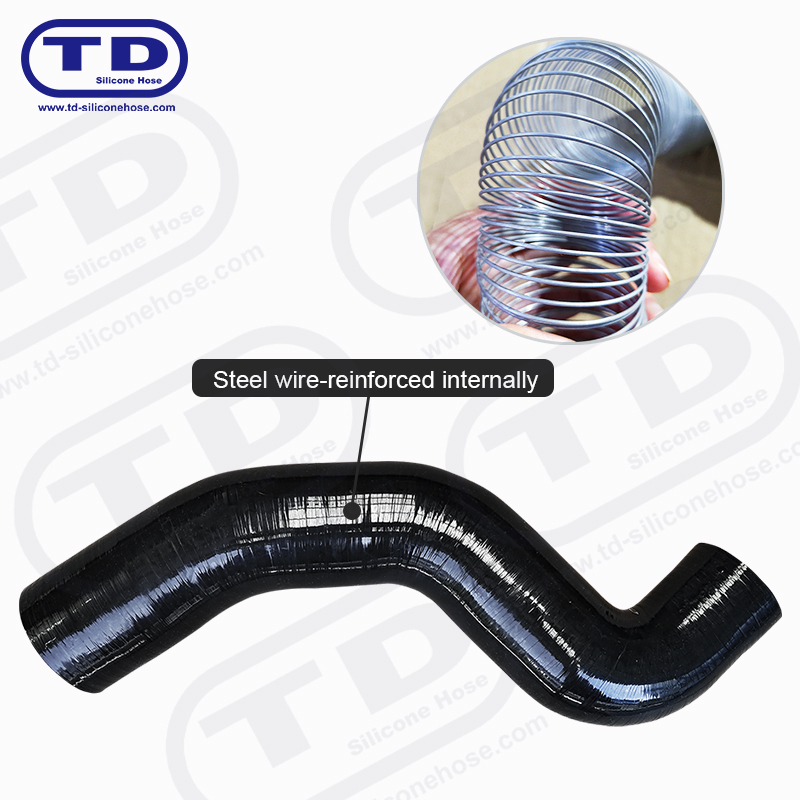 Wholesale Wire Reinforced Silicone Hose Suppliers, ManufacturersNingbo Tiandai Auto Parts Co., Ltd. is China Wire Reinforced Silicone Hose Manufacturers and Wire Reinforced Silicone Hose Suppliers, of...View Product →
Sourcing Straight Silicone Hoses from a Manufacturer
When you need hoses in volume, or when the stock sizes do not cover your application, buying direct from a silicone hose manufacturer gives access to more constructions and better control over quality. A production-oriented supplier can offer consistent wall thickness, certified silicone material, and repeatable test data for temperature and pressure. That is especially important for automotive cooling parts, where a failed hose can stop a vehicle or damage an engine.
Ningbo Tiandai Auto Parts Co., Ltd. is one example of a manufacturer that builds silicone hoses for modified cars, racing cars, motorcycles, trucks, and buses. The company runs an IATF 16949 quality management system, supplies more than 1,500 hose and accessory items across nine product families, and supports export through the port and logistics network in Ningbo. A manufacturer with this kind of range can also supply matching clamps and aluminum fittings, which simplifies procurement and reduces fit errors.
The takeaway is simple: a silicone straight hose is a small part with big responsibilities. Check inner diameter, wall thickness, reinforcement, temperature range, and pressure rating before you buy. Use a matching clamp and a clean cut when you install it. If the job is serious, source from a certified manufacturer who can document the construction and test values. Do that, and the straight hose will be the least interesting part of your system, because it will simply work.
Our Product //
Ningbo Tiandai Auto Parts Co., Ltd. All Rights Reserved. ALL RESERVED.
Wholesale Automotive Silicone Hose Manufacturers
