

 English
 中文简体
中文简体 русский
 Español
 عربى
عربى
Submit feedback
Universal Silicone Hose and Tube: Sizing, Temperature Ratings, and Selection Guide
Industry news-Content
- 1 Why Universal Silicone Hose and Tube Outperform Rubber
- 2 Standard Configurations of Universal Silicone Hose
- 3 How to Choose the Right Universal Silicone Hose or Tube
- 4 Where Universal Silicone Hose and Tube Are Used
- 5 Installation Practices That Extend Hose Life
- 6 Conclusion: Buy on Specifications, Not Colour
Why Universal Silicone Hose and Tube Outperform Rubber
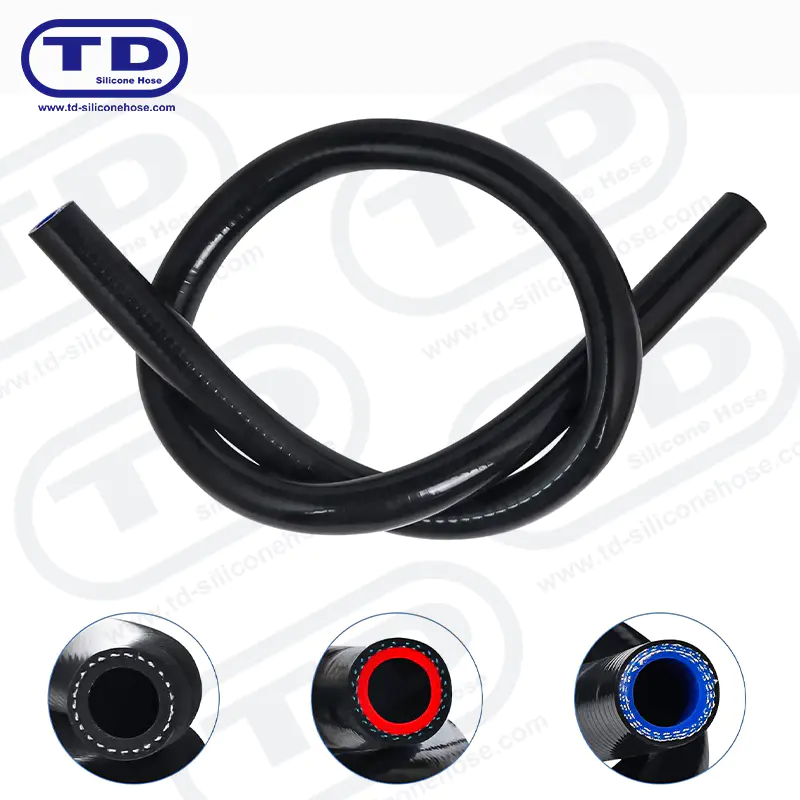
When a charge-air pipe goes through its third replacement rubber hose in 18 months, the smart fix is not another identical part. It is a switch to universal silicone hose and tube, which hold up under sustained heat, pressure pulses, and coolant exposure that degrade standard rubber compounds quickly. The conclusion is straightforward: silicone is the practical upgrade for cooling circuits, turbocharger air paths, and industrial transfer lines because it keeps its shape, resists aging, and works across a much wider temperature window.
A well-made silicone tube remains flexible from roughly -60°C to 200°C in continuous service, with intermittent exposure to higher temperatures possible depending on construction. Rubber compounds in the same application harden, soften, or crack far sooner. The smooth inner bore of a silicone hose also reduces flow resistance and minimizes deposits, which matters for both coolant circulation and boost pressure delivery. For a full breakdown of the differences, see this silicone versus rubber hose comparison before you choose.
Standard Configurations of Universal Silicone Hose
Universal silicone hose is not a single product. It is a family of standard shapes that cover almost every routing problem in an engine bay or a machine. Choosing the right shape is the first step toward a clean installation and a reliable seal.
Straight Hose for Straightforward Runs
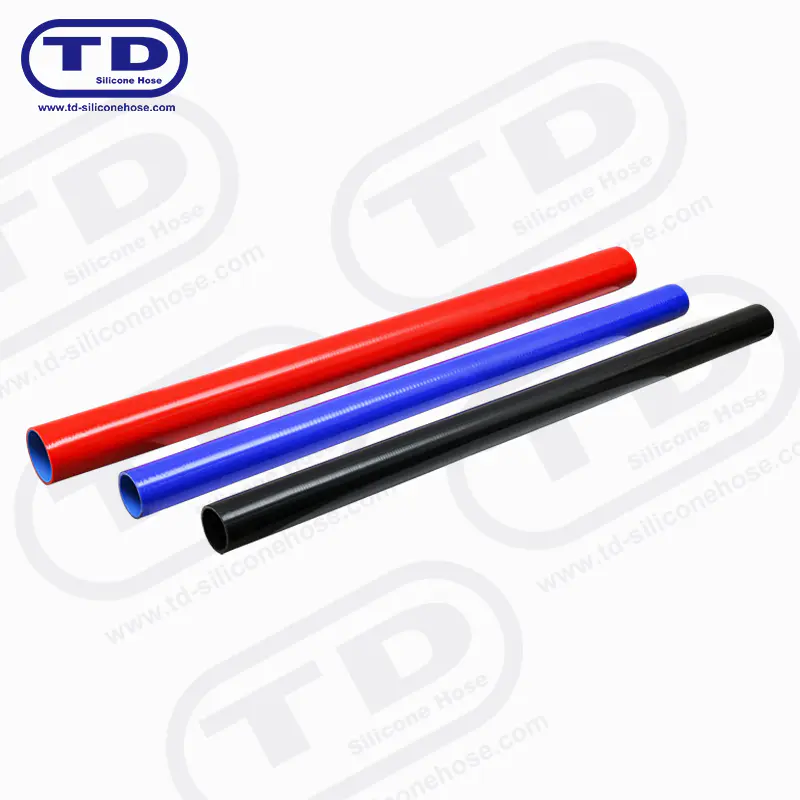
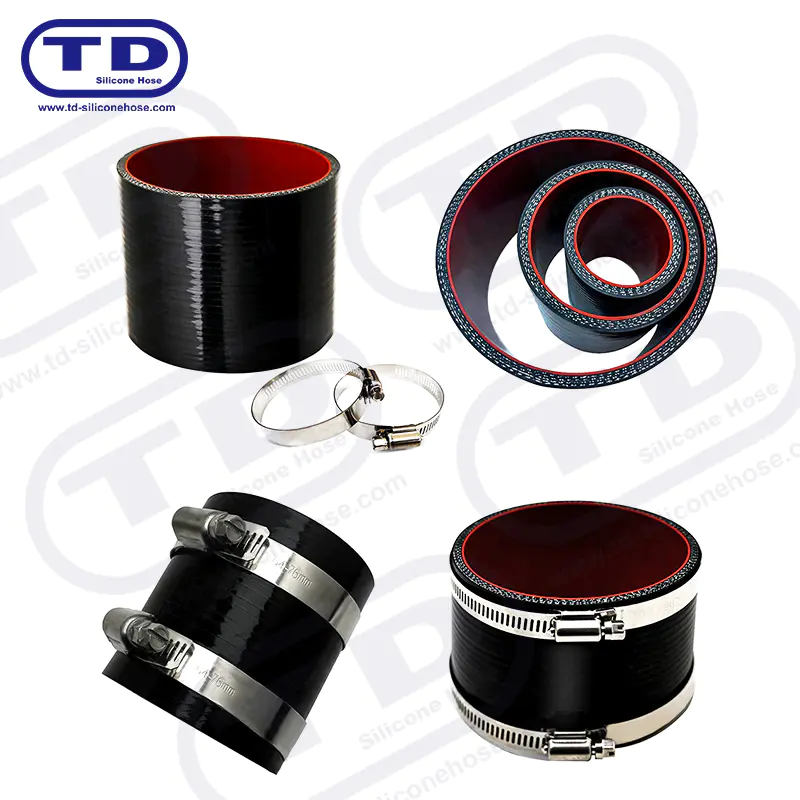
Straight silicone hose is the workhorse for joining pipes, extending lines, and connecting components at fixed distances. It is available in a wide range of internal diameters and wall thicknesses, and it can be cut to the exact length you need. A quality straight hose should have a consistent wall and a smooth bore, because any irregularity creates a weak point under pressure. If you need a basic run for coolant or air, compare straight silicone hose configurations before placing an order.
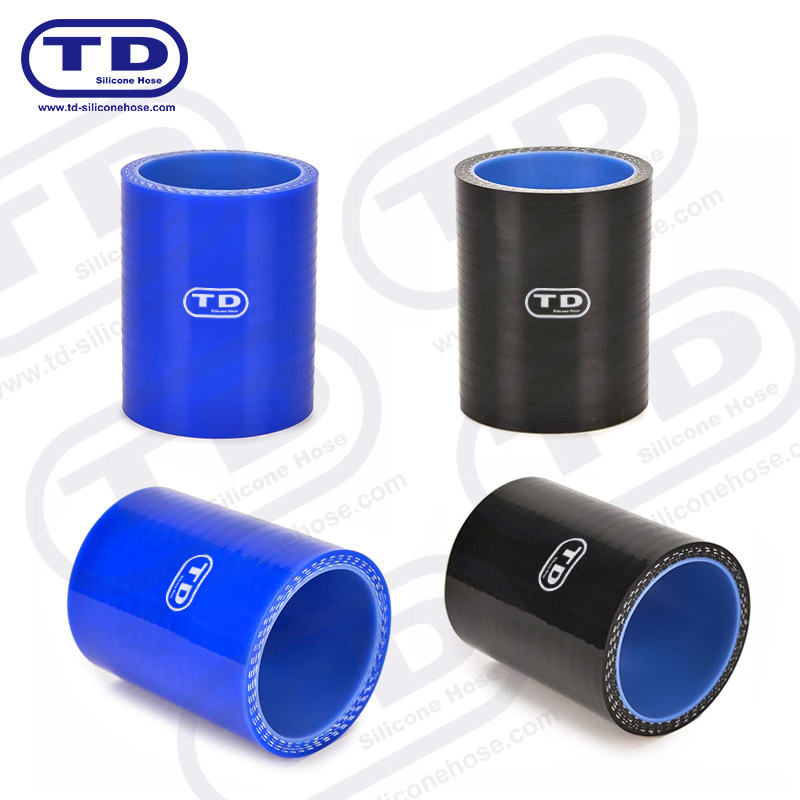 Wholesale Silicone Straight Hose Suppliers, ManufacturersNingbo Tiandai Auto Parts Co., Ltd. is China Silicone Straight Hose Manufacturers and Silicone Straight Hose Suppliers, offer Wholesale ...View Product →
Elbow Hoses for Tight Routing
Elbow hoses handle direction changes without kinking. The common angles are 45 degrees, 90 degrees, 135 degrees, and 180 degrees, so you can route a line around engine mounts, chassis rails, and turbocharger housings without forcing the hose into an unnatural bend. A 90 degree elbow is the most popular choice for radiator connections and intercooler pipe transitions, and the 180 degree version is useful for tight U-turns in confined bays. See the available 90 degree silicone elbow hose range when you plan the routing.
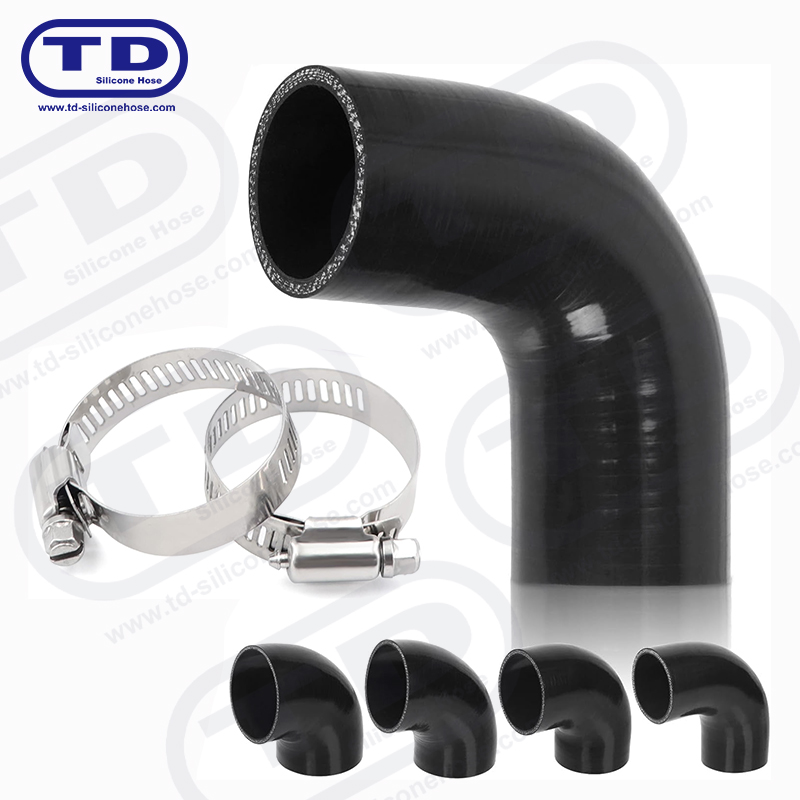 Wholesale Silicone 90° Elbow Hose Suppliers, ManufacturersNingbo Tiandai Auto Parts Co., Ltd. is China Silicone 90° Elbow Hose Manufacturers and Silicone 90° Elbow Hose Suppliers, offer Wholesal...View Product →
Reducers, Hump Hoses, and T-Shapes
Reducers connect components with different diameters, which is exactly what you need between a turbocharger outlet and an intercooler inlet, or between a large radiator tank and a smaller engine block fitting. Measure both ends carefully because the reducer has to seal on two different sizes. For vibration isolation and small misalignment, a hump hose absorbs movement between engine and chassis components. A T-shape hose splits one line into two branches for coolant bleed lines or distribution systems. Start with a silicone reducer hose if your job involves joining two pipe sizes.
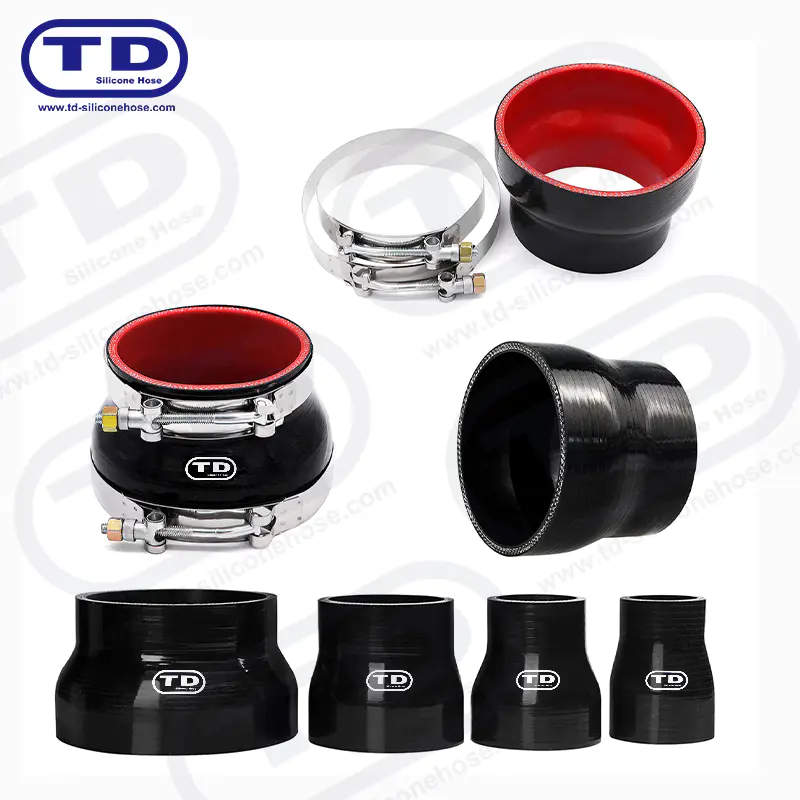 Silicone Reducer Coupler Hose Manufacturers, SuppliersAs China Silicone Reducer Coupler Hose Manufacturers and Wholesale Suppliers, Tiandai Auto Parts Co., Ltd. offer Silicone Reducer Hose fo...View Product →
How to Choose the Right Universal Silicone Hose or Tube
Selection comes down to four variables: internal diameter, wall thickness, temperature rating, and whether the hose needs reinforcement. Get these right and the hose will last; skip one and the installation will fail early.
Measure the Internal Diameter, Not the Outside
Universal silicone hose is specified by internal diameter. For a reducer, you need both IDs. Measure the component that the hose fits over, such as a radiator neck, a turbo outlet, or an intercooler tank, because the hose seals on the outside of that component. Wall thickness typically ranges from 3 mm to 7 mm. Thicker walls add strength and heat resistance but reduce flexibility, so choose based on operating conditions rather than a thicker-is-better assumption. If you are unsure about the process, follow this guide on how to measure and fit silicone hoses correctly.
Match Temperature and Pressure to the Application
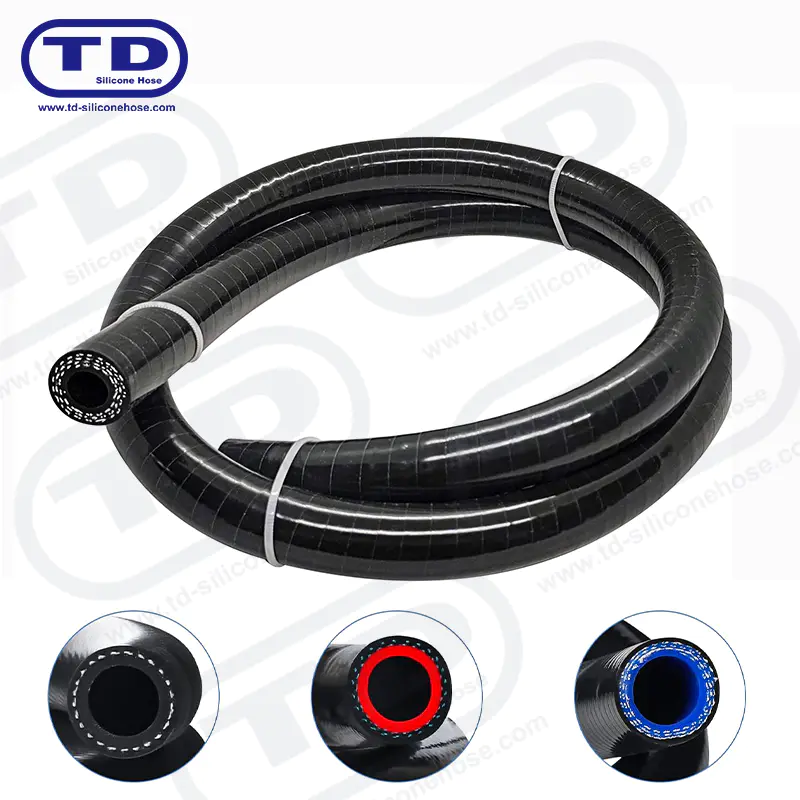
Standard silicone handles continuous service from about -60°C to 200°C, which covers cooling systems, heater circuits, and charge-air ducting in most vehicles. If the hose sits near an exhaust manifold or a turbocharger, check the intermittent temperature rating of the specific product. Pressure is the other side of the equation: cooling systems operate at low positive pressure, while charge-air ducts see pressure pulses from boost. A wire-reinforced silicone tube is the right choice where the hose must resist collapse under vacuum or hold its cross-section under pulsing pressure.
Look at Reinforcement and Liner Materials
Standard silicone is fine for coolant and dry air, but aggressive media change the material selection. A fluorosilicone liner protects the hose when it carries fuel, oil, or solvent vapors. An aluminum-wrapped exterior reflects radiant heat and protects the hose in crowded engine bays. A wire helix reinforcement maintains the round section under vacuum or clamping loads. If the application is exposed to any of these conditions, a universal hose without a liner or reinforcement is the wrong part.
| Configuration | Typical Use | Key Measurement |
|---|---|---|
| Straight hose | Joining pipes, extending coolant or air lines | Internal diameter and wall thickness |
| 45, 90, 135, 180 degree elbows | Changing direction around engine or chassis components | Bend angle and leg length |
| Reducer hose | Connecting components with different diameters | Both internal diameters |
| Hump hose | Absorbing vibration, shock, and minor misalignment | Internal diameter and overall length |
| T-shape hose | Splitting one line into two branches | Main internal diameter and branch internal diameter |
Where Universal Silicone Hose and Tube Are Used
Universal silicone hose and tube appear in almost every cooling and air-handling circuit in road vehicles, motorsport builds, and industrial machinery. In a passenger car, the most common locations are the radiator circuit, the heater core lines, the turbocharger charge-air path, and the vacuum system. In a truck or bus, the same hoses connect the engine cooling system and the cabin heater. In a motorcycle, silicone hoses replace brittle original rubber in the coolant loop and oil-cooler connections.
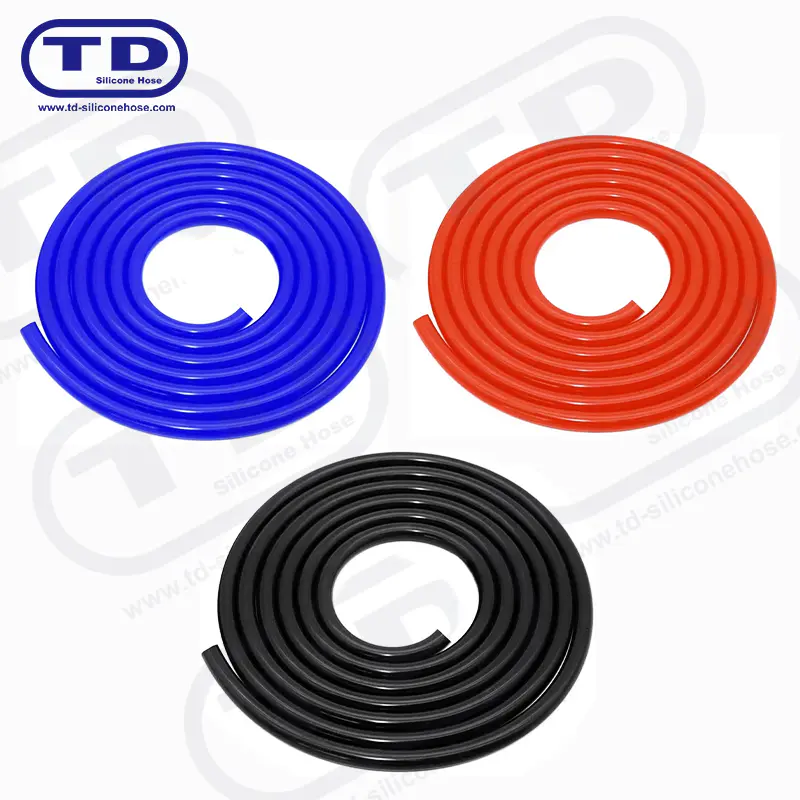
The industrial side is just as broad: silicone tube moves coolant, process water, and low-pressure air in machines, compressors, and test equipment. The material does not crack under ozone and ultraviolet exposure the way many rubber compounds do, which is why outdoor and high-heat installations keep working long after a rubber line would be replaced.
There is also a fast-growing use in hydrogen fuel cell systems, where silicone tube handles coolant circuits and manages gas connections with the cleanliness that fuel cell stacks require. A manufacturer like Ningbo Tiandai Auto Parts, based in Ningbo, China, produces these hoses across nine product series with more than 1500 items, and the company holds the IATF 16949 automotive quality management certification. That combination of range and process control matters when you are buying replacement hoses in volume or specifying a hose for a production program.
Installation Practices That Extend Hose Life
The best silicone hose will fail early if it is installed badly. Follow a short checklist to protect the investment.
- Cut the hose square with a sharp blade and remove any debris from the bore. A burr or a ragged edge creates a leak path and a stress concentration.
- Slide the clamp onto the hose before pushing the hose onto the fitting. Position the clamp beyond the flared end of the fitting, not right on the edge.
- Use a clamp design that matches the hose size and pressure. Small vacuum lines work with standard worm-drive clamps, while large charge-air hoses benefit from a T-bolt clamp that applies even pressure around the circumference.
- Support heavy hose assemblies so the weight hangs on brackets, not on the hose. A heavy intercooler pipe swinging from a silicone bend will eventually tear the hose.
- Avoid bends sharper than the hose can handle naturally. Check the recommended bend radius before installation and add elbow fittings where the routing demands a tight turn.
For a full walkthrough, follow this step-by-step automotive silicone hose installation guide on your next job.
Conclusion: Buy on Specifications, Not Colour
Universal silicone hose and tube are a proven replacement for rubber in cooling, charge-air, vacuum, and industrial lines. The key is to select the right configuration, measure the internal diameter correctly, verify the continuous and intermittent temperature ratings, and add reinforcement or a liner when the media demands it. A supplier with broad product coverage and certified quality control simplifies that job, especially when you need multiple shapes and sizes from one source.
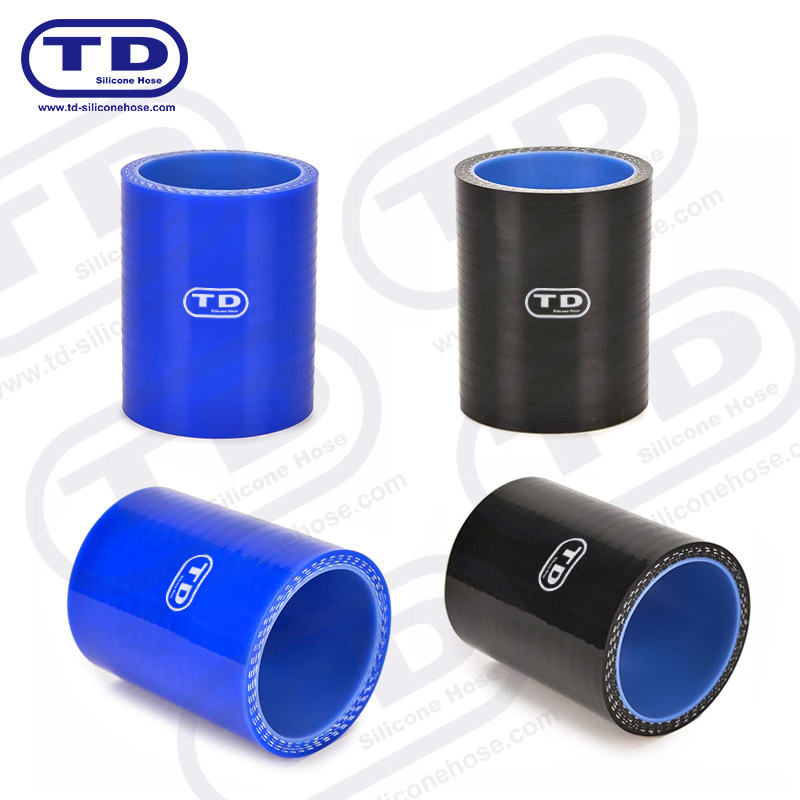
Ningbo Tiandai Auto Parts manufactures straight hoses, elbows, reducers, hump hoses, T-shapes, reinforced tubes, clamps, and aluminum fittings under one roof, which means the hose, the clamp, and the connector can be matched as a system rather than pieced together from different suppliers. That is the practical advantage of buying universal silicone hose from a dedicated manufacturer: the part fits, the material is right, and the installation lasts.
Our Product //
Ningbo Tiandai Auto Parts Co., Ltd. All Rights Reserved. ALL RESERVED.
Wholesale Automotive Silicone Hose Manufacturers
