

 English
 中文简体
中文简体 русский
 Español
 عربى
عربى
Submit feedback
Silicone vs. Rubber Hose: Why High-Performance Elbow Silicone Hoses Dominate High-Temp Applications
Industry news-Content
- 1 Core Material Differences: What Silicone and Rubber Actually Are
- 2 Side-by-Side Comparison: Silicone vs Rubber Hose
- 3 Temperature Performance: The Biggest Practical Difference
- 4 High Performance Elbow Silicone Hoses: Where Geometry Meets Pressure
- 5 Where Rubber Hoses Still Make Sense
- 6 Longevity and Total Cost of Ownership
- 7 How to Choose the Right Silicone Hose for Your Application
For high-performance and demanding applications, silicone hoses outperform rubber hoses in almost every category that matters — temperature range, lifespan, flexibility retention, and resistance to degradation. Standard rubber hoses are adequate for low-stress, cost-sensitive applications, but they deteriorate faster under heat, pressure cycling, and chemical exposure.
The comparison becomes especially clear in automotive and industrial settings where hoses carry coolant, boost pressure, or air intake across engine bays that regularly exceed 150°C. In those environments, the material difference between silicone and rubber is not marginal — it directly affects reliability and service intervals. The breakdown below covers every meaningful distinction so you can match the right hose material to your actual requirements.
Core Material Differences: What Silicone and Rubber Actually Are
Understanding the performance gap starts with understanding what each material is made of.
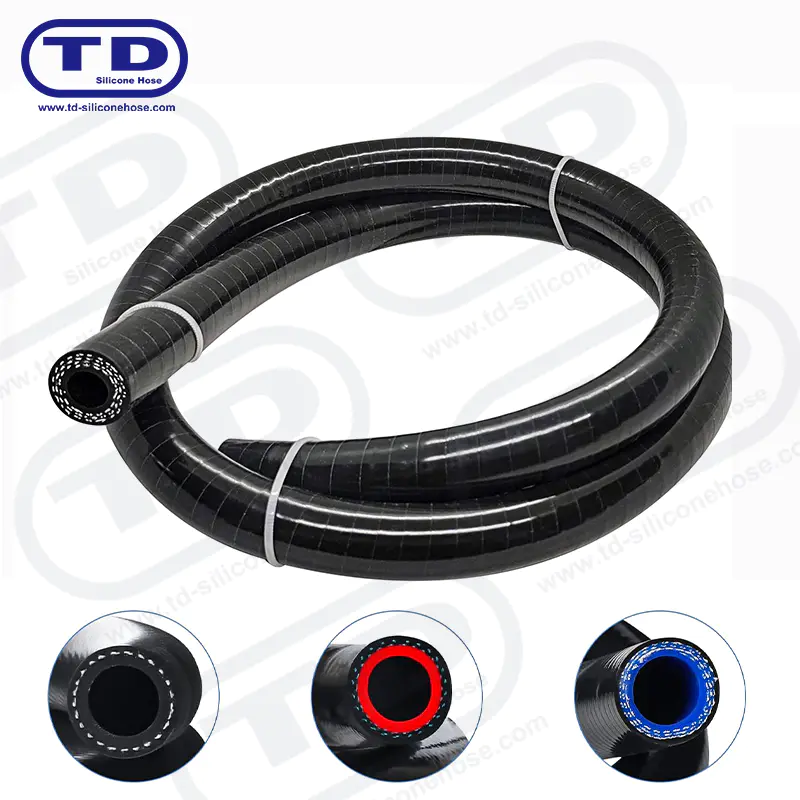
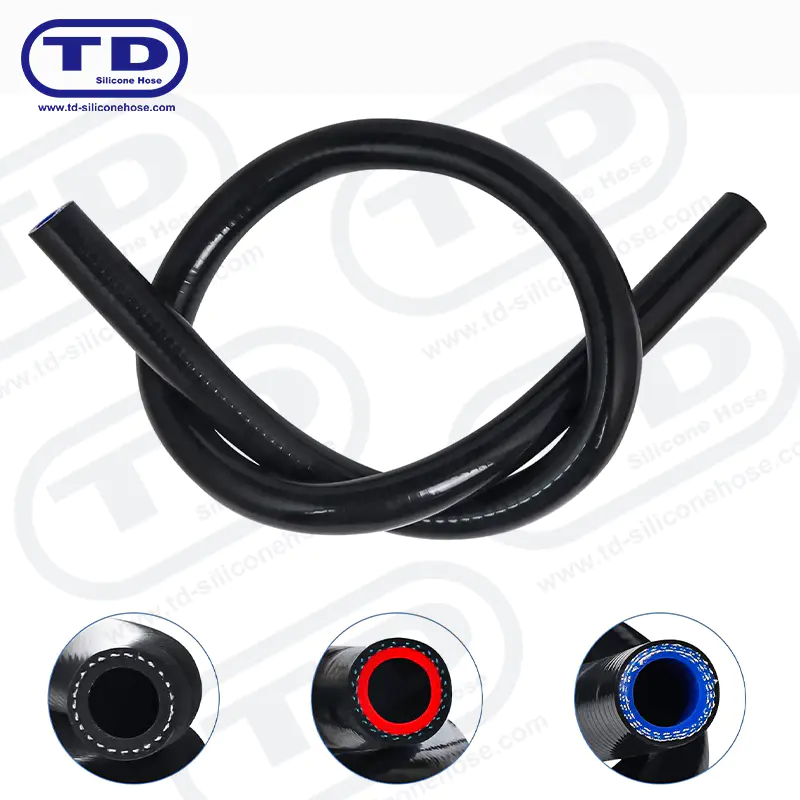
Silicone hoses are made from polydimethylsiloxane (PDMS), an inorganic polymer with silicon-oxygen backbone chains. This structure gives silicone its exceptional thermal stability and resistance to UV, ozone, and oxidation. Most performance silicone hoses also incorporate multiple layers of polyester braid reinforcement between the silicone plies, which dramatically increases burst pressure resistance.
Rubber hoses are typically made from EPDM (Ethylene Propylene Diene Monomer), neoprene, or natural rubber. EPDM is the most common in automotive coolant and air applications. It is a carbon-chain polymer, which makes it more susceptible to thermal breakdown, ozone cracking, and swelling when exposed to petroleum-based fluids over time.
Side-by-Side Comparison: Silicone vs Rubber Hose
The table below covers the critical performance metrics across both materials:
| Property | Silicone Hose | Rubber Hose (EPDM) |
|---|---|---|
| Continuous temp range | −60°C to +220°C | −40°C to +150°C |
| Burst pressure (typical) | 100–250 psi | 60–150 psi |
| Lifespan (typical) | 10–15+ years | 3–7 years |
| UV and ozone resistance | Excellent | Moderate (EPDM) to poor |
| Flexibility at low temps | Remains flexible to −60°C | Stiffens below −20°C |
| Oil and fuel resistance | Poor (unless fluorosilicone) | Moderate (neoprene/Viton) |
| Cost (relative) | Higher upfront | Lower upfront |
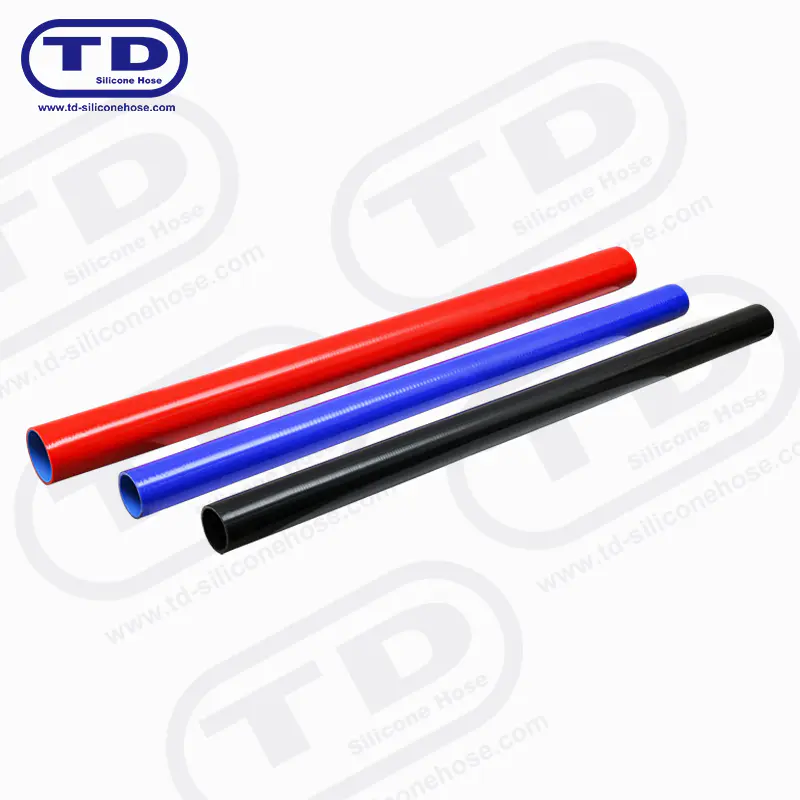
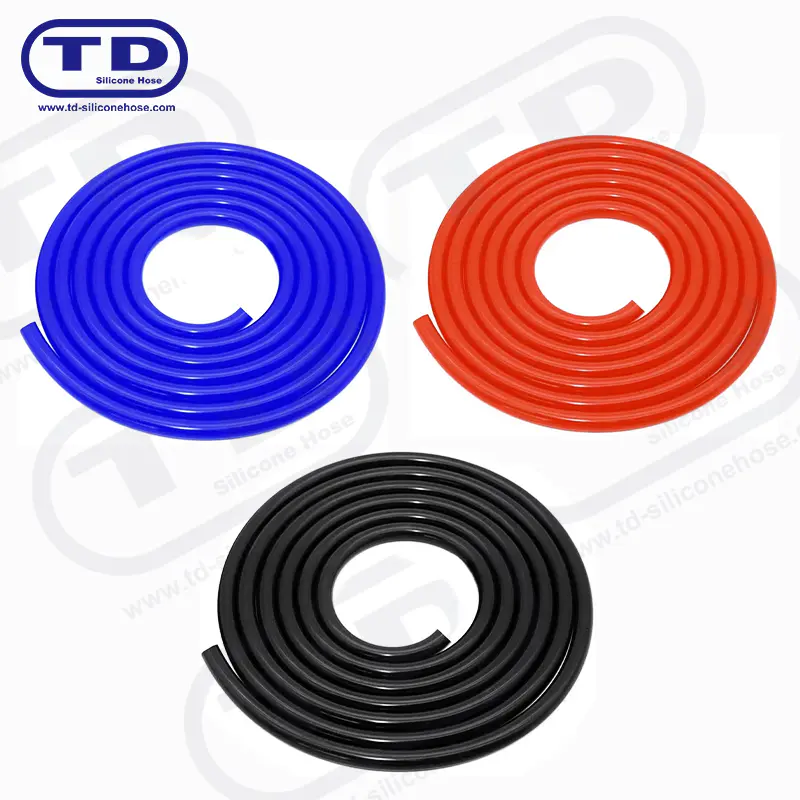
| Surface finish options | Wide (blue, red, black, custom) | Typically black only |
Temperature Performance: The Biggest Practical Difference
The temperature gap between silicone and rubber is the single most important factor in high-performance applications. Silicone maintains its mechanical properties continuously from −60°C to +220°C, with short-term peaks tolerated up to 260°C in some formulations. EPDM rubber, by contrast, begins to harden, crack, and lose elasticity as it approaches its upper limit of around 150°C.
In a turbocharged engine bay, charge air and coolant temperatures can regularly hit 120–180°C at the hose interface. Running an EPDM hose in that environment pushes it close to or beyond its limit, accelerating degradation with every heat cycle. A silicone hose under the same conditions operates comfortably within its rated range, cycling without hardening or cracking for years.
Cold performance matters too — in cold climates, rubber hoses become stiff at startup, increasing the risk of cracking under pressure before the engine warms. Silicone stays pliable down to −60°C, which makes it the preferred material for vehicles and equipment operated in sub-zero conditions.
High Performance Elbow Silicone Hoses: Where Geometry Meets Pressure
Among silicone hose configurations, elbow hoses are among the most mechanically demanding. They are used to route coolant, boost air, or intake air around corners in an engine bay where a straight hose cannot fit. The bend itself introduces stress concentration points — especially on the outer radius — that straight hoses never experience.
Why Elbow Geometry Requires Premium Construction
A poor-quality elbow hose — whether silicone or rubber — will collapse or kink at the inner radius under negative pressure or when clamped tightly. High-performance elbow silicone hoses address this through:
- Multiple polyester braid reinforcement layers — typically 2–4 plies, which prevent collapse under vacuum and maintain the hose's circular cross-section through the bend
- Uniform wall thickness through the arc — cheaper hoses thin out on the outer radius, reducing burst pressure precisely where stress is highest
- Standard elbow angles — 45°, 90°, and 135° are the most common; some applications require compound bends or custom-molded shapes for specific vehicle platforms
- Precision-molded ends — ID dimensions must be consistent at each end opening to ensure leak-free clamping against aluminum piping or OEM connection points
Common Applications for Elbow Silicone Hoses
- Intercooler inlet and outlet connections on turbocharged engines
- Radiator upper and lower hose replacements on performance builds
- Cold-side charge piping on diesel performance trucks
- Air intake routing on modified or aftermarket induction systems
- Industrial compressed air and vacuum system junctions
Where Rubber Hoses Still Make Sense
Silicone is not always the right answer. There are specific scenarios where rubber remains the better or only practical choice:
- Oil and fuel contact — standard silicone swells and degrades rapidly when exposed to petroleum-based fluids. Nitrile (NBR) or Viton rubber hoses are required for fuel lines and oil circuits. Fluorosilicone exists as a premium alternative but costs significantly more.
- Budget OEM replacement on stock vehicles — a standard passenger car operating within normal temperature ranges does not need silicone hoses. An EPDM replacement hose at a fraction of the cost will perform adequately for the vehicle's service life.
- High-abrasion environments — rubber has better abrasion resistance than silicone in applications where the hose contacts rough surfaces or moves repeatedly against metal.
- High-pressure hydraulics — multi-spiral steel-wire hydraulic rubber hoses rated above 3,000 psi are purpose-built for hydraulic systems where silicone hoses are not designed to compete.
Longevity and Total Cost of Ownership
Silicone hoses cost more upfront — a quality 90° elbow silicone hose typically runs $20–$60 depending on diameter and construction, versus $8–$25 for an equivalent EPDM rubber hose. However, silicone hoses routinely last 10 to 15 years or more without cracking, hardening, or swelling, while rubber hoses in hot or high-stress environments may need replacement every 3 to 5 years.
In a performance vehicle that is regularly serviced and expected to stay on the road for 10+ years, replacing rubber hoses twice over the vehicle's life will exceed the cost of fitting silicone hoses once. The labor cost of replacing a hose that has failed — particularly an intercooler hose that causes boost leaks or a radiator hose that causes overheating — easily dwarfs the initial price difference.
For racing or track applications, the argument for silicone is even stronger — a rubber hose failure at the track can end a day's running or cause engine damage, while the reduced risk from a properly rated silicone hose justifies the premium without question.
How to Choose the Right Silicone Hose for Your Application
Once you've decided silicone is the right material, these are the specification decisions that determine whether the hose actually fits and performs:
- Inside diameter (ID) — must match the OD of the pipe or nipple it connects to; measure the pipe, not the old hose, as rubber hoses stretch over time
- Bend angle — confirm whether you need a 45°, 90°, or 135° elbow; some vehicles require a specific sweep radius to clear other components
- Wall thickness and ply count — for boost and pressure applications, a minimum of 3-ply construction is recommended; 4-ply for sustained pressures above 25 psi
- Temperature rating — verify the hose is rated for the specific circuit; coolant hoses see different temperatures than charge air hoses
- Leg lengths — each arm of an elbow hose has a straight section; ensure both legs are long enough to accept the clamp and seat properly against the pipe bead
Buying a silicone hose from a manufacturer that publishes burst pressure ratings, wall thickness specs, and temperature ratings — rather than one that lists only color and price — is the clearest way to ensure you are getting genuine performance-grade construction rather than a silicone-colored rubber alternative.
Our Product //
Ningbo Tiandai Auto Parts Co., Ltd. All Rights Reserved. ALL RESERVED.
Wholesale Automotive Silicone Hose Manufacturers
